How to Recognize and Address Workforce Strengths and Weaknesses via Tech
How to Recognize and Address Workforce Strengths and Weaknesses via Tech
In today's rapidly evolving business landscape, the adage "your people are your greatest asset" has never been more pertinent. For Vice Presidents, Directors, and Senior Managers in Learning & Development, understanding the nuanced tapestry of your workforce's capabilities is not just a strategic advantage—it's a necessity. From navigating complex compliance mandates in finance and healthcare to driving sales performance in retail or ensuring operational safety in oil and gas, identifying and cultivating talent is paramount. This article explores how modern technology empowers L&D leaders to precisely recognize, develop, and leverage employee strengths while strategically addressing weaknesses, fostering a resilient and high-performing organization.
The Evolving Landscape of Talent Management
Traditional methods of performance reviews and skill assessments often fall short in capturing the full spectrum of an employee's potential. They can be subjective, time-consuming, and lack the granularity needed to identify emerging skill gaps or hidden talents. Industries like pharma, banking, and insurance face constant regulatory changes, demanding continuous upskilling. Meanwhile, hospitality and retail require agile teams capable of adapting to fluctuating market demands and customer expectations. The challenge for L&D is to move beyond reactive training to a proactive, data-driven approach that accurately maps individual and collective capabilities against organizational goals.
Leveraging Technology for Deeper Insights
The advent of sophisticated learning technologies has transformed how organizations approach talent development. Modern platforms offer unparalleled visibility into employee performance and learning journeys, turning abstract potential into actionable insights.
Data-Driven Skill Assessment
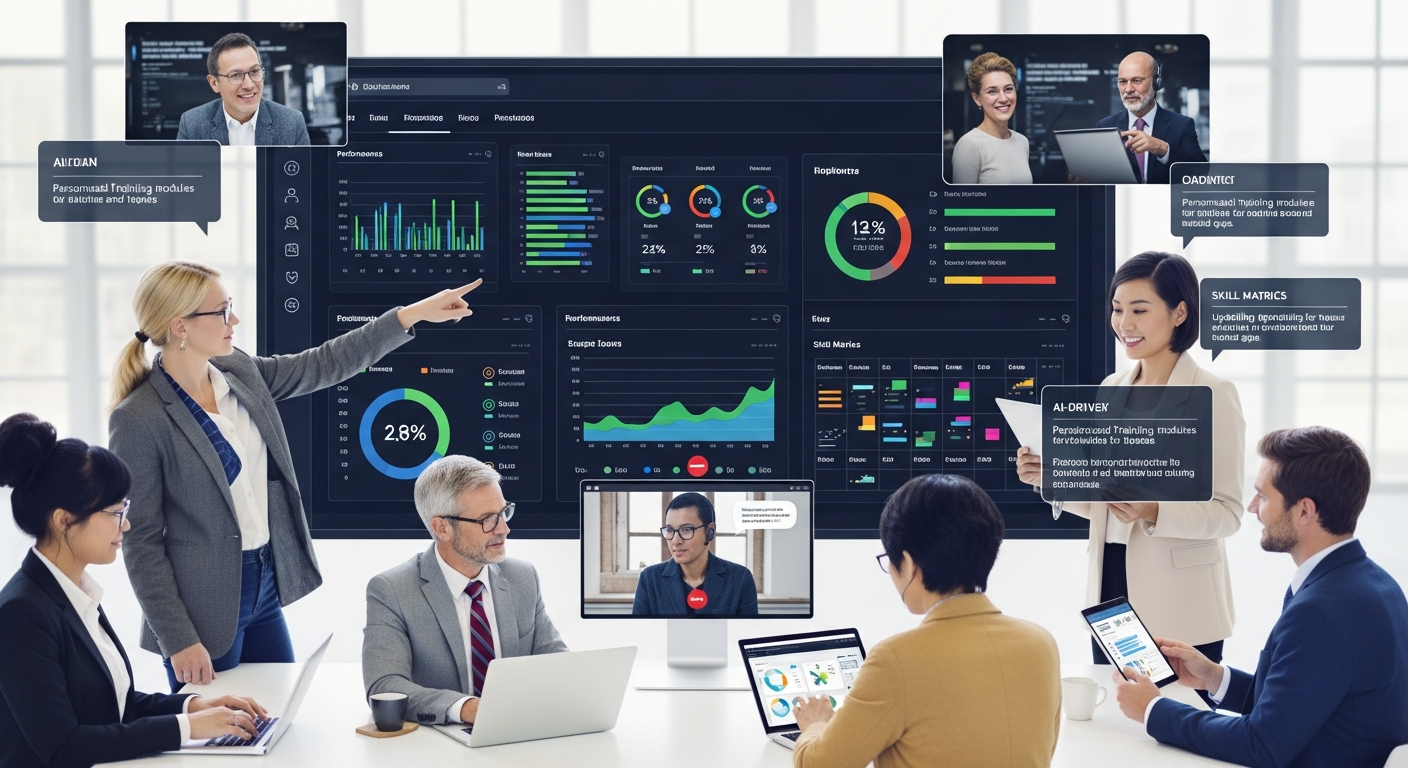
At the core of effective talent management is robust data. Today's learning platforms, such as an advanced LMS, integrate various data points—from assessment results and course completions to on-the-job performance metrics. This rich data ecosystem allows L&D teams to create detailed skill inventories for individuals and departments. For instance, in the banking sector, identifying a compliance officer's specific strengths in AML regulations versus a weakness in cybersecurity protocols becomes clear, enabling targeted intervention. A comprehensive learning content management system (LCMS) facilitates the organization and analysis of this data, making it easier to pinpoint areas for development.
Personalized Learning Paths
Once strengths and weaknesses are identified, the next step is to provide tailored development opportunities. Generic training programs are increasingly ineffective. Adaptive Learning technologies, for example, dynamically adjust content and pace based on a learner's progress, prior knowledge, and identified skill gaps. This ensures that employees spend their time efficiently, focusing on areas where they need the most improvement or where they can deepen existing strengths. For a sales team, this might mean a rep strong in product knowledge but weak in negotiation skills receives targeted modules on advanced sales techniques, possibly through a Microlearning LMS.
Predictive Analytics for Workforce Planning
Beyond current assessments, technology offers a window into the future. Predictive analytics, embedded within a robust learning management system, can forecast future skill needs based on industry trends, strategic objectives, and anticipated regulatory shifts. This is particularly critical in fast-paced sectors like healthcare and finance, where anticipating future skill requirements allows L&D to proactively design Risk-focused Training and upskilling programs, ensuring the organization remains competitive and compliant.
AI's Role in Unlocking Potential
Artificial Intelligence (AI) is rapidly becoming an indispensable ally for L&D professionals. Its ability to process vast amounts of data, identify complex patterns, and automate decision-making elevates talent management to an entirely new level.
Automated Skill Gap Identification
AI-powered analytics can go beyond surface-level data to uncover subtle skill gaps and emerging strengths that might be missed by human observers. By analyzing performance data, project contributions, and even informal learning activities, AI can provide a more holistic view of an employee's capabilities. This can be transformative for large organizations in retail or manufacturing, where manual assessment across thousands of employees is impractical. An advanced enterprise learning management system leverages AI to automate these insights.
Content Curation and Delivery
AI also excels at personalizing the learning experience. Based on identified strengths and weaknesses, AI algorithms can curate highly relevant learning content, recommend specific courses, or even suggest mentorship opportunities. An AI Powered Authoring Tool can even help L&D teams rapidly create tailored content, making the delivery of personalized learning incredibly efficient. This ensures that every employee receives the most impactful training at the right time, whether it's an immersive Gamified LMS experience or targeted microlearning modules.
Implementing a Tech-Driven Strategy: Best Practices for L&D Leaders
- Start with Clear Objectives: Define what skills your organization needs now and in the future. What problems are you trying to solve?
- Choose the Right Platform: Invest in a robust cloud based learning management system that offers advanced analytics, personalization capabilities, and scalability for your needs. A comprehensive learning management software is crucial.
- Integrate Data Sources: Connect your learning platform with HRIS, performance management systems, and other relevant data points for a holistic view.
- Foster a Culture of Continuous Learning: Promote the use of the platform by showcasing its benefits and making learning an integral part of career development.
- Regularly Review and Adapt: Technology and business needs evolve. Continuously review the effectiveness of your programs and adapt your strategy accordingly.
Addressing Key Questions in a Digital Age
As L&D leaders embrace these powerful technologies, several strategic questions naturally arise:
Q: How can we precisely quantify skill gaps across our global operations to ensure consistent quality and compliance?
A: Advanced learning platforms integrate data from various assessments, project performance, and certifications to provide a unified, granular view of skill proficiencies. These systems can benchmark individual and team capabilities against industry standards or internal best practices, offering precise quantification of gaps. This data enables L&D to create highly targeted interventions, ensuring uniform skill levels and adherence to global standards, crucial for industries like mining and hospitality with widespread operations.
Q: How do learning technologies adapt to diverse regulatory environments and regional skill demands, especially for multinational corporations?
A: Modern lms learning management system solutions are designed with modularity and localization in mind. They support multiple languages, allow for region-specific content creation, and can be configured to deliver training that aligns with local regulations and cultural nuances. For example, a global MaxLearn LMS can present different compliance modules to employees in various countries, dynamically adjusting content based on their geographic location and job role. This ensures that training is not only effective but also culturally relevant and legally sound, from a pharma company in Europe to an oil and gas operation in the Middle East.
Q: What role do sophisticated learning algorithms play in personalizing learning pathways and predicting future skill needs, enhancing long-term organizational resilience?
A: Sophisticated algorithms are the engine behind true personalization and predictive analytics. By analyzing an employee's learning history, performance data, career aspirations, and organizational needs, these algorithms can intelligently recommend the most effective next steps in their development. They can identify patterns that suggest an employee is primed for a leadership role or pinpoint a collective weakness that could become a future business risk. This algorithmic intelligence allows organizations to proactively build future-ready workforces, moving beyond reactive training to strategic talent development, ensuring resilience in sectors like finance and health care which demand constant adaptation.
Benefits Beyond Skill Development
Implementing a tech-driven approach to talent management offers benefits that extend far beyond individual skill improvement:
- Increased Employee Engagement and Retention: Employees who feel invested in and supported in their growth are more likely to stay with the organization.
- Enhanced Productivity and Performance: A skilled workforce is a productive workforce. Addressing weaknesses and leveraging strengths directly impacts bottom-line results.
- Greater Agility and Adaptability: Organizations that can quickly identify and address skill gaps are better positioned to respond to market changes and innovation.
- Stronger Compliance and Reduced Risk: In highly regulated industries, targeted training minimizes human error and ensures adherence to critical standards.
Conclusion
For L&D leaders across compliance, sales, banking, finance, insurance, retail, pharma, health care, hospitality, oil and gas, and mining, the imperative to understand and develop your workforce has never been clearer. Technology, particularly an advanced learning management solutions suite, provides the tools to move from guesswork to precision, from generic training to personalized development, and from reactive problem-solving to proactive talent strategy. By harnessing the power of data, AI, and adaptive learning, you can build a truly resilient, skilled, and future-ready workforce, driving sustained success for your organization.


Comments
Post a Comment