How Does Gamification Increase Employee Engagement in Compliance Modules?
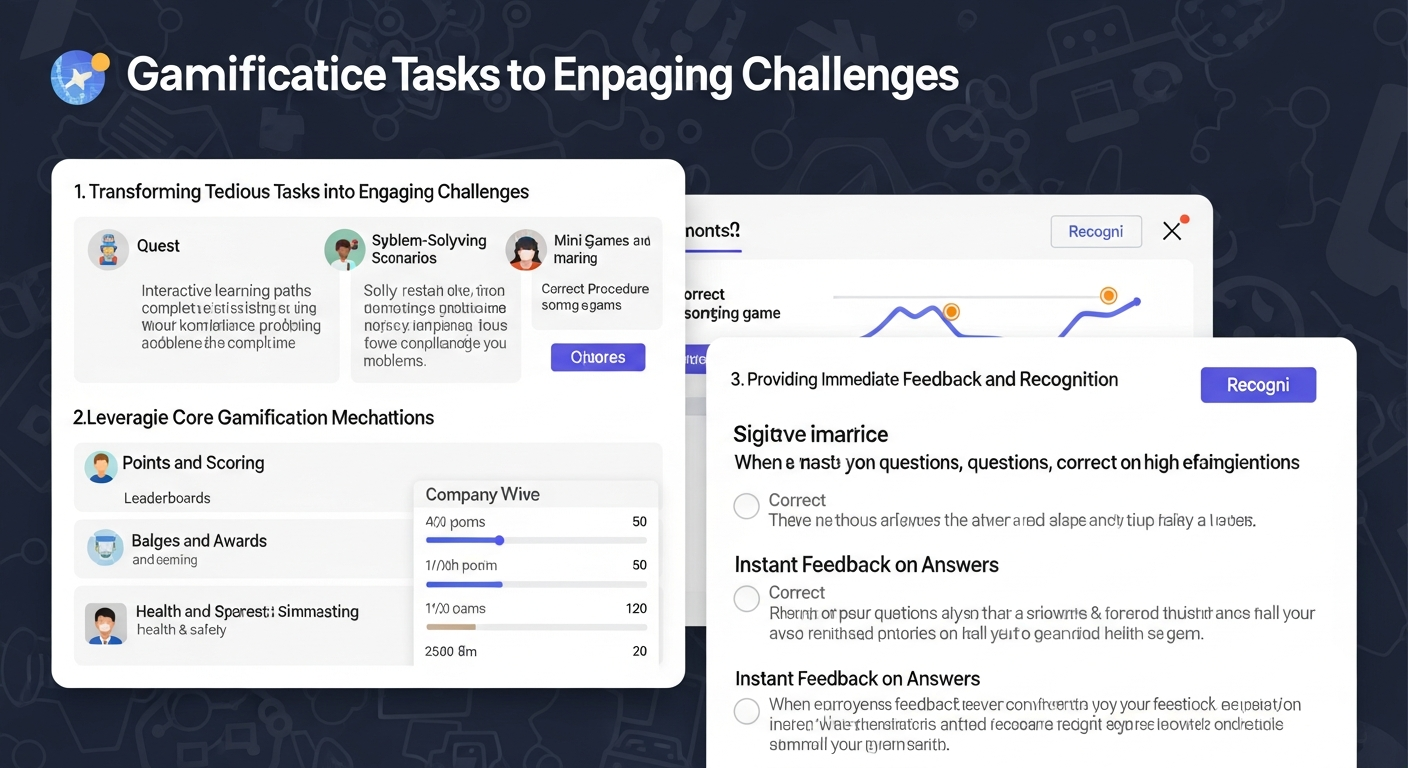
Driving Compliance: How Gamification Supercharges Employee Engagement in Regulatory Modules
In the dynamic landscape of modern business, ensuring employees are not just aware but actively engaged with critical compliance training is paramount. For Vice Presidents, Directors, and Senior Managers in Learning & Development across industries like Sales, Banking, Finance, Insurance, Retail, Pharma, Health care, Hospitality, Oil and Gas, and Mining, the challenge is clear: how do you transform often-perceived dry, mandatory modules into impactful learning experiences? The answer lies in the strategic application of gamification.
Traditional compliance training methods, characterized by lengthy presentations and passive learning, frequently fall short. They struggle to capture attention, foster retention, or truly change behavior. This often leads to minimal engagement, tick-box completion, and ultimately, increased organizational risk. But what if compliance could be as engaging as your favorite app? This is where gamification steps in, turning passive learners into active participants and compliance from a chore into a challenge.
The Compliance Conundrum: Why Engagement Matters More Than Ever
Compliance isn't just about avoiding penalties; it's about safeguarding reputation, ensuring ethical operations, and maintaining trust with customers and stakeholders. Yet, the very nature of regulatory content—often dense, abstract, and mandatory—can breed disinterest. Employees may rush through modules, retain little, and struggle to apply knowledge in real-world scenarios. This creates a significant gap between completion rates and actual understanding or behavioral change. The goal for L&D leaders is to bridge this gap, ensuring that every employee not only completes the training but internalizes its lessons and applies them effectively.
What is Gamification in the L&D Context?
Gamification is the strategic application of game-design elements and game principles in non-game contexts. In Learning & Development, it involves incorporating elements like points, badges, leaderboards, challenges, narratives, and immediate feedback into learning experiences. The objective isn't to make compliance a "game" in the recreational sense, but rather to leverage the psychological triggers that make games so captivating—motivation, achievement, competition, and progression—to drive deeper engagement and more effective learning outcomes in serious topics like compliance.
How Gamification Transforms Compliance Training
Implementing gamification within your compliance modules can revolutionize how your employees interact with essential regulatory content. Here’s how:
Increased Motivation and Participation
- Points and Badges: Awarding points for module completion, correct answers, or achieving milestones provides immediate recognition and a sense of accomplishment. Badges act as visual representations of skill acquisition and expertise, encouraging learners to earn more.
- Leaderboards: Friendly competition among individuals or teams can significantly boost motivation. Seeing their progress relative to peers inspires employees to strive for higher scores and deeper understanding.
Improved Knowledge Retention
- Active Learning: Gamified modules shift learners from passive recipients to active participants. Interactive scenarios, quizzes, and simulations require decision-making, which strengthens memory recall and understanding.
- Repeated Exposure: Challenges that require revisiting content or mini-games that reinforce key concepts provide spaced repetition, a proven method for long-term retention.
Enhanced Skill Application and Decision-Making
- Simulations and Scenarios: Realistic, game-like simulations allow employees to practice applying compliance rules in safe, consequence-free environments. They can make choices, see the immediate impact, and learn from mistakes without real-world repercussions. This is particularly effective for Risk-focused Training.
- Storytelling: Embedding compliance principles within engaging narratives helps learners connect emotionally with the content, making it more memorable and relevant to their roles.
Immediate Feedback and Progress Tracking
- Unlike traditional assessments that might offer delayed feedback, gamified elements provide instant responses. This allows learners to correct misconceptions on the spot, reinforce correct understanding, and continuously track their progress towards mastery. A robust Gamified LMS will often include intuitive progress dashboards.
Fostering a Positive Learning Culture
- By making compliance training enjoyable and rewarding, gamification transforms it from a dreaded obligation into an opportunity for growth and recognition. This cultivates a more positive learning culture where employees are more receptive to ongoing education.
Implementing Gamification Effectively
To truly leverage the power of gamification, consider these best practices:
- Clear Objectives: Ensure gamified elements are tied directly to learning objectives and compliance outcomes, not just for fun.
- Relevant Rewards: Points and badges should signify meaningful achievements that align with business goals and individual development.
- Appropriate Design: The level of gamification should match your audience and the complexity of the compliance topic. Balance competition with collaboration.
- Integration with a Robust Platform: A modern Microlearning LMS or Gamified LMS is essential to manage content, track progress, and deliver the gamified experience seamlessly.
The Role of Intelligent Technologies in Gamified Compliance
The synergy between gamification and advanced computational intelligence elevates compliance training to unprecedented levels of effectiveness and personalization. Leaders in L&D are increasingly asking:
How can cutting-edge algorithms tailor compliance content to individual employee needs and roles?
Modern learning platforms, often incorporating Adaptive Learning capabilities, leverage sophisticated algorithms to analyze a learner's performance, existing knowledge, and job function. This allows the system to dynamically adjust the difficulty, provide personalized feedback, and recommend specific gamified challenges or modules that are most relevant to their unique learning path. For instance, a sales professional might receive tailored scenarios focusing on ethical selling practices, while an operations manager might see simulations related to regulatory safety protocols. This highly individualized approach ensures that every moment spent on compliance training is optimized for maximum impact, making the learning journey more efficient and engaging.
What's the impact of advanced analytical tools on optimizing compliance learning modules and predicting knowledge gaps?
Analytical engines within powerful learning management systems continuously collect data on learner interactions, completion rates, challenge success, and areas of struggle. By processing this vast amount of information, these intelligent tools can identify patterns, highlight common misconceptions, and even predict potential knowledge gaps before they manifest as real-world risks. This predictive capability allows L&D teams to proactively refine Risk-focused Training content, develop targeted gamified interventions, or deploy specific micro-challenges to reinforce critical areas. Furthermore, an AI Powered Authoring Tool can help in rapidly generating new, gamified content based on identified needs, ensuring your compliance training remains agile and highly effective.
How do intelligent systems facilitate consistent and engaging compliance training across diverse operational environments and cultural backgrounds?
For global organizations, ensuring uniform yet culturally sensitive compliance training is a monumental task. Intelligent systems address this by offering features such as multi-language support, localized content delivery, and context-aware gamified scenarios. These systems can present regulatory information in ways that resonate with different cultural norms, using relatable examples and challenges. By analyzing engagement metrics across various regions, they can pinpoint successful gamification strategies and replicate them, while also adapting content to address specific regional regulations or operational nuances. This ensures that regardless of location, employees receive consistent, relevant, and highly engaging compliance training, fostering a unified culture of compliance worldwide.
Benefits Beyond Engagement
The impact of gamification extends far beyond simple employee engagement. For organizations, it translates into:
- Reduced Risk: A more knowledgeable and engaged workforce is less likely to commit compliance errors, mitigating potential legal and financial repercussions.
- Improved Organizational Culture: A culture that values and supports continuous learning and ethical conduct.
- Higher ROI: Effective training reduces the need for costly remediation, fines, and reputational damage.
Choosing the Right Platform
To effectively implement gamification for compliance, a robust LMS is indispensable. Look for a comprehensive learning content management system that supports interactive elements, analytics, and personalized learning paths. A powerful learning management software offers the flexibility to integrate gamified modules, track detailed performance metrics, and scale with your organization's needs. Consider a cloud based learning management system for accessibility and ease of deployment across your enterprise. Solutions like MaxLearn LMS provide an intuitive interface and the necessary features for successful enterprise learning management, transforming your approach to compliance training. An advanced learning management system that acts as a true LCMS can empower L&D teams to create, manage, and deliver highly effective and engaging content, making it the ideal learning management solutions provider to elevate your regulatory education.
Conclusion
Gamification is no longer a novelty; it's a proven strategy for transforming the often-arduous task of compliance training into an engaging, effective, and even enjoyable experience. By harnessing the power of game mechanics and intelligent technologies, L&D leaders can significantly boost employee engagement, improve knowledge retention, and cultivate a robust culture of compliance within their organizations. It’s time to move beyond mundane modules and embrace an innovative approach that not only meets regulatory requirements but also empowers your workforce to thrive.


Comments
Post a Comment