How AI-Driven Knowledge Scans Prevent Human Error in High-Risk Compliance
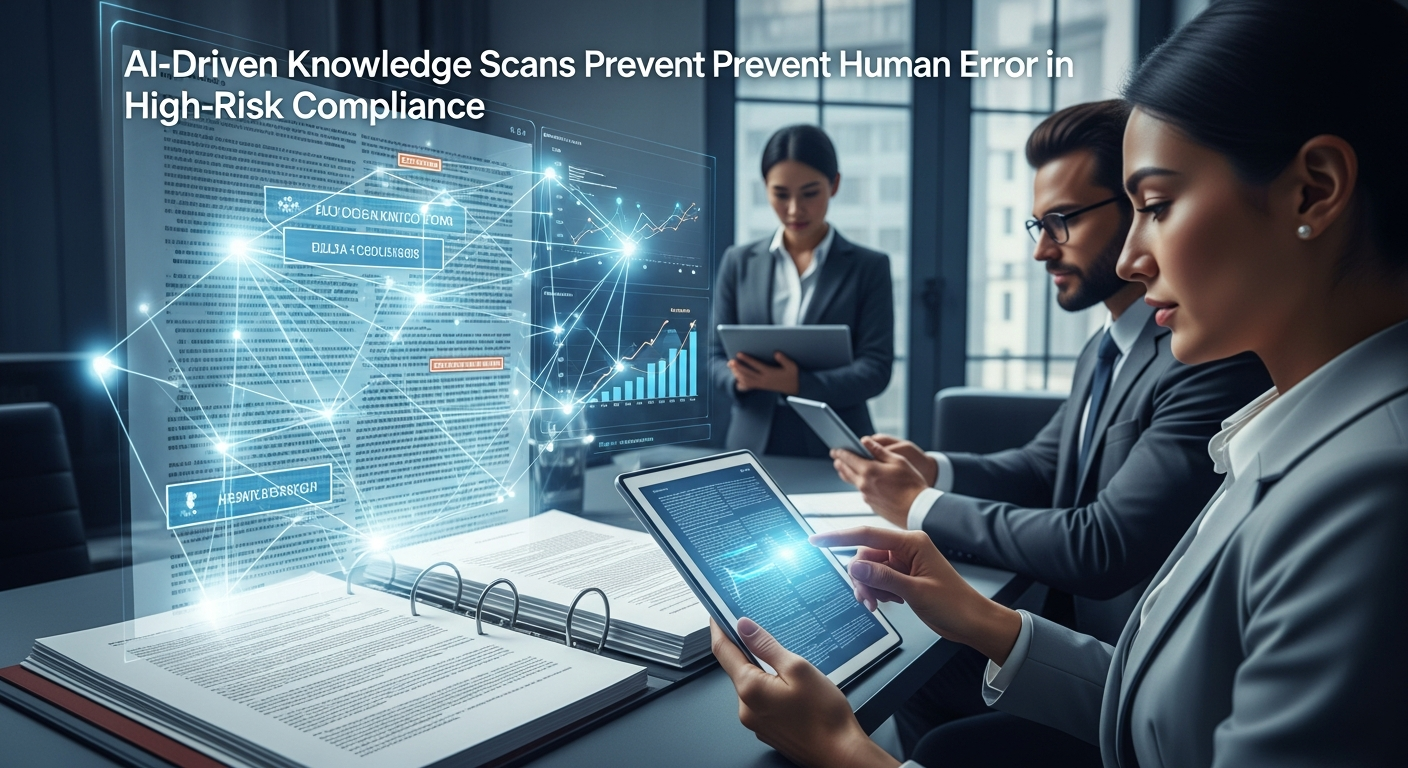
How AI-Driven Knowledge Scans Prevent Human Error in High-Risk Compliance
In today’s hyper-regulated world, the stakes for compliance have never been higher. For Vice Presidents, Directors, and Senior Managers in L&D across industries like Banking, Pharma, and Oil & Gas, ensuring unwavering adherence to complex regulations is a perpetual challenge. Human error, a persistent adversary, can lead to devastating fines, reputational damage, and even legal repercussions. But what if there was a way to significantly mitigate this risk, transforming compliance from a reactive burden into a proactive safeguard? Enter AI-driven knowledge scans – a revolutionary approach that leverages advanced artificial intelligence to scrutinize vast datasets, identify anomalies, and pinpoint potential compliance breaches before they escalate.
This article will delve into how these intelligent systems are not just an innovation but a necessity for organizations operating in high-risk environments, fundamentally changing how we approach compliance training and risk management.
The Pervasive Threat of Human Error in Compliance
Despite best intentions and rigorous training, human error remains an undeniable factor in compliance failures. The sheer volume and complexity of regulations, coupled with the pressure of daily operations, create an environment ripe for oversight. From misinterpreting a new directive to failing to update a critical document, small errors can have cascading effects.
The High Stakes of Non-Compliance
The consequences of compliance lapses extend far beyond financial penalties. They can erode public trust, trigger investigations, and even result in criminal charges for individuals and organizations. For sectors like healthcare and finance, a single oversight can compromise patient safety or financial stability. Traditional compliance methods, heavily reliant on manual checks and periodic audits, often catch errors after they’ve occurred, making prevention a constant uphill battle. This is where the power of advanced intelligence can make a transformative difference.
Introducing Automated Intelligent Knowledge Scans
Automated intelligent knowledge scans are sophisticated systems that use machine learning, natural language processing (NLP), and big data analytics to continuously monitor and assess an organization’s compliance landscape. Instead of relying on humans to manually review documents, transactions, and communications for adherence, these systems work tirelessly in the background, offering unparalleled vigilance.
What are Intelligent Knowledge Scans?
At their core, intelligent knowledge scans ingest and analyze an enormous volume of data – from internal policies and training materials to external regulatory updates, legal documents, and even communications logs. They are programmed to understand regulatory frameworks, identify patterns, detect deviations, and flag potential risks. This continuous, real-time monitoring capability allows organizations to move from a reactive "catch-and-fix" model to a proactive "predict-and-prevent" strategy.
For L&D professionals, this means insights from these scans can directly inform and enhance compliance training. The data generated can highlight specific areas of weakness in employee understanding or procedural adherence, enabling more targeted and effective training interventions. Solutions like an LMS become crucial for deploying these targeted learning paths.
Key Benefits of Intelligent Scans in Compliance
Precision and Speed Beyond Human Capability
One of the most significant advantages of intelligent knowledge scans is their ability to process and analyze data with a speed and accuracy that no human team can match. They can sift through millions of documents, transactions, and communications in minutes, identifying nuances and connections that would take humans weeks or even months to uncover. This unparalleled efficiency ensures that no stone is left unturned and potential errors are identified almost instantaneously.
Proactive Risk Identification
Traditional methods often identify non-compliance post-factum. Intelligent scans, however, are designed to be predictive. By continuously monitoring data streams and comparing them against regulatory requirements and best practices, they can identify emerging patterns or subtle deviations that indicate a potential future compliance risk. This early warning system allows organizations to intervene before an issue escalates into a full-blown crisis, saving significant resources and preventing damage.
Enhanced Training and Continuous Improvement
The insights gleaned from intelligent scans are invaluable for refining compliance training programs. By pinpointing common areas of confusion or consistent procedural errors, L&D teams can develop more Risk-focused Training. This data-driven approach allows for the creation of Microlearning LMS modules that address specific knowledge gaps, making training more relevant and effective. An enterprise learning management system can then deliver these tailored learning experiences.
Advanced Intelligence Questions and Answers for L&D Leaders
How do Artificial Intelligence systems enhance training effectiveness in regulated industries?
Artificial Intelligence systems revolutionize training by providing data-driven insights into learner performance and compliance gaps. They facilitate Adaptive Learning paths, personalizing content delivery based on individual needs and roles, ensuring that employees receive the precise information required for their specific compliance responsibilities. These systems can also automate the updating of learning materials to reflect new regulations, ensuring training content is always current. Furthermore, the analytics derived help L&D teams pinpoint weak areas across the workforce, enabling highly targeted interventions and resource allocation within a comprehensive AI Powered Authoring Tool.
Where can advanced intelligent technologies most effectively reduce compliance risks geographically?
Advanced intelligent technologies can most effectively reduce compliance risks globally by providing real-time monitoring and analysis of diverse regional and international regulations. For organizations with a global footprint, keeping track of varying legal frameworks across different jurisdictions is a monumental task. These systems can continuously scan global regulatory updates, translate complex legal jargon into actionable insights, and flag potential conflicts between local and international standards. This capability is critical for cross-border operations in finance, retail, and manufacturing, ensuring consistent compliance and reducing the risk of penalties arising from geographical regulatory nuances. Integrating such insights into a Gamified LMS can also help engage diverse international teams with localized compliance scenarios.
What are the primary objectives of integrating automated intelligent operations into an organization's compliance framework?
The primary objectives of integrating automated intelligent operations into a compliance framework are multifaceted: to enhance accuracy, improve efficiency, reduce operational costs, and ensure continuous, proactive risk management. By automating the laborious tasks of data review and risk identification, organizations can minimize human error, accelerate compliance processes, and free up human experts to focus on strategic oversight and complex problem-solving. These operations aim to build a resilient compliance posture that is not just reactive but dynamically adjusts to the evolving regulatory landscape, providing peace of mind to stakeholders and safeguarding the organization's integrity. Such integration often utilizes a sophisticated learning content management system or learning management software to distribute compliance knowledge effectively.
Implementation Considerations for L&D Leaders
For L&D professionals, integrating intelligent knowledge scans means evolving your role from just delivering training to also leveraging data for strategic compliance assurance. A robust cloud based learning management system or LCMS is essential for this transformation.
Integrating Automated Intelligence with Your Learning Ecosystem
The success of intelligent knowledge scans in preventing human error is intrinsically linked to how well their insights are translated into actionable learning interventions. This requires a seamless integration with your existing learning management system. Data from the scans should flow directly into the lms learning management system, allowing L&D teams to:
- Automatically assign targeted training modules to individuals or teams identified with specific knowledge gaps.
- Update compliance courses in real-time based on new regulatory changes detected by the intelligent systems.
- Personalize learning paths using Adaptive Learning techniques, ensuring each employee receives relevant and impactful training.
- Track the effectiveness of training interventions by correlating learning outcomes with compliance performance data from the intelligent scans.
Choosing the right MaxLearn LMS, which offers robust analytics and integration capabilities, is paramount for maximizing the benefits of intelligent compliance initiatives. This ensures that the insights from intelligent scans don't just sit in a report but actively drive a dynamic, continuously improving learning environment. Whether you call it a learning management software or learning management system, its role in this ecosystem is critical.
Conclusion
The journey towards zero human error in high-risk compliance is challenging, but not impossible. AI-driven knowledge scans offer a powerful tool for L&D leaders to revolutionize their approach to compliance training and risk management. By providing unprecedented precision, speed, and proactive identification of risks, these intelligent systems empower organizations to move beyond reactive damage control to a state of continuous compliance assurance. Integrating these capabilities into a modern learning management solutions framework will not only mitigate risks but also foster a culture of vigilance and continuous learning, safeguarding the organization's future in an ever-evolving regulatory landscape.


Comments
Post a Comment