Financial Services Compliance: Solving Information Overload with Microlearning
Financial Services Compliance: Solving Information Overload with Microlearning
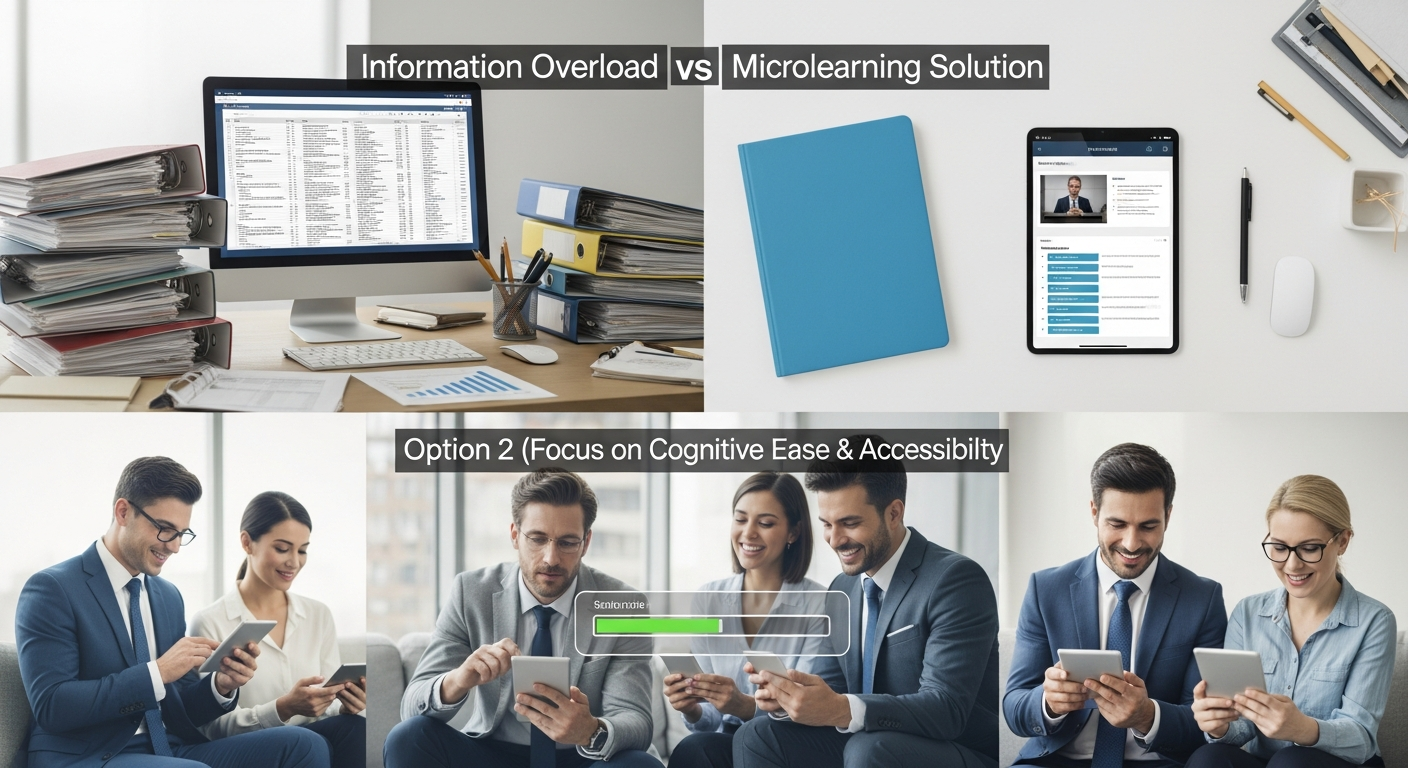
In the intricate world of financial services, compliance isn't just a requirement; it's the bedrock of trust, reputation, and sustained business operations. Yet, for learning and development leaders, the sheer volume, complexity, and constant evolution of regulations present an overwhelming challenge. From banking and insurance to retail finance and healthcare, every sector grapples with what can only be described as a compliance information tsunami. Employees are bombarded with lengthy manuals, annual hour-long training modules, and dense policy updates, often leading to disengagement, poor retention, and ultimately, increased risk. This is where the strategic power of microlearning emerges as a vital solution.
The Compliance Tsunami: A Persistent Challenge for L&D
For VPs, Directors, and Managers of L&D, ensuring compliance is a monumental task. The regulatory landscape is a dynamic beast, with new directives emerging from bodies like the SEC, FINRA, FCA, and countless others across diverse industries and geographies. Consider the following:
- Volume: Thousands of pages of legislation and internal policies.
- Complexity: Nuanced rules that require deep understanding and contextual application.
- Updates: Frequent amendments and new laws necessitate continuous learning.
- Retention: Long-form training often results in information overload and quick forgetting.
- Engagement: Traditional compliance training is notoriously dull, leading to passive participation.
In this environment, merely "checking the box" with annual training is no longer sufficient. Organizations need proactive, effective, and engaging learning strategies that truly embed compliance knowledge. How can organizations optimize their compliance training for maximum impact and retention?
The answer lies in moving beyond the conventional. By breaking down complex compliance topics into digestible, focused segments, organizations can enhance learning effectiveness, improve recall, and significantly reduce the cognitive burden on employees. This shift not only mitigates risk but also fosters a culture of continuous learning and compliance adherence.
Microlearning: A Strategic Imperative for Compliance
Microlearning, by its very nature, is perfectly suited to combat the information overload endemic to compliance training. It delivers short, focused bursts of information, typically lasting 1-10 minutes, designed to achieve a specific learning objective. Instead of a single, sprawling course on AML (Anti-Money Laundering), microlearning offers distinct modules on "Identifying Suspicious Transactions," "Understanding KYC (Know Your Customer) Procedures," or "Reporting Requirements."
Why Microlearning Works for Financial Compliance:
- Enhanced Retention: Shorter modules align with human attention spans, leading to better recall and application of knowledge.
- Improved Engagement: Microlearning content is often more dynamic, interactive, and less daunting than traditional courses.
- On-Demand Accessibility: Employees can access relevant information precisely when they need it – whether at their desk, on a mobile device, or during a client interaction.
- Rapid Updates: When regulations change, it's far easier and quicker to update a 5-minute module than to overhaul a 2-hour course.
- Personalized Learning Paths: Microlearning allows for tailored content delivery, addressing specific knowledge gaps or roles.
- Reduced Training Time: While the total number of modules might increase, the time spent per session decreases, making learning more manageable and less disruptive to workflow.
Leveraging Advanced Learning Platforms for Compliance Effectiveness
Implementing microlearning effectively for financial compliance requires a robust learning management system (LMS). A modern Microlearning LMS goes beyond simply hosting content; it provides the framework for delivering, tracking, and optimizing micro-content for maximum impact. A comprehensive learning content management system or learning management software ensures that your compliance training is not only digestible but also relevant and impactful.
How can a global financial institution ensure consistent compliance across diverse regulatory landscapes?
An enterprise learning management solution empowers L&D teams to deliver localized microlearning modules that address regional regulatory nuances. A cloud based learning management system ensures seamless access and consistent delivery across all geographical locations, while enabling central oversight and reporting. For instance, specific modules can be created for GDPR compliance in Europe, CCPA in California, or local banking regulations in Asia, all managed within a single, powerful lms learning management system.
Driving Engagement and Personalization
- Gamified LMS Features: Incorporating elements like points, badges, leaderboards, and interactive challenges can significantly boost engagement and motivate employees to complete compliance modules. This transforms what was once a chore into an engaging activity.
- Adaptive Learning Paths: Utilizing AI-driven algorithms, an advanced LMS can analyze an individual's performance and knowledge gaps, then automatically serve up targeted microlearning modules. This means employees only receive training on what they *don't* know, making learning highly efficient and personalized. What methodologies are most effective for truly individualizing compliance learning paths? Adaptive learning, coupled with frequent, low-stakes assessments, is paramount.
- AI Powered Authoring Tool: These tools can dramatically accelerate the creation of microlearning content. By leveraging AI, L&D teams can convert existing lengthy documents or webinars into bite-sized, interactive modules with quizzes and scenarios, significantly reducing development time and cost.
- Risk-focused Training: A sophisticated learning management system allows L&D professionals to identify high-risk compliance areas based on internal audits or industry trends. Microlearning can then be deployed strategically to address these specific risks, focusing resources where they are most needed and providing targeted interventions to mitigate potential issues.
A cutting-edge learning management solutions provider like MaxLearn LMS offers the features necessary to transform compliance training from a burden into a competitive advantage. Their robust LCMS capabilities enable efficient content creation, delivery, and management, ensuring your organization stays ahead of the regulatory curve.
Implementing Microlearning for Impact
For L&D leaders looking to transition to a microlearning approach for compliance, here are key steps:
- Content Audit: Identify existing compliance materials and break them down into potential microlearning topics.
- Define Learning Objectives: For each micro-module, clearly state what the learner should know or be able to do.
- Choose the Right Formats: Mix videos, infographics, short quizzes, interactive scenarios, and simulations.
- Integrate with Workflow: Make compliance learning easily accessible at the point of need.
- Measure and Iterate: Use LMS analytics to track completion rates, engagement, and knowledge retention. Continuously refine content based on feedback and performance data.
Conclusion
The era of information overload in financial services compliance is giving way to a more intelligent, agile approach to learning. By embracing microlearning, supported by advanced LMS technology, L&D leaders can transform compliance training from a dreaded obligation into an effective, engaging, and risk-mitigating process. This strategic shift not only protects the organization but also empowers employees with the clear, concise knowledge they need to navigate the complex regulatory landscape with confidence. Invest in microlearning; invest in compliance excellence.


Comments
Post a Comment