Driving Measurable Workplace Performance via Target-Learner Cognitive Profiling
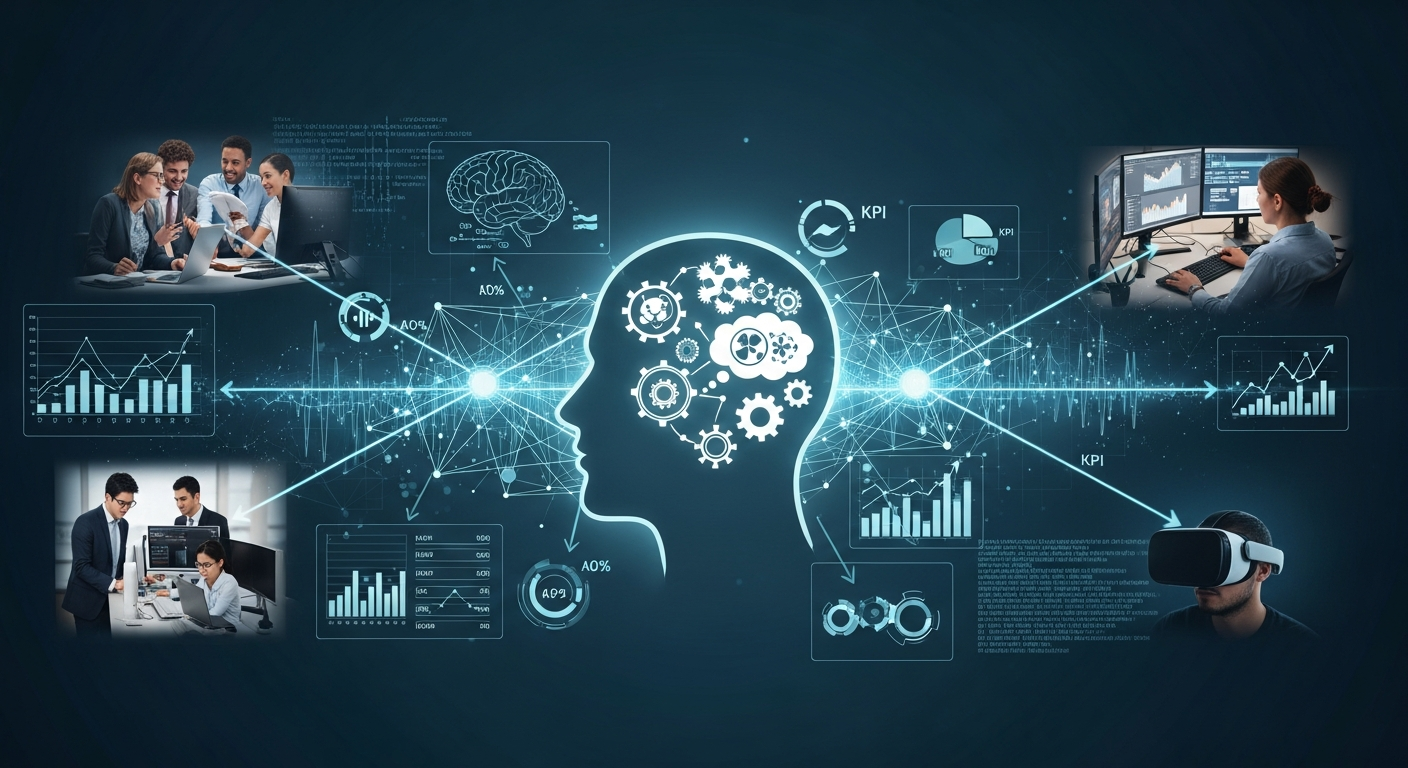
Driving Measurable Workplace Performance via Target-Learner Cognitive Profiling
In today's fast-paced corporate landscape, traditional one-size-fits-all training programs are increasingly falling short. Learning & Development (L&D) leaders – VPs, Directors, and Managers – are under immense pressure to demonstrate concrete ROI on their training investments. The challenge isn't just delivering content; it's ensuring that content resonates, engages, and ultimately drives measurable improvements in individual and organizational performance. This is where the innovative approach of target-learner cognitive profiling emerges as a game-changer.
Imagine a world where every employee receives training perfectly tailored to their unique learning style, existing knowledge base, motivational triggers, and processing preferences. This isn't a futuristic fantasy; it's the strategic advantage offered by cognitive profiling, transforming L&D from a cost center into a powerful engine for growth across diverse industries like Compliance, Sales, Banking, Finance, Insurance, Retail, Pharma, Health care, Hospitality, Oil and Gas, and Mining.
What is Target-Learner Cognitive Profiling?
Target-learner cognitive profiling is the systematic process of assessing and understanding the specific cognitive attributes, learning preferences, and psychological factors that influence how an individual best acquires, processes, and applies new information. It moves beyond simplistic demographics to delve into the 'how' and 'why' of effective learning for each person.
This comprehensive profiling involves understanding various dimensions:
- Learning Styles: Are they visual, auditory, kinesthetic, or reading/writing learners?
- Prior Knowledge & Experience: What do they already know, and where are the gaps?
- Motivational Triggers: What drives their engagement – intrinsic curiosity, career advancement, problem-solving, or competition?
- Cognitive Load Capacity: How much information can they process effectively at once?
- Attention Span & Focus: What content formats and durations best suit their concentration patterns?
- Problem-Solving Approaches: Do they prefer analytical, creative, or collaborative methods?
The Science Behind the Strategy
At its core, cognitive profiling leverages principles from cognitive psychology, educational neuroscience, and adult learning theories. It recognizes that the human brain is not a uniform processing unit. By understanding these individual differences, L&D professionals can design Adaptive Learning experiences that align with how learners naturally think and absorb information, leading to deeper understanding and more durable retention.
Benefits for Workplace Performance
Adopting a cognitive profiling approach yields a cascade of benefits that directly impact workplace performance and organizational success:
-
Enhanced Engagement and Retention
When training content is tailored to individual preferences, learners are more engaged. They perceive the training as relevant and valuable, leading to higher completion rates and better knowledge retention. This is where a Gamified LMS can further boost motivation by aligning with individual competitive or collaborative profiles.
-
Improved Knowledge Transfer and Application
By optimizing the learning experience, organizations ensure that knowledge isn't just acquired but effectively transferred from the learning environment to real-world job performance. This directly translates to improved productivity, better decision-making, and fewer errors.
-
Optimized Resource Allocation
Investing in training that misses the mark is a waste of valuable resources. Cognitive profiling helps L&D teams design efficient programs, allocate budget effectively, and choose the most impactful delivery methods, whether it's through a robust Microlearning LMS or a comprehensive enterprise learning management solution.
-
Measurable ROI on L&D Investments
Perhaps the most compelling benefit for senior leadership is the ability to tie training directly to tangible business outcomes. By understanding how different profiles respond to specific interventions, L&D can measure the impact on KPIs such as sales figures, compliance rates, customer satisfaction, and operational efficiency, proving the value of their learning management software.
Implementing Cognitive Profiling in Your L&D Strategy
Integrating cognitive profiling into your L&D framework requires a strategic, phased approach:
-
Data Collection and Analysis
Begin by gathering data through assessments, surveys, existing performance metrics, and even interviews. Modern learning management systems (LMS) can capture valuable insights into learner behavior. This data forms the foundation of your cognitive profiles.
-
Personalized Learning Path Design
Based on the profiles, design dynamic and personalized learning paths. This means offering different modules, resources, and activities to different learners for the same learning objective. An Adaptive Learning system is crucial here, adjusting content difficulty and pace based on learner interactions.
-
Content Customization
Tailor your learning content to match identified cognitive profiles. For visual learners, emphasize infographics and videos; for kinesthetic learners, incorporate simulations and interactive exercises. Tools like an AI Powered Authoring Tool can significantly streamline this customization process, rapidly generating varied content formats.
-
Leveraging the Right Technology
A sophisticated LMS or a dedicated Learning content management system (LCMS) is indispensable. Look for a cloud based learning management system that offers robust analytics, personalization capabilities, and support for diverse content types. A powerful learning management system like MaxLearn LMS can be the backbone of your personalized learning strategy.
Addressing Key Questions
How can technology really understand individual learning needs?
Advanced learning management solutions leverage sophisticated algorithms and machine learning to analyze learner interactions, performance data, and even demographic information (where relevant and ethical). An Adaptive Learning system, for example, observes how a learner engages with content – what they click on, how quickly they progress, what questions they get right or wrong – and dynamically adjusts the learning path, content delivery, and even the type of feedback provided in real-time. This is often powered by an AI Powered Authoring Tool that can generate contextually relevant content variations.
Is this approach suitable for diverse global teams?
Absolutely. In fact, cognitive profiling becomes even more critical for diverse global teams. Cultural backgrounds, educational systems, and even language proficiency can significantly influence learning preferences and cognitive processing. A robust cloud based learning management system designed for enterprise learning management can host multilingual content and offer a flexible framework to accommodate different cognitive profiles across various regions, ensuring equitable and effective training for everyone. A powerful lms learning management system like MaxLearn LMS is built to handle such complexity.
What role does risk play in personalizing training?
Risk is a critical factor in personalizing training, especially in highly regulated industries like Banking, Pharma, and Oil and Gas. Identifying individuals or teams with higher cognitive profiles for risk aversion or, conversely, a tendency towards risky behavior, allows L&D to tailor Risk-focused Training. For example, some might benefit from scenario-based simulations that highlight consequences, while others might respond better to data-driven analyses of past incidents. Understanding these profiles ensures that compliance and safety training is not just completed, but truly internalized, mitigating potential hazards and fostering a culture of responsibility.
Case Studies/Industry Applications
In Sales, cognitive profiling helps identify whether a salesperson responds better to competitive gamification via a Gamified LMS or a collaborative learning environment, impacting their sales process training. In Healthcare, it can tailor complex medical procedure training to optimize knowledge retention for diverse medical professionals. For Compliance training, a Microlearning LMS combined with cognitive profiling ensures that critical regulatory information is absorbed effectively, minimizing errors and legal exposure.
The Future of Performance-Driven L&D
The shift towards hyper-personalization in learning is no longer optional; it's a strategic imperative. As L&D leaders, embracing target-learner cognitive profiling allows you to move beyond generic training and create truly impactful, performance-driven learning experiences. This approach, supported by advanced learning management solutions and an intelligent LCMS, positions L&D as a strategic partner in achieving organizational goals.
By understanding the unique cognitive landscape of your workforce, you can unlock unparalleled potential, drive efficiency, and ensure that every learning dollar spent contributes directly to a more skilled, engaged, and high-performing workforce. The journey begins with understanding your learner – deeply and scientifically.


Comments
Post a Comment