Cross-Border Compliance: Standardizing Global Policies with Multilingual Micro-Lessons
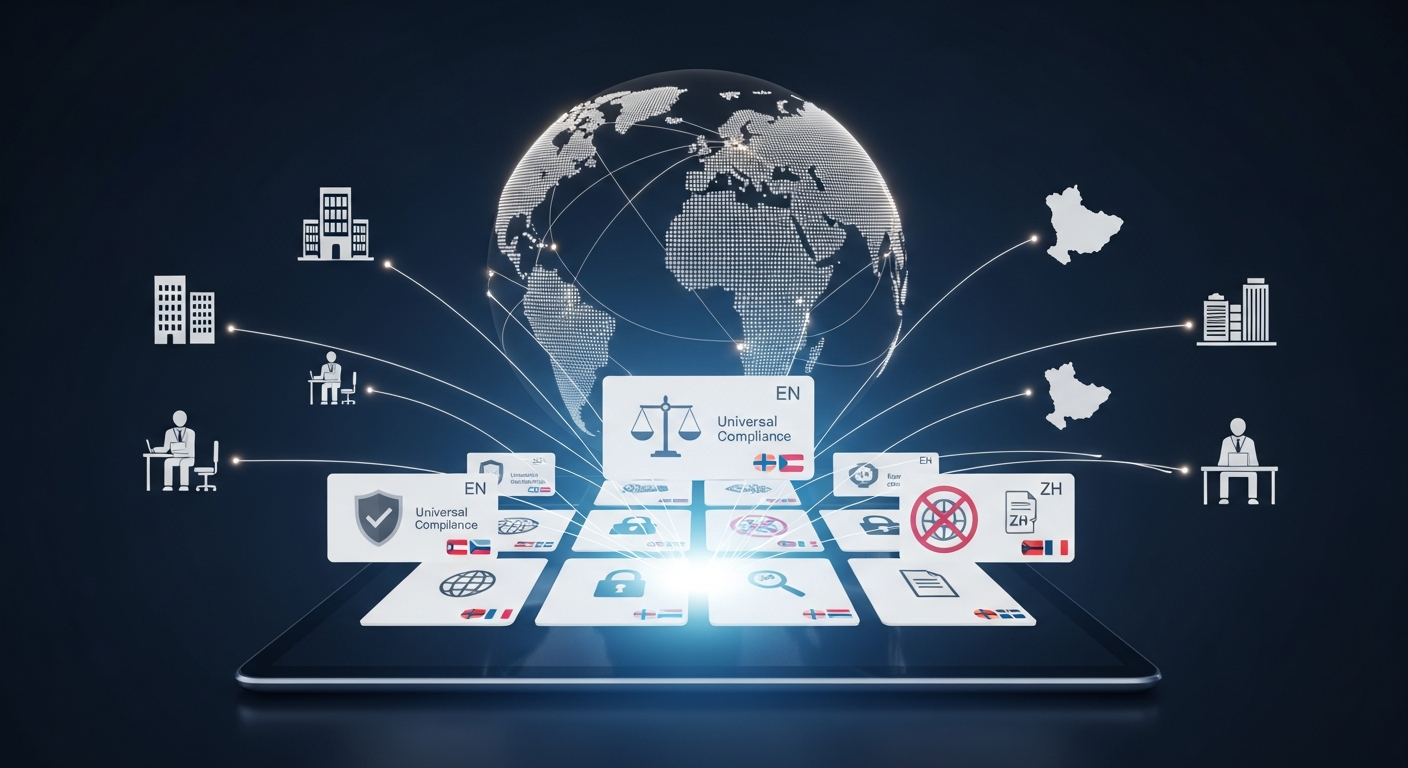
Cross-Border Compliance: Standardizing Global Policies with Multilingual Micro-Lessons
In today's interconnected global economy, businesses operate across a labyrinth of international regulations, diverse cultural norms, and varying legal frameworks. For Vice Presidents, Directors, and Senior Managers in Learning & Development (L&D), ensuring consistent, effective, and compliant employee training across multiple territories is not just a challenge—it's a mission-critical imperative. The stakes are incredibly high, ranging from hefty fines and legal repercussions to severe reputational damage. The solution lies in a strategic blend of standardized global policies delivered through engaging, multilingual micro-lessons, powered by advanced learning technologies.
Compliance training, once a static, often dreaded annual event, must evolve. Traditional methods struggle to keep pace with dynamic regulatory changes and the complexities of local adaptation. This article explores how modern eLearning strategies, particularly microlearning and artificial intelligence, are transforming cross-border compliance, making it more efficient, engaging, and globally consistent.
The Global Compliance Conundrum: A Multi-Faceted Challenge
Operating internationally means navigating a patchwork quilt of compliance requirements. Consider a multinational financial institution, a pharmaceutical giant, or a retail chain with operations spanning dozens of countries. Each region might have unique data privacy laws (like GDPR, CCPA), anti-bribery statutes (FCPA, UK Bribery Act), anti-money laundering (AML) directives, and industry-specific regulations. Non-compliance is not merely an inconvenience; it can lead to:
- Significant financial penalties and sanctions.
- Legal action and litigation.
- Loss of business licenses and operational restrictions.
- Irreparable damage to brand reputation and customer trust.
- Employee disengagement due to lack of clarity or inadequate training.
The inherent difficulty is compounded by the need to communicate these complex policies effectively to a diverse workforce, each with different linguistic backgrounds, learning styles, and regional contexts. A robust learning management system (LMS) is essential to manage this complexity.
Why Micro-Lessons are a Game-Changer for Global Compliance
Enter microlearning—the delivery of content in short, bite-sized modules, typically 3-5 minutes long, focused on a single learning objective. For cross-border compliance, micro-lessons offer unparalleled advantages:
- Enhanced Retention: Shorter modules prevent cognitive overload, leading to better information recall and application.
- Improved Engagement: Employees are more likely to complete and absorb short, focused content, especially when delivered via a Gamified LMS.
- Flexibility and Accessibility: Training can be accessed on demand, anytime, anywhere, fitting into busy schedules and accommodating different time zones. This is crucial for a global workforce.
- Rapid Updates: When regulations change, only the relevant micro-lesson needs to be updated, not an entire lengthy course. This ensures training is always current.
- Targeted Learning: Specific modules can be assigned based on an employee's role, location, and the specific compliance risks they face. This allows for highly Adaptive Learning paths.
An effective Microlearning LMS serves as the backbone for deploying these targeted, impactful lessons globally.
The Power of Multilingual Delivery
Standardizing global policies isn't just about content; it's about context. A policy written in English for a US audience might not resonate with an employee in Japan or Brazil without proper localization and translation. Multilingual micro-lessons ensure:
- Clarity and Understanding: Employees learn in their native language, reducing ambiguity and ensuring accurate comprehension of critical compliance rules.
- Cultural Relevance: Beyond translation, content can be adapted to include culturally appropriate examples and scenarios, making policies more relatable and actionable.
- Inclusivity: Providing training in local languages demonstrates respect for diversity and fosters a more inclusive work environment, boosting morale and engagement.
- Legal Defensibility: Documented proof of training in local languages strengthens an organization's defense against non-compliance claims, showcasing due diligence.
AI's Role in Elevating Cross-Border Compliance Training
Artificial intelligence is not just a buzzword; it's a transformative force in L&D, especially for complex tasks like global compliance training. AI-driven platforms bring unparalleled efficiency and personalization to the process.
Intelligent Systems and Personalized Learning Journeys
Question: How can intelligent systems personalize compliance training for employees across different regions and roles?
Answer: Intelligent learning platforms leverage data to analyze an individual's role, location, prior knowledge, and the specific regulatory landscape they operate within. This allows for the dynamic creation of customized learning journeys, ensuring each employee receives precisely the compliance modules most relevant to their operational context and risk exposure. This dynamic customization significantly enhances engagement and understanding compared to a one-size-fits-all approach.
Advanced Analytical Tools for Regulatory Intelligence
Question: How do advanced analytical tools help keep compliance content up-to-date with ever-evolving international laws?
Answer: Sophisticated analytical tools continuously monitor global regulatory changes and legislative updates. They can identify new requirements or amendments relevant to a company's operations in specific countries. This intelligence is then used to flag affected training modules, prompting content developers or automatically updating relevant sections, ensuring that employees are always trained on the most current compliance standards. This proactive approach minimizes legal risks and keeps the organization agile.
Smart Content Generation Systems for Localization
Question: What capabilities do smart content generation systems offer for localizing and translating compliance materials efficiently?
Answer: Smart content generation systems utilize machine learning and natural language processing to automate significant portions of the localization and translation process. They can adapt micro-lessons to different languages while preserving cultural nuances and legal terminology. Beyond simple translation, these systems can suggest localized examples, case studies, and scenarios, making the content more resonant and understandable for employees in various geographical locations, drastically reducing the time and cost associated with manual content adaptation. This is often supported by an AI Powered Authoring Tool.
Key Benefits of an Integrated Approach
Adopting multilingual micro-lessons within an AI-enhanced enterprise learning management system offers a multitude of benefits for L&D leaders:
- Consistent Standards: Ensures every employee, regardless of location, receives consistent, high-quality, and standardized compliance training tailored to their specific needs.
- Reduced Risk: Proactive and relevant training significantly lowers the risk of non-compliance, protecting the organization from legal and financial repercussions. This facilitates effective Risk-focused Training.
- Operational Efficiency: Automating content updates, localization, and personalized learning paths frees up L&D teams to focus on strategy rather than manual administration.
- Cost Savings: Reduces reliance on costly, in-person training sessions and manual translation efforts.
- Enhanced Employee Engagement: Relevant, bite-sized, and culturally sensitive content leads to higher completion rates and better knowledge application.
- Scalability: Easily deploy training to thousands of employees across new regions as the business expands.
Choosing the Right Learning Solution
For L&D professionals seeking to master cross-border compliance, selecting the right learning content management system (LCMS) or learning management software is paramount. Look for a robust LMS that offers:
- Comprehensive multilingual support, including translation management.
- Robust microlearning capabilities and content creation tools.
- AI integration for personalized learning, content recommendations, and automated updates.
- Advanced reporting and analytics to track compliance rates and identify knowledge gaps globally.
- A user-friendly interface for both administrators and learners.
- Cloud-based infrastructure for global accessibility, such as a cloud based learning management system.
A modern lms learning management system, such as MaxLearn LMS, provides these learning management solutions, enabling organizations to streamline their global compliance efforts.
Conclusion
Cross-border compliance is a complex, ever-evolving landscape that demands a sophisticated and adaptable approach to employee training. By leveraging the power of multilingual micro-lessons and intelligent AI capabilities, L&D leaders can move beyond traditional, ineffective methods. This integrated strategy not only standardizes global policies and mitigates risk but also fosters a culture of continuous learning and compliance across the entire organization. Investing in the right learning technology is no longer optional; it is the strategic imperative for thriving in a globally regulated world.


Comments
Post a Comment