Boosting Workforce Agile Capability with Personalized, Multi-Channel Microlearning
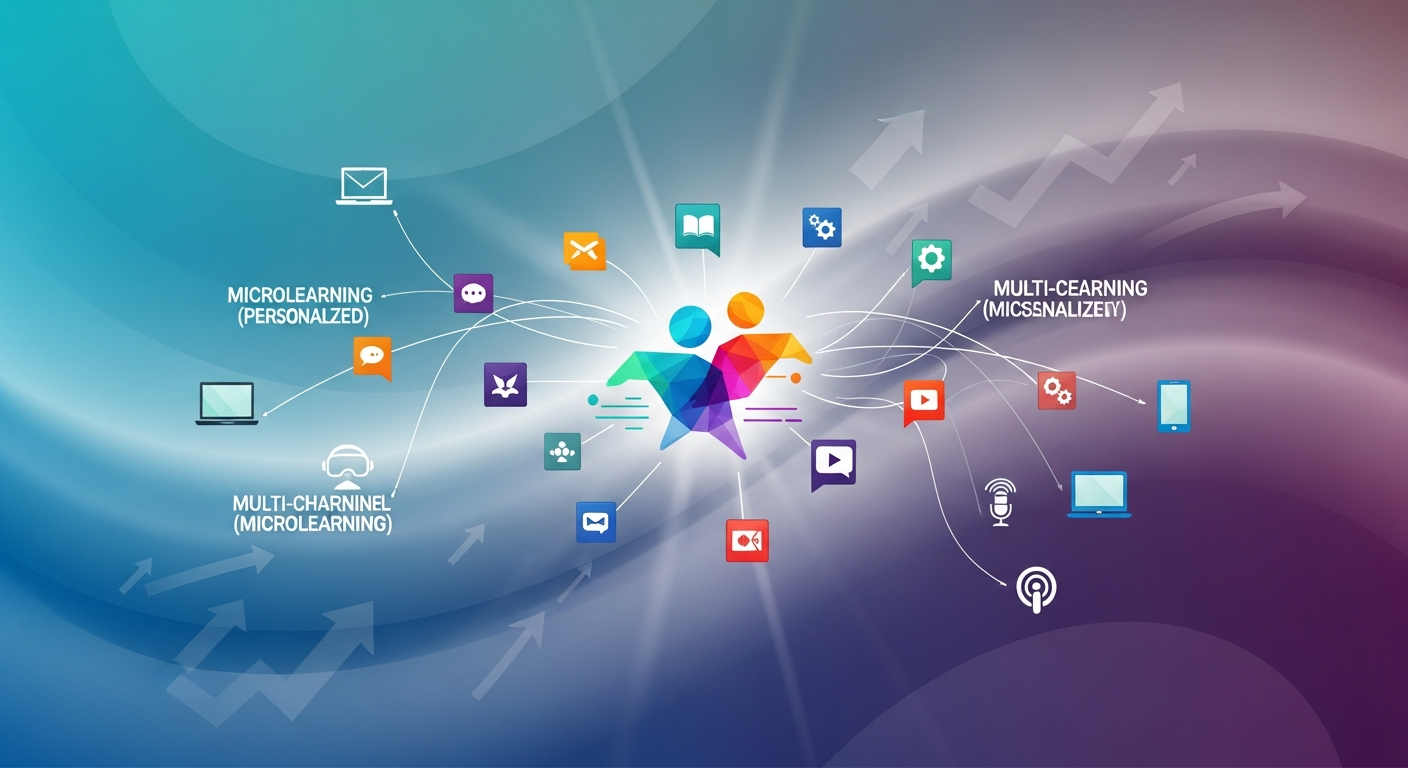
Boosting Workforce Agile Capability with Personalized, Multi-Channel Microlearning
In today's rapidly evolving business landscape, the demand for an agile workforce is no longer a luxury but a fundamental necessity. From the stringent regulatory environments of Banking and Finance to the fast-paced innovation cycles of Pharma and Tech, organizations across all sectors – including Compliance, Sales, Insurance, Retail, Health Care, Hospitality, Oil and Gas, and Mining – are grappling with unprecedented change. The ability to adapt quickly, learn new skills, and pivot strategies is paramount for sustained success. For L&D Vice Presidents, Directors, and Senior Managers, the challenge lies in cultivating this agility effectively and at scale.
Traditional training models often fall short in delivering the continuous, on-demand learning required to foster true organizational agility. Enter personalized, multi-channel microlearning – a dynamic approach that promises to revolutionize how your workforce acquires, retains, and applies critical knowledge and skills.
The Agile Imperative: Why L&D Must Evolve
The modern enterprise operates in a VUCA world (Volatile, Uncertain, Complex, Ambiguous). To thrive, employees need to be:
- Responsive: Quick to react to market shifts, customer demands, and competitive pressures.
- Adaptive: Able to embrace new technologies, processes, and business models.
- Innovative: Empowered to develop creative solutions and drive continuous improvement.
- Resilient: Capable of navigating challenges and recovering quickly from setbacks.
Achieving this level of agility requires a learning strategy that is equally dynamic and accessible. The traditional classroom, lengthy e-learning modules, or annual training events simply cannot keep pace with the speed of change. A modern Microlearning LMS becomes indispensable for this transformation.
Challenges with Traditional Learning Approaches
While foundational training remains vital, conventional methods often struggle with:
- Information Overload: Long courses lead to decreased retention.
- Lack of Relevance: Generic content fails to address individual or role-specific needs.
- Time Constraints: Employees, especially in high-pressure environments like Sales or Health Care, have limited time for extensive training.
- Disengagement: Monotonous delivery methods lead to boredom and poor participation.
- Slow Deployment: Updating and distributing new content can be a cumbersome process.
These limitations hinder the development of an agile workforce, leaving skill gaps unaddressed and slowing down organizational responsiveness.
The Power of Personalized, Multi-Channel Microlearning
Microlearning breaks down complex topics into bite-sized, easily digestible modules, typically 2-10 minutes in length. When combined with personalization and multi-channel delivery, its impact on workforce agility is profound.
What is Microlearning?
Microlearning focuses on single learning objectives per module, making it ideal for reinforcing specific skills, updating compliance knowledge, or introducing new product features. It’s perfect for on-the-job training and just-in-time support.
The Role of Personalization
Personalization tailors learning paths to individual needs, roles, and existing skill sets. Instead of a one-size-fits-all approach, employees receive content directly relevant to their development goals, whether it’s specialized knowledge for a financial analyst or new product training for a retail associate. This can be greatly enhanced by a sophisticated Gamified LMS which tracks progress and suggests next steps.
Multi-Channel Delivery for Ubiquitous Access
Multi-channel delivery ensures learning is accessible anytime, anywhere, and on any device. Whether it's a quick video on a smartphone during a commute, an interactive quiz on a tablet between tasks, or a concise article on a desktop, employees can consume content through their preferred medium and at their moment of need. This flexibility is crucial for industries with distributed workforces like Oil and Gas or Hospitality.
Key Benefits for Boosting Agile Capability
Implementing personalized, multi-channel microlearning with a robust Microlearning LMS offers several strategic advantages:
- Rapid Skill Acquisition and Deployment: Employees can quickly learn and apply new skills, significantly reducing time-to-competence for critical tasks or new initiatives. This is particularly beneficial for Sales teams needing to master new offerings rapidly.
- Enhanced Engagement and Retention: Short, engaging modules delivered in a variety of formats (video, quizzes, infographics, simulations) keep learners motivated. Gamification elements within a Gamified LMS further boost participation and knowledge retention.
- Contextual Relevance: Learning is delivered precisely when and where it's needed, allowing employees to immediately apply new knowledge to real-world scenarios. Imagine a healthcare professional accessing a brief protocol reminder right before a procedure.
- Fostering a Culture of Continuous Learning: By making learning easy, accessible, and integrated into daily workflows, organizations cultivate a mindset of ongoing development, a cornerstone of agility.
- Scalability and Flexibility: A centralized Adaptive Learning platform can deliver personalized content to thousands of employees across diverse global locations and roles, adapting to their progress and needs.
- Measurable Impact: Advanced analytics within a modern Microlearning LMS can track completion rates, comprehension levels, and even correlate learning activities with performance metrics, demonstrating clear ROI.
Implementing a Robust Learning Solution
To fully leverage the power of personalized, multi-channel microlearning, a sophisticated learning management system (LMS) is essential. Look for an LMS that specializes in microlearning, offering features such as:
- Intuitive content creation and curation tools. An AI Powered Authoring Tool can dramatically speed up the creation of engaging microlearning modules.
- Robust analytics to track learner progress and identify skill gaps.
- Mobile-first design for seamless multi-channel delivery.
- Integration capabilities with other enterprise systems.
- Support for diverse content formats, from video to interactive simulations.
- Adaptive Learning paths that adjust based on learner performance and preferences.
This kind of Microlearning LMS or MaxLearn LMS, is more than just a repository; it's a dynamic ecosystem for continuous skill development. A comprehensive learning content management system or LCMS, provides the backbone for managing, updating, and distributing this targeted content effectively. For industries like compliance, the ability to rapidly disseminate Risk-focused Training through a cloud based learning management system is invaluable.
Addressing Industry-Specific Needs
The versatility of personalized, multi-channel microlearning makes it suitable for every sector:
- Compliance & Finance: Rapid dissemination of regulatory updates and Risk-focused Training, ensuring all employees are up-to-date with evolving requirements.
- Sales: Just-in-time product knowledge, objection handling techniques, and competitive intelligence delivered directly to sales professionals on the go.
- Healthcare: Quick refreshers on medical procedures, new drug information, or patient care protocols.
- Retail & Hospitality: Training on new product lines, customer service excellence, and seasonal promotions for a transient workforce.
- Oil & Gas / Mining: Safety protocols, equipment operation procedures, and emergency response training delivered to remote or field-based teams.
An enterprise learning management solution built on these principles ensures that learning is an enabler, not a bottleneck, to organizational agility.
Leveraging Intelligent Systems for Enhanced L&D
As L&D leaders consider modernizing their strategies, questions often arise about how intelligent systems can further optimize learning and development initiatives.
How can intelligent systems help L&D leaders identify the most relevant learning content for specific employee needs?
Intelligent systems analyze vast amounts of data, including employee roles, performance metrics, career aspirations, and existing skill inventories, to create highly personalized learning paths. By understanding individual proficiencies and organizational skill gaps, these systems can recommend precise microlearning modules. They can dynamically suggest content that addresses immediate performance needs or aligns with long-term professional development, ensuring every learning moment is relevant and impactful. This capability is central to an Adaptive Learning approach.
What are optimal strategies for generating diverse and engaging microlearning content quickly across various departments?
Utilizing generative capabilities, L&D teams can rapidly produce a wide array of microlearning formats tailored for different departments. For instance, an intelligent content creation platform can transform lengthy policy documents into concise interactive quizzes for compliance, create scenario-based simulations for sales training, or generate short explainer videos for new software features. These tools can adapt content for multi-channel delivery, ensuring it's engaging whether viewed on a desktop or a mobile device, dramatically increasing the speed and efficiency of content development. An AI Powered Authoring Tool is key here.
How can we use intelligent systems to measure the impact of microlearning on workforce agility and continuously improve our L&D programs?
Intelligent systems provide advanced analytics that go beyond completion rates. They can correlate microlearning engagement with key performance indicators (KPIs) such as sales figures, compliance adherence, error rates, and project delivery times. By continuously monitoring these metrics, L&D leaders gain insights into which learning interventions are most effective in boosting agility. The system can then recommend adjustments to content, delivery methods, or personalization strategies, creating a feedback loop for ongoing program optimization. This allows for proactive identification of emerging skill needs and the ability to pivot training resources swiftly, ensuring the learning management software is always aligned with business goals.
Conclusion
Boosting workforce agile capability demands a departure from outdated training paradigms. Personalized, multi-channel microlearning, powered by an advanced Microlearning LMS, offers a scalable, engaging, and highly effective solution. By delivering precise, contextual, and on-demand learning, organizations can empower their employees to adapt faster, innovate continuously, and drive sustainable growth across all industries. Investing in this modern approach to learning management solutions is not just about training; it's about building a future-ready, agile workforce capable of navigating any challenge.


Comments
Post a Comment