Anti-Money Laundering (AML) Compliance: Making Complex Rules Digestible
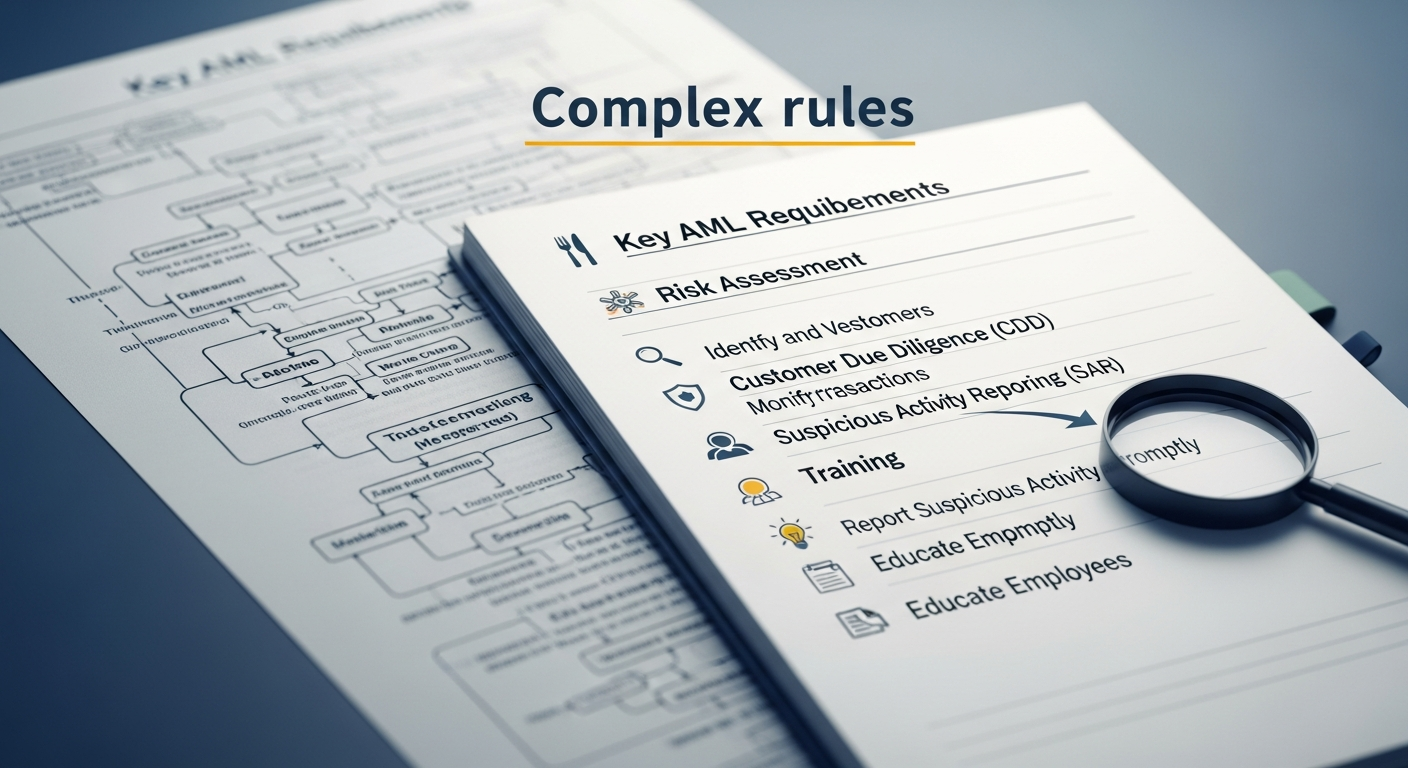
Anti-Money Laundering (AML) Compliance: Making Complex Rules Digestible
In today's interconnected global economy, the fight against financial crime has never been more critical. Anti-Money Laundering (AML) compliance stands as a formidable line of defense, protecting organizations, national economies, and global stability from illicit financial activities. However, for many Vice Presidents, Directors, Senior Managers, and Managers of Learning and Development across vital sectors like Banking, Finance, Insurance, Retail, Pharma, Health care, Hospitality, Oil and Gas, and Mining, the sheer complexity and ever-evolving nature of AML regulations present a significant challenge. How do you transform dense, technical, and often intimidating compliance rules into engaging, understandable, and actionable training for your workforce?
This article delves into strategies for demystifying AML compliance training, making it digestible, effective, and capable of fostering a strong culture of integrity. We'll explore how modern eLearning methodologies, especially those powered by advanced learning platforms, can turn regulatory burdens into opportunities for enhanced operational resilience and ethical practice.
The Imperative of Robust AML Compliance
The stakes in AML compliance are extraordinarily high. Non-compliance can lead to severe penalties, including hefty fines, reputational damage, operational restrictions, and even criminal charges. Beyond the financial and legal ramifications, lax AML controls can inadvertently facilitate terrorism financing, drug trafficking, human exploitation, and other grave crimes.
Every industry, from the intricate transactions within Banking and Finance to supply chain transparency in Pharma and Retail, the management of large capital in Oil and Gas and Mining, and patient data security in Healthcare, faces unique AML risks. Equipping employees with the knowledge and skills to identify suspicious activities and adhere to protocols is not just a regulatory obligation; it’s a fundamental business imperative. It safeguards the organization's integrity, fosters customer trust, and contributes to a safer global financial ecosystem.
Navigating the Labyrinth of AML Complexity
What makes AML compliance so challenging to teach and learn? Several factors contribute to its inherent complexity:
- Global and Jurisdictional Nuances: AML regulations vary significantly across countries and regions, often requiring organizations to comply with multiple, sometimes conflicting, sets of rules.
- Constant Evolution: Regulators frequently update guidelines, introduce new directives, and respond to emerging financial crime typologies, demanding continuous learning and adaptation.
- Technical Jargon: The language of AML is often dense, filled with legal and financial terminology that can be overwhelming for non-specialists.
- Volume of Information: The sheer quantity of policies, procedures, and case studies can be daunting to process and retain.
- Subjectivity and Nuance: Identifying "suspicious activity" often requires critical thinking, pattern recognition, and judgment, not just rote memorization of rules.
Given these challenges, traditional, one-size-fits-all training methods often fall short, leading to disengagement, poor retention, and ultimately, compliance gaps.
Strategies for Digestible AML Compliance Training
The key to effective AML training lies in transforming complex information into easily consumable, memorable, and actionable learning experiences. Here's how:
Microlearning: Breaking Down the Beast
Instead of lengthy, overwhelming modules, break down AML topics into concise, focused learning nuggets. Microlearning LMS platforms are ideal for this, delivering bite-sized content that can be consumed in minutes. This approach aligns with modern attention spans, facilitates retention, and allows learners to access specific information precisely when they need it.
Gamification: Engaging the Learner
Transforming compliance training from a chore into an engaging experience is crucial. Incorporating elements like points, badges, leaderboards, and interactive simulations can significantly boost motivation and retention. A Gamified LMS injects a sense of challenge and reward, making learners more likely to internalize complex rules and apply them in real-world scenarios.
Adaptive Learning Paths: Personalized Compliance Journeys
Not all learners require the same level or type of training. Adaptive Learning technologies assess a learner's existing knowledge and performance, then tailor the learning path to address specific gaps and reinforce weaker areas. This personalized approach ensures efficiency and maximizes the impact of training, focusing on what each individual truly needs.
Practical, Scenario-Based Training
Theoretical knowledge alone is insufficient. AML training must include realistic scenarios and case studies that mirror potential situations employees might encounter. This hands-on approach helps learners develop critical thinking skills, enabling them to identify red flags and apply compliance procedures effectively in their daily roles.
Leveraging an Advanced Learning Platform
To implement these strategies effectively, organizations need a robust and intelligent learning solution. A modern LMS is not just a content repository; it's an ecosystem for continuous learning. Platforms that function as a comprehensive Learning content management system and learning management software provide the necessary tools for creating, delivering, and tracking high-impact AML training. Investing in cutting-edge learning management solutions means choosing an advanced learning management system that simplifies the entire training lifecycle. For organizations seeking a true lms learning management system, a cloud based learning management system offers unparalleled scalability and accessibility, making it an ideal choice for enterprise learning management across diverse teams and locations. A true LCMS integrates content creation with learning delivery, streamlining the entire process. Consider a solution like MaxLearn LMS for comprehensive capabilities.
Intelligent Systems: Revolutionizing AML Compliance Training
The integration of artificial intelligence is transforming how organizations approach compliance training, offering unprecedented opportunities to simplify and optimize learning.
How can intelligent systems help tailor learning experiences for compliance professionals?
Intelligent systems can analyze vast amounts of data, including learner performance, historical compliance incidents, and even individual job roles, to dynamically personalize content delivery. For instance, an AI-powered platform can identify specific knowledge gaps or areas of struggle for an individual and automatically recommend targeted micro-modules or supplemental resources. This ensures that training is highly relevant and impactful, directly addressing individual needs without requiring manual intervention. An AI Powered Authoring Tool can even assist in the rapid creation and adaptation of such personalized content.
In a world of constantly changing regulations, how can intelligent platforms keep training current and relevant across different regions?
Advanced intelligent platforms can continuously monitor global regulatory changes and legislative updates in real-time. By leveraging natural language processing and machine learning, these systems can flag new directives, identify affected policies within an organization, and automatically suggest necessary updates to training content. This proactive approach ensures that compliance training is always up-to-date and tailored to specific geographical requirements, minimizing the risk of non-compliance due to outdated information.
How can advanced analytics from intelligent tools pinpoint specific areas where an individual learner needs more focus in AML training?
Intelligent analytics delve deep into a learner's interactions, assessment results, and engagement patterns within the learning platform. By tracking performance across various topics and scenarios, these tools can generate detailed profiles of an individual's strengths and weaknesses. This allows for precise identification of areas where a learner might be at higher risk of misunderstanding or non-compliance. Based on these insights, the system can automatically assign additional training, provide targeted feedback, or recommend specific Risk-focused Training, ensuring every employee achieves a robust understanding of critical AML concepts.
Conclusion
AML compliance is a non-negotiable aspect of modern business, yet its inherent complexity can be a significant barrier to effective training. By embracing modern eLearning strategies like microlearning, gamification, and adaptive learning, supported by intelligent platforms, L&D leaders can transform this challenge into an opportunity. Investing in solutions that simplify, engage, and personalize the learning experience not only ensures regulatory adherence but also cultivates a well-informed, vigilant workforce that actively contributes to the organization's integrity and long-term success. Making complex rules digestible is not just about meeting obligations; it's about empowering your people to be the first line of defense against financial crime.


Comments
Post a Comment