7 Signs Your Employee Compliance Program Is Failing (And How to Fix It)
```html
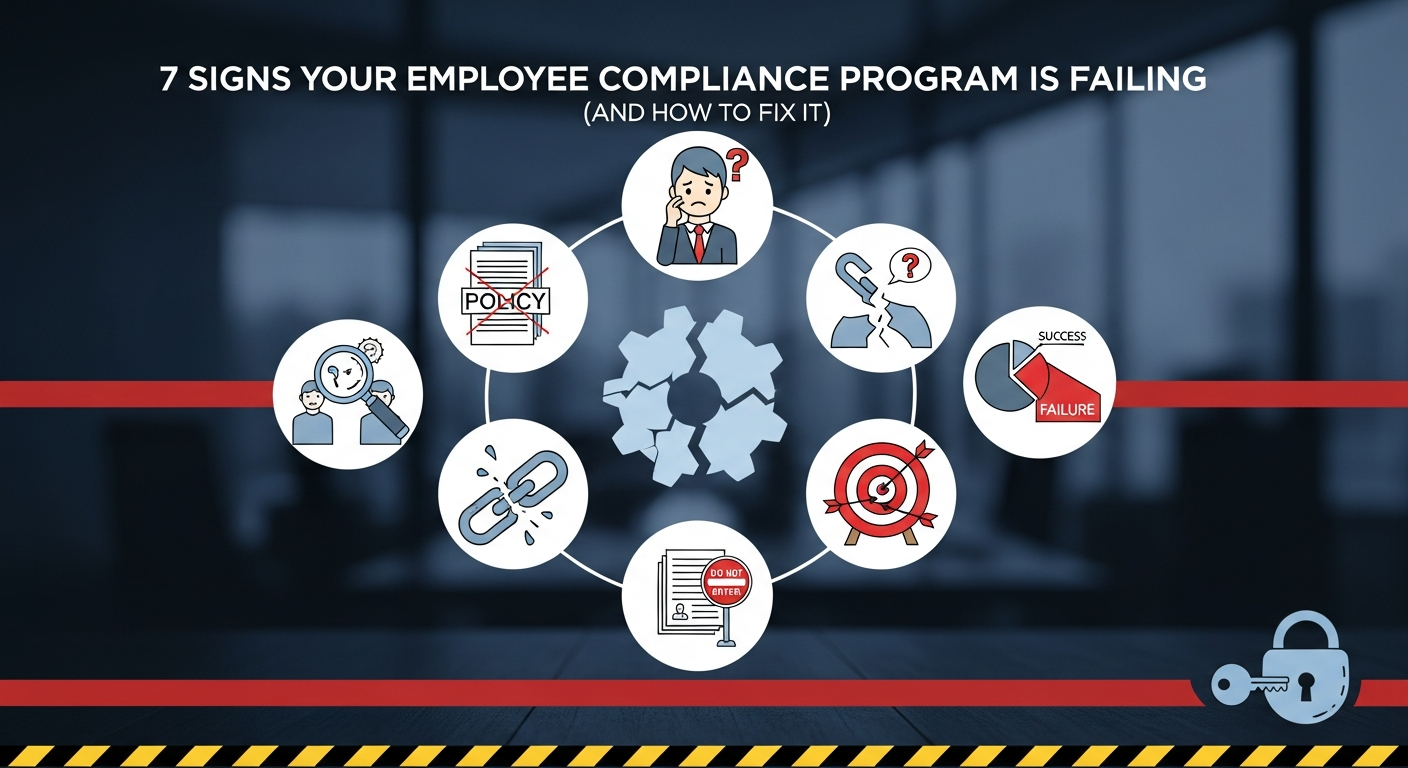
7 Signs Your Employee Compliance Program Is Failing (And How to Fix It)
In today’s complex business landscape, a robust employee compliance program isn't just a regulatory checkbox; it’s a strategic imperative. For Vice Presidents, Directors, and Senior Managers in L&D across industries like Banking, Pharma, Retail, and Healthcare, the success of your compliance training directly impacts your organization’s reputation, financial stability, and operational integrity. A failing program can lead to hefty fines, legal battles, reputational damage, and a breakdown of trust – both internally and externally. But how do you know if your meticulously planned initiatives are actually hitting the mark, or subtly crumbling beneath the surface? Recognizing the red flags early is crucial to pivot from reactive damage control to proactive, preventative success.
This article will delve into seven critical signs that indicate your employee compliance program might be falling short, and more importantly, provide actionable strategies and modern Microlearning LMS solutions to get it back on track.
The Stakes Are High: Why a Failing Compliance Program Matters
Beyond the immediate financial penalties, a dysfunctional compliance program can have far-reaching consequences. It erodes employee morale, fosters a culture of apathy towards rules, and can lead to a significant loss of market trust. For L&D leaders, this translates to wasted training budgets, ineffective initiatives, and a constant uphill battle to justify the value of their programs. Proactive identification and resolution of these issues are paramount, transforming compliance from a burden into a competitive advantage.
Unmasking the Red Flags: 7 Signs Your Compliance Program Needs a Revamp
1. Low Engagement and Completion Rates
If your employees dread compliance training, rush through modules, or consistently fail to complete required courses, it's a clear sign of disengagement. A "check-the-box" mentality means information isn't being absorbed or applied, rendering the training ineffective. This often stems from dry, lengthy content that doesn't resonate with modern learners.
How to Fix It: Revitalize your content with interactive, bite-sized modules delivered via a Microlearning LMS. Incorporate elements of a Gamified LMS to make learning fun and rewarding, encouraging healthy competition and intrinsic motivation. Focus on practical scenarios relevant to their roles, making the content immediately applicable.
2. Frequent Compliance Incidents or Breaches
Perhaps the most alarming sign is a recurring pattern of policy violations, data breaches, or regulatory non-compliance. These incidents suggest that employees either don't understand the rules, don't remember them, or don't perceive the personal relevance and consequences of non-compliance. This points to a gap between training delivery and practical application.
How to Fix It: Shift towards Risk-focused Training. Identify high-risk areas within your organization and design specific, scenario-based training that addresses these vulnerabilities directly. Implement regular refreshers and on-the-job aids to reinforce critical knowledge continuously. A robust learning management system can track these incidents and tailor interventions.
3. Outdated or Irrelevant Training Content
Compliance regulations are ever-evolving. If your training materials haven't been updated to reflect the latest laws, internal policies, or industry best practices, your program is failing by default. Stale content loses credibility and fails to prepare employees for current challenges, leaving your organization exposed.
How to Fix It: Adopt agile content development processes. Leverage an AI Powered Authoring Tool to rapidly create, update, and deploy engaging content. Regularly review and refresh modules, integrating real-world case studies and recent regulatory changes. A flexible learning content management system is key here.
4. Lack of Measurable Impact and Data
If you can't quantify the effectiveness of your compliance program, how do you know it's working? A lack of data on training effectiveness, knowledge retention, or behavioral change is a major red flag. Without metrics, justifying budget, proving ROI, or identifying areas for improvement becomes impossible.
How to Fix It: Implement a sophisticated learning management software with robust analytics. Track key performance indicators (KPIs) such as completion rates, assessment scores, time to proficiency, and post-training behavioral changes. Correlate training data with incident reports to demonstrate tangible impact. An effective lms learning management system provides these critical insights.
5. Employee Resistance and Negative Feedback
Are you constantly hearing complaints about compliance training being a waste of time, too long, or irrelevant? Negative feedback, active resistance, or even cynicism from employees indicates a fundamental disconnect. This isn't just about training; it's about the perceived value and relevance within their daily work.
How to Fix It: Involve employees in the design process through feedback loops and surveys. Emphasize the "why" behind compliance, linking it to their personal responsibilities and the company's overall success. Use engaging formats, shorter modules, and practical examples to make training more appealing. A user-friendly learning management solution can significantly improve the learner experience.
6. Inefficient Program Management and Administration
If your L&D team is bogged down by manual tracking, scheduling, reporting, and chasing completions, your program's efficiency is suffering. This administrative burden detracts from strategic planning and content improvement, making the entire process cumbersome and prone to errors.
How to Fix It: Invest in an integrated enterprise learning management system. A comprehensive LCMS or cloud based learning management system can automate administrative tasks, streamline course assignments, track progress, and generate reports effortlessly. This frees up your team to focus on pedagogical quality and strategic compliance goals.
7. A One-Size-Fits-All Training Approach
Treating all employees identically, regardless of their role, department, prior knowledge, or risk exposure, is a recipe for inefficiency. Generic training often contains irrelevant information for some, while missing critical details for others, leading to wasted time and knowledge gaps.
How to Fix It: Implement Adaptive Learning paths. Utilize a learning management system to deliver personalized content based on roles, pre-assessments, and performance data. This ensures that each employee receives relevant, targeted training, maximizing efficiency and effectiveness.
Modern Answers for L&D Leaders: Leveraging AI and Smart Solutions
Optimizing Operational Efficiency Within Compliance Training
Seeking to optimize operational efficiency within compliance training? Modern learning management solutions are designed to automate numerous processes, from course assignment and tracking to reminder notifications and certification management. An advanced LMS significantly reduces the administrative burden on L&D teams, freeing them to focus on content quality and strategic initiatives rather than manual paperwork. By streamlining these operations, organizations can ensure faster deployment of critical training, reduce costs, and improve resource allocation across the board.
Managing Compliance Training Across Diverse Global Teams
Considering how best to manage compliance training across diverse global teams? A sophisticated learning management system offers robust localization features, including multi-language support, regional content adaptation, and compliance with varying international regulations. Deploying training through a cloud based learning management system ensures accessibility for employees worldwide, regardless of their geographical location. This global reach ensures consistency in core messaging while allowing for the necessary flexibility to address local nuances, creating a truly global yet locally relevant compliance culture.
Tailoring Training to Individual Employee Needs and Learning Styles
Wondering how to tailor training to individual employee needs and learning styles? The key lies in personalization. By leveraging data from pre-assessments, job roles, and past performance, an Adaptive Learning approach within an lms learning management system can create unique learning paths for each employee. This targeted delivery ensures that individuals receive content that is most relevant to their specific role, addresses their unique knowledge gaps, and aligns with their preferred learning style, maximizing engagement and knowledge retention. This level of customization makes training more effective and less of a chore.
The Path to Compliance Excellence Starts Now
A failing employee compliance program isn't just a problem; it's an opportunity for transformation. By recognizing these seven signs and implementing modern, technology-driven solutions, L&D leaders can shift their compliance initiatives from reactive necessities to proactive drivers of organizational success. Embracing an advanced learning management system, such as MaxLearn LMS, with features like microlearning, gamification, adaptive paths, and AI-powered authoring, can revolutionize your compliance training. It's time to build a program that not only meets regulatory requirements but also fosters a culture of integrity, knowledge, and operational excellence across your enterprise.
```


Comments
Post a Comment