Why Choose Between Microlearning and a Traditional LMS When You Can Have Both?
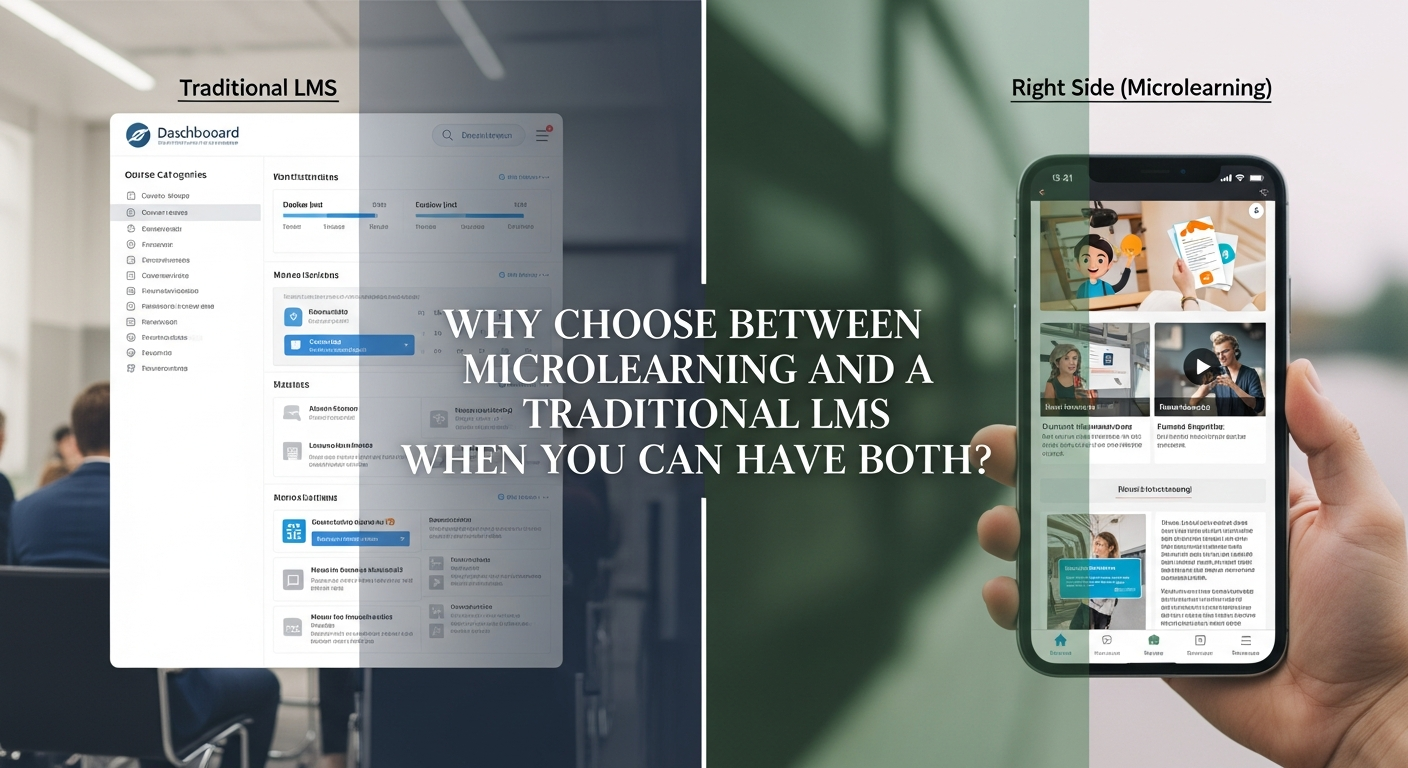
Why Choose Between Microlearning and a Traditional LMS When You Can Have Both?
In the dynamic world of corporate learning and development, L&D Vice Presidents, Directors, and Senior Managers are constantly seeking optimal strategies to enhance employee performance, ensure compliance, and drive business growth. The debate between microlearning and a traditional Learning Management System (LMS) has long been a focal point. While both offer distinct advantages, the most forward-thinking organizations are realizing that this isn't an "either/or" proposition. Instead, a powerful synergy emerges when these two approaches are strategically integrated, creating a comprehensive and highly effective learning ecosystem.
From compliance in banking and finance to rapid product knowledge in retail, and critical skill updates in healthcare and pharma, every industry faces unique learning challenges. The key lies in understanding how a blended approach, powered by an advanced Microlearning LMS, can deliver unparalleled results.
Understanding the Learning Landscape
The Agility and Impact of Microlearning
Microlearning, characterized by short, focused bursts of content, is designed for quick consumption and immediate application. Its appeal lies in its ability to deliver just-in-time learning, perfectly aligning with the modern learner's preference for bite-sized, accessible information. Imagine a sales professional needing to master a new product feature or an oil and gas technician needing a quick refresher on a safety protocol – microlearning excels in these scenarios.
- Enhanced Engagement: Short modules prevent cognitive overload and maintain learner attention.
- Improved Retention: Spaced repetition and targeted content boost knowledge recall.
- Immediate Application: Learners can quickly apply new skills or information to their tasks.
- Flexibility: Accessible on any device, anywhere, anytime, ideal for diverse workforces across hospitality or mining.
For organizations looking to foster continuous learning and rapid skill development, especially in fast-paced environments like sales or retail, integrating a robust microlearning system is not just an option, but a necessity.
The Enduring Power of a Traditional Learning Management System
A traditional LMS, also known as a learning content management system (LCMS), has long been the backbone of enterprise training. It provides a centralized platform for managing, delivering, and tracking extensive courses, certifications, and compliance programs. For foundational knowledge, onboarding, and complex skill development, the comprehensive nature of an LMS is irreplaceable.
- Centralized Management: A single hub for all learning activities, from course assignment to progress tracking.
- Robust Reporting: Detailed analytics on learner performance, completion rates, and compliance adherence.
- Comprehensive Curricula: Ideal for delivering in-depth courses, certifications, and multi-module programs critical in banking, finance, or pharma.
- Regulatory Compliance: Essential for industries like healthcare and insurance that require strict documentation and standardized training.
While some perceive a traditional learning management system as rigid, its strengths in structured delivery and robust administration remain vital for any serious enterprise learning management strategy. Many advanced platforms today, like the MaxLearn LMS, offer the capabilities of both a traditional LMS and modern microlearning features.
The False Dichotomy: Why Choose When You Can Have Synergy?
The notion that organizations must choose between microlearning and a traditional LMS is a false dichotomy. Progressive L&D leaders understand that these two approaches are not mutually exclusive but rather complementary. A powerful hybrid model leverages the strengths of each, creating a learning experience that is both comprehensive and highly engaging.
Consider the journey of an employee: a traditional lms learning management system can provide the foundational knowledge and extensive certification required for a role, while microlearning can offer ongoing support, performance reinforcement, and just-in-time refreshers. This blended strategy caters to different learning needs and contexts, ensuring that training is always relevant, accessible, and effective.
Synergy in Practice: A Hybrid Approach to Learning
Strategic Integration for Maximum Impact
Implementing a blended strategy means using your learning management software intelligently. A typical scenario might involve:
- Onboarding & Foundational Knowledge: Delivered via comprehensive LMS modules, ensuring all new hires understand core policies, systems, and company culture.
- Skill Reinforcement & Performance Support: Microlearning modules provide quick refreshers on software usage, sales techniques, or customer service protocols.
- Compliance Training: Core compliance principles covered in the LMS, with microlearning acting as ongoing reminders and updates for specific regulatory changes, crucial for sectors like insurance or compliance. Risk-focused Training becomes more agile.
- Product Training: Initial product deep-dives in the LMS, followed by microlearning for new features or troubleshooting tips.
The result is a holistic learning management solution that adapts to the diverse needs of your workforce. Modern platforms often combine elements, offering a Gamified LMS experience within a traditional framework, boosting engagement further.
Benefits of the Blended Model
Adopting a hybrid approach offers a multitude of benefits for L&D professionals:
- Optimized Learning Journeys: Learners receive the right content, in the right format, at the right time, fostering Adaptive Learning.
- Enhanced Engagement and Completion Rates: The variety keeps learners motivated, reducing training fatigue.
- Increased ROI on Training: Efficient delivery and improved knowledge application translate to better business outcomes.
- Future-Proofing L&D: A flexible system that can quickly adapt to changing business needs and technological advancements.
- Scalability: Easily scale training programs across various departments and geographical locations, ideal for global enterprises.
Leveraging Intelligence for Enhanced Learning
The true power of a blended approach is amplified by intelligent technologies. Imagine a cloud based learning management system that not only combines microlearning and traditional courses but also uses AI to personalize the experience.
Question: How can learning platforms intelligently adapt content for individual learners?
Answer: Advanced platforms utilize algorithms to analyze a learner's performance, preferences, and role, then dynamically recommend or present content. This ensures that a sales manager in retail receives highly relevant training, while a healthcare professional gets tailored updates, optimizing their learning journey for maximum impact.
Question: Can a learning system deliver content specifically tailored to regional requirements?
Answer: Absolutely. Modern systems can incorporate location-specific data, delivering training modules that reflect local regulations, cultural nuances, or market conditions. For example, a global banking corporation can ensure its employees in different regions receive compliance training specific to their local laws, directly impacting global operational efficiency.
Question: How can learning solutions ensure content is highly relevant to specific job roles and industries?
Answer: Through sophisticated analysis of job descriptions, skills matrices, and industry-specific benchmarks, intelligent learning solutions can curate and deliver content precisely aligned with an individual's role and sector. This might mean leveraging an AI Powered Authoring Tool to quickly generate scenario-based training for a pharma sales rep or specialized modules for oil and gas engineers, maximizing relevance and minimizing wasted learning effort.
This level of precision is critical for industries with high stakes, like compliance, where targeted, relevant learning directly mitigates risk and ensures operational excellence across all levels of enterprise learning management.
Choosing the Right Platform for Your Integrated Strategy
For L&D leaders looking to embrace this hybrid model, the choice of learning management system is paramount. You need a platform that:
- Seamlessly integrates both microlearning and traditional course delivery.
- Offers robust tracking and reporting for all types of content.
- Supports mobile learning and accessibility.
- Leverages AI and data analytics for personalization and optimization.
- Provides flexible content creation and management capabilities (LCMS functionality).
Investing in such a comprehensive learning management solution ensures that your organization can provide dynamic, effective, and compliant training programs across all segments and industries.
Conclusion
The future of corporate learning isn't about choosing between microlearning and a traditional LMS; it's about strategically combining their strengths to create a powerful, adaptive, and engaging learning ecosystem. By embracing this hybrid model, L&D leaders can empower their workforce with relevant, timely, and impactful training, driving sustained performance, ensuring compliance, and ultimately contributing to significant business growth in an ever-evolving market. It's time to stop choosing and start integrating for a truly transformative learning experience.


Comments
Post a Comment