What Are Examples of VARK Model Microlearning in Workplace Training?
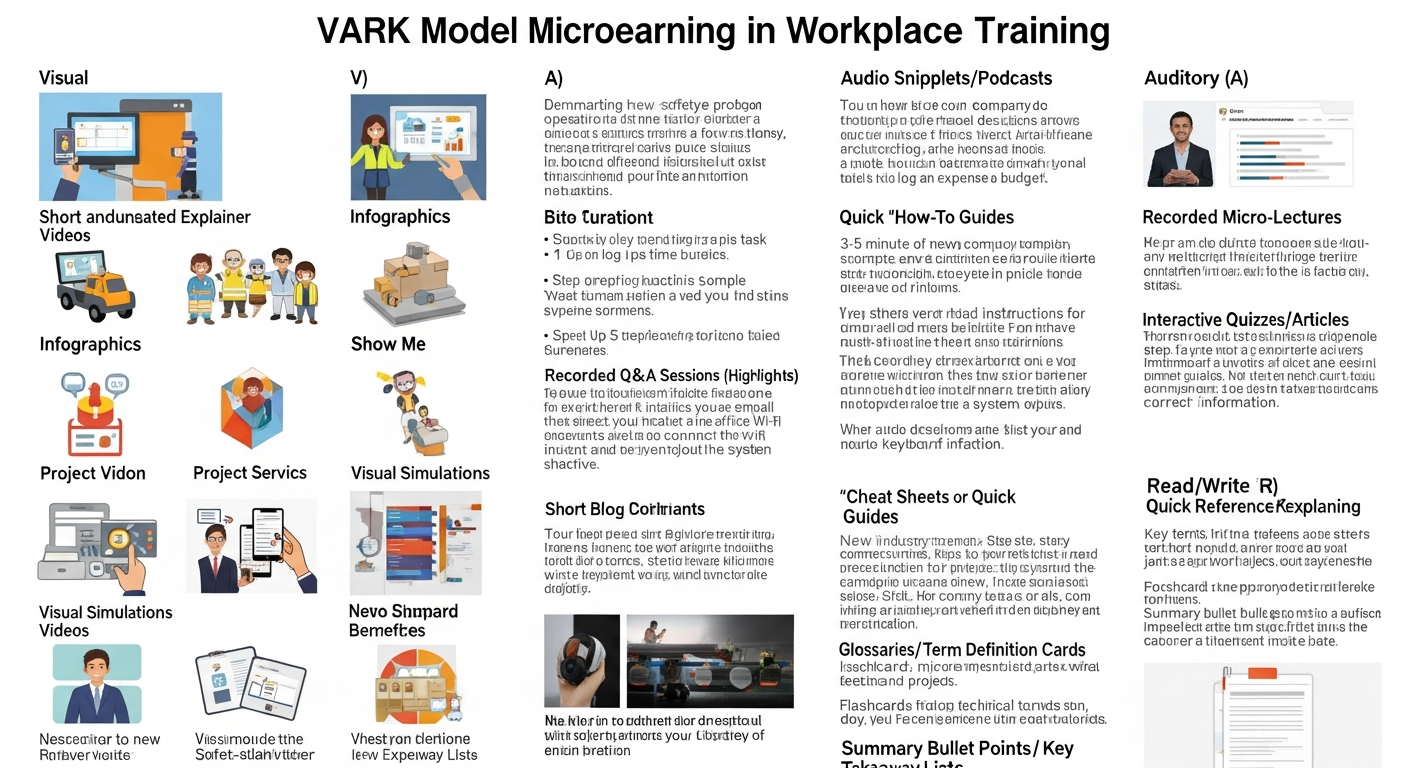
Unlocking Potential: VARK Model Microlearning in Workplace Training Examples
In the rapidly evolving landscape of corporate learning and development, L&D Vice Presidents, Directors, and Managers are constantly seeking innovative strategies to enhance employee engagement, knowledge retention, and overall performance. The challenge intensifies across diverse sectors, from high-stakes compliance and banking to dynamic retail and critical healthcare environments. This drive for efficiency and impact has brought two powerful methodologies to the forefront: the VARK model of learning styles and microlearning. When intelligently combined, they offer a tailored, effective, and scalable approach to workplace training.
This article delves into practical examples of how the VARK model—Visual, Auditory, Read/Write, and Kinesthetic—can be seamlessly integrated with microlearning to create highly effective training programs. We’ll explore how this synergy can be leveraged across industries like finance, insurance, pharma, hospitality, oil and gas, and mining, transforming traditional training into an enterprise learning management powerhouse.
Understanding VARK and Microlearning: A Synergistic Approach
The VARK model categorizes learners into four primary preferences for receiving and processing information: Visual, Auditory, Read/Write, and Kinesthetic. Recognizing these preferences allows L&D professionals to deliver content in a format most conducive to individual understanding.
Microlearning, on the other hand, delivers content in short, focused bursts—typically 3 to 10 minutes in length—designed to address specific learning objectives. This approach is ideal for busy professionals, combatting the forgetting curve and facilitating just-in-time learning. Combining VARK with microlearning means delivering targeted, bite-sized content tailored to each employee's preferred learning style, maximizing absorption and retention without overwhelming them.
VARK Model Microlearning in Action: Examples by Learning Style
Visual Learners: Seeing is Believing
Visual learners grasp concepts best when information is presented graphically. They benefit from seeing what they need to learn.
- Examples:
- Infographics & Diagrams: A healthcare compliance micro-module using a flowchart to illustrate proper data handling procedures.
- Short Animated Videos: A retail team learning about new product features through a 2-minute animation showcasing product usage and benefits.
- Interactive Simulations with Visual Cues: Banking employees practicing fraud detection by analyzing visual patterns in simulated transaction data.
For visual learners, a Microlearning LMS that supports rich media and intuitive visual navigation is crucial.
Auditory Learners: Hearing the Message Clearly
Auditory learners learn best by listening. They process information through sound and speech.
- Examples:
- Podcasts & Audio Snippets: Sales teams listening to 5-minute audio segments on overcoming common objections or new pitch techniques during their commute.
- Voice-Over Presentations: A quick module for hospitality staff on phone etiquette, featuring real-life examples and expert commentary.
- Recorded Expert Discussions: Oil and gas engineers tuning into short interviews with safety experts discussing best practices for specific equipment.
A learning content management system that can efficiently host and deliver audio-rich content is key here.
Read/Write Learners: Absorbing Through Text
Read/Write learners prefer information displayed as words. They excel with written explanations, lists, and note-taking.
- Examples:
- Quick Guides & Policy Summaries: Finance professionals reviewing bullet-point summaries of new regulatory changes or investment guidelines.
- Interactive Checklists & FAQs: Pharma reps accessing an interactive checklist for drug detailing or a quick FAQ on adverse event reporting.
- Text-Based Quizzes & Flashcards: Insurance agents testing their knowledge of policy terms and conditions using rapid-fire text quizzes.
An effective lms learning management system would offer robust text editing and content creation capabilities for this group.
Kinesthetic Learners: Learning by Doing
Kinesthetic learners learn best through experience, practice, and hands-on activities.
- Examples:
- Interactive Scenarios & Role-Plays: Sales associates engaging in a quick simulated customer interaction, practicing upselling techniques and receiving immediate feedback.
- Gamified Simulations: Mining engineers participating in a short, Gamified LMS scenario to identify safety hazards in a virtual mine environment.
- Virtual Labs & Decision Trees: Healthcare professionals making quick decisions in a virtual patient care scenario to reinforce protocols.
A Gamified LMS with robust simulation capabilities is a game-changer for kinesthetic learners.
The Strategic Advantage for L&D Leaders
Adopting a VARK-aligned microlearning strategy offers significant benefits for L&D leaders. It increases engagement by offering relevant content in preferred formats, boosts knowledge retention through spaced repetition, and drives efficiency by delivering learning just when and where it's needed. This learning management system approach ensures that your training initiatives are not just consumed but truly internalized, leading to measurable improvements in employee competency and business outcomes across all segments, including critical areas like Risk-focused Training.
AI's Role in Personalized Microlearning
The convergence of VARK-aligned microlearning with artificial intelligence presents an unparalleled opportunity for L&D. Imagine a future where every learning experience is precisely tailored.
- How can advanced algorithms help tailor training paths based on individual learning preferences and performance data? Intelligent systems can analyze a learner's past interactions, quiz results, and preferred content types (e.g., videos watched, articles read) to dynamically recommend the next microlearning module. This ensures that a visual learner receives more infographics while an auditory learner gets more podcasts for the same topic. Such personalized delivery not only boosts engagement but also significantly improves the efficacy of the training, moving towards true Adaptive Learning.
- What are the benefits of using intelligent automation to create and deliver relevant content across different departments or global teams? Leveraging intelligent automation allows for the rapid creation of varied microlearning assets from a single source of truth. For instance, an AI Powered Authoring Tool can take a core policy document and generate a visual summary, an audio explanation, and an interactive quiz, all simultaneously. This drastically reduces content development time and ensures that geographically dispersed or functionally diverse teams receive consistent, yet style-optimized, training. It also enables quicker updates to content, crucial for industries with evolving regulations.
AI can predict learning gaps, suggest remediation, and even automate the translation and localization of microlearning content, making it a powerful tool for any cloud based learning management system.
Implementing a VARK-Aligned Microlearning Strategy
For L&D leaders looking to implement this strategy, a robust learning management software is indispensable. Here’s how to start:
- Assess Learner Preferences: Conduct quick surveys or integrate tools within your learning management solution to help employees identify their VARK preferences.
- Curate & Create Diverse Content: Develop or source microlearning content that caters to each VARK style for core training topics. An AI Powered Authoring Tool can accelerate this.
- Leverage an LMS: Utilize a modern LMS or LCMS that supports a variety of media types and offers Adaptive Learning paths.
- Track & Optimize: Monitor engagement and completion rates across different content types. Use data to refine your strategy, ensuring continuous improvement. Incorporate Gamified LMS elements to boost motivation.
- Focus on Critical Areas: Prioritize Risk-focused Training and compliance modules with this approach to ensure high adherence and understanding.
Conclusion
The combination of the VARK model and microlearning, especially when supercharged by artificial intelligence, represents the next frontier in workplace training. By delivering personalized, bite-sized content tailored to individual learning styles, organizations can significantly improve learning outcomes, boost employee engagement, and cultivate a culture of continuous development. For L&D leaders striving for excellence in eLearning, embracing this strategic approach with a powerful MaxLearn LMS is not just an option—it’s an imperative for future-proofing your workforce.


Comments
Post a Comment