The Science of Cognition: Evaluating Gardner’s Theory for Corporate Learning Paths
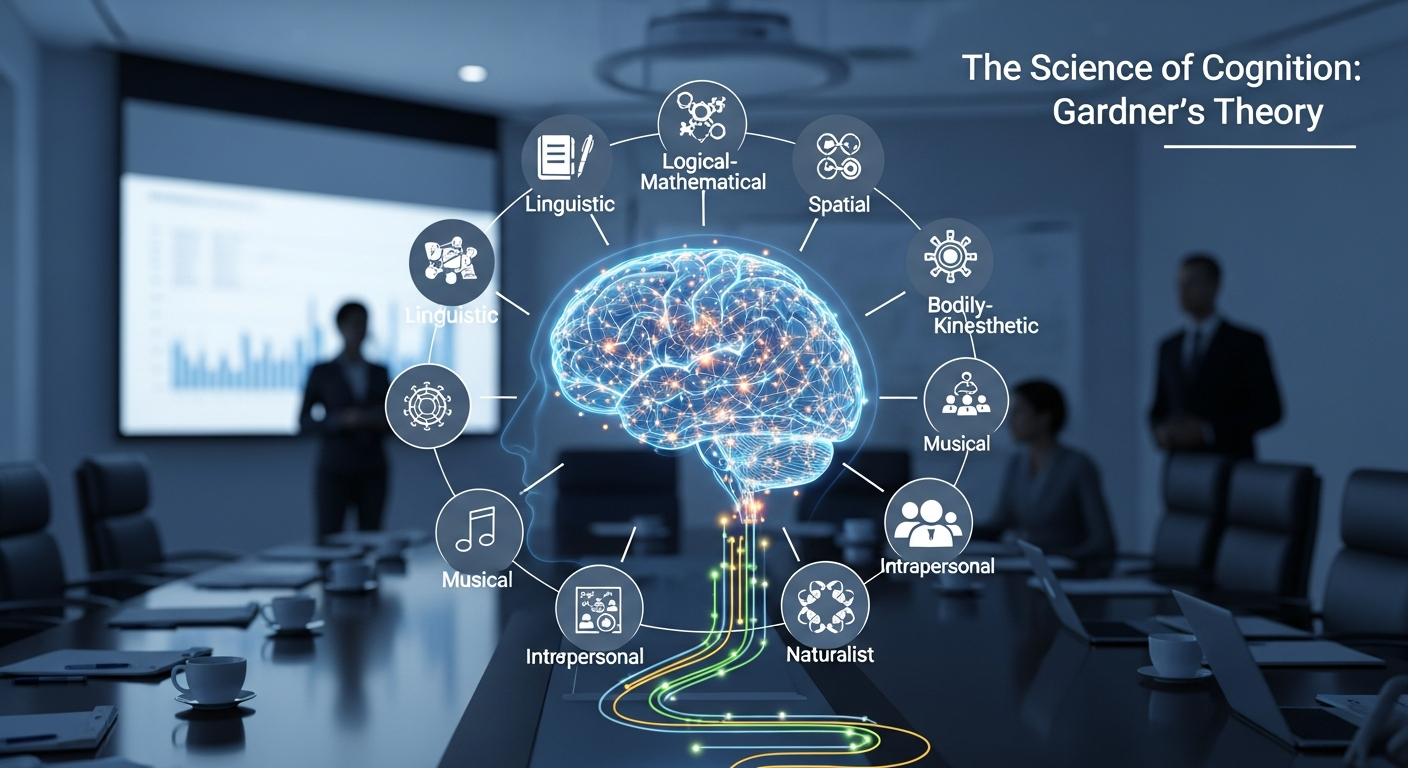
The Science of Cognition: Evaluating Gardner’s Theory for Corporate Learning Paths
In the dynamic landscape of corporate education, the quest for optimal learning outcomes is constant. As Vice Presidents, Directors, and Managers of Learning & Development, you face the challenge of equipping diverse workforces with the knowledge and skills necessary to thrive in rapidly evolving industries such as Compliance, Sales, Banking, Finance, Insurance, Retail, Pharma, Healthcare, Hospitality, Oil and Gas, and Mining. The efficacy of your training programs directly impacts productivity, innovation, and risk mitigation. This pursuit often leads us to explore foundational theories of human cognition, one of the most intriguing being Howard Gardner's Theory of Multiple Intelligences.
For decades, Gardner's framework has sparked debate and inspired educators to reconsider the monolithic view of intelligence. But how relevant is this psychological theory in the context of modern corporate learning paths, especially when powered by advanced eLearning technologies?
Unpacking Howard Gardner’s Theory
Howard Gardner, a developmental psychologist, challenged traditional notions of intelligence in the 1980s, proposing that intelligence is not a single, quantifiable entity (like an IQ score) but rather a collection of distinct cognitive abilities. He initially identified seven, later expanding to eight (and sometimes nine), "intelligences," each representing a different way individuals interact with the world and process information. These include:
- Linguistic Intelligence: The ability to use language effectively, both orally and in writing. Think of writers, poets, and lawyers.
- Logical-Mathematical Intelligence: Skill in logical reasoning, problem-solving, and numerical patterns. Common in scientists, mathematicians, and engineers.
- Spatial Intelligence: The capacity to think in three dimensions and visualize images. Essential for architects, artists, and navigators.
- Bodily-Kinesthetic Intelligence: Expertise in using one's body to solve problems, create products, or present ideas. Dancers, athletes, and surgeons often excel here.
- Musical Intelligence: Proficiency in rhythm, pitch, and timbre; the ability to create and appreciate music. Composers and musicians embody this.
- Interpersonal Intelligence: The ability to understand and interact effectively with others. Leaders, salespeople, and therapists often possess this in abundance.
- Intrapersonal Intelligence: The capacity for self-understanding and self-reflection. Philosophers and psychologists might demonstrate this strongly.
- Naturalist Intelligence: The ability to recognize and categorize elements of the natural world. Biologists, farmers, and environmentalists fall into this category.
- Existential Intelligence (often debated): The capacity to contemplate deep questions about life and existence.
Gardner posited that everyone possesses all these intelligences to varying degrees, with unique profiles that influence how they learn and excel. The theory encourages a shift from "how smart are you?" to "how are you smart?"
The Allure for L&D: Tailoring Learning Experiences
For L&D professionals, the appeal of Gardner's theory is immediately apparent. If individuals learn differently, then training programs should cater to these diverse strengths. Imagine the potential:
- Designing Microlearning LMS modules that leverage visual aids for spatially intelligent learners.
- Incorporating role-playing and simulations for bodily-kinesthetic and interpersonal learners in sales or customer service training.
- Developing structured logic puzzles for those with strong logical-mathematical intelligence in compliance or finance.
- Utilizing storytelling and debate for linguistically intelligent employees.
This approach promises increased engagement, better knowledge retention, and ultimately, more effective skill development across all industries. From enhancing Risk-focused Training in banking to improving patient safety protocols in healthcare, the idea of tailoring content to cognitive strengths is compelling.
Navigating the Critiques: Practicalities and Pitfalls
Despite its intuitive appeal, Gardner's theory has faced significant criticism from the academic community. The primary challenge lies in the lack of robust empirical evidence to support the distinct neurological or psychological independence of each intelligence. Critics argue that what Gardner describes as separate intelligences might simply be different cognitive styles, talents, or highly developed skills, rather than fundamental types of intelligence.
For corporate L&D, the practical implications are also substantial:
- Diagnostic Challenge: How does one accurately assess each employee's "intelligence profile" without cumbersome and potentially biased tools?
- Resource Intensive: Creating bespoke learning paths for eight or nine distinct intelligences for every topic, across thousands of employees, would be an immense undertaking in terms of content development and delivery.
- Risk of Labeling: Over-reliance on such classifications could lead to unintended labeling or pigeonholing of employees, limiting their exposure to other learning modalities or perceived development areas.
Modern Cognitive Science and Practical Application
While Gardner's theory may not be fully embraced by mainstream cognitive psychology as a scientific model of intelligence, its enduring legacy lies in its emphasis on individual differences. Modern cognitive science, influenced by fields like neuroscience and educational psychology, provides a more evidence-based understanding of how people learn. This includes principles such as:
- Varied Modalities: Incorporating visual, auditory, and kinesthetic elements within a single course can cater to diverse preferences and strengthen memory encoding for all learners.
- Active Learning: Engaging learners through problem-solving, discussions, and hands-on activities is far more effective than passive consumption of information.
- Spaced Repetition and Retrieval Practice: Techniques that leverage how memory works, ensuring knowledge is retained over time.
The spirit of Gardner's work – promoting a learner-centric approach and moving away from "one-size-fits-all" training – remains highly valuable. The challenge for L&D leaders is to achieve this personalization not through rigid "intelligence" categorization, but through flexible, data-driven, and technologically advanced solutions.
The Role of Advanced Learning Platforms
This is where modern eLearning platforms become indispensable. A robust LMS or learning content management system doesn't need to explicitly identify an employee's "musical intelligence" to offer varied and engaging content. Instead, it provides the tools to create and deliver a rich tapestry of learning experiences, allowing individuals to gravitate towards modalities that resonate with them naturally.
- Microlearning LMS: Delivers bite-sized content in various formats (videos, infographics, quizzes), appealing to different preferences and busy schedules.
- Gamified LMS: Incorporates game-like elements, challenges, and rewards to boost engagement and motivation across diverse learner types.
- Adaptive Learning: Utilizes algorithms to dynamically adjust the learning path based on an individual's performance and choices, providing true personalization without explicit intelligence profiling.
- AI Powered Authoring Tool: Streamlines the creation of diverse content types, making it feasible to produce rich, multi-modal learning experiences efficiently.
By offering a rich menu of learning experiences and leveraging data to understand engagement patterns, an effective learning management software ensures that learners can find their optimal path.
Crafting Effective Corporate Learning Journeys
For L&D leaders, the takeaway is clear: focus on creating a diverse, flexible, and technologically supported learning ecosystem. Rather than trying to categorize employees by a debated theory, aim for:
- Multi-modal Content: Ensure your learning management solutions offer videos, interactive simulations, text, audio, and hands-on exercises.
- Learner Choice: Where possible, empower employees to choose how they engage with content.
- Data-Driven Personalization: Use analytics from your lms learning management system to understand which formats and approaches are most effective for different groups and topics.
- Scalability: Opt for a cloud based learning management system that can efficiently deliver personalized content across your entire organization, globally.
Platforms like MaxLearn LMS provide the necessary framework for an enterprise learning management strategy that supports varied learning preferences, fostering a culture of continuous development that is robust, engaging, and highly effective.
Your Cognitive Journey: Questions Answered by Technology
As L&D leaders navigate the complexities of modern corporate education, technology offers powerful answers to pressing questions about personalization and efficacy.
Question 1: How can cutting-edge technology help identify and cater to individual learning preferences within a large organization?
Answer: Sophisticated algorithms within an advanced enterprise learning management platform analyze user interactions, performance data, and content consumption patterns. This allows the learning management software to recommend relevant content, adjust difficulty levels, and suggest diverse learning activities, effectively personalizing the path without explicitly labeling cognitive styles. An LCMS can further refine this by managing diverse content types and ensuring easy access to varied resources.
Question 2: In what ways can a robust platform ensure consistent and effective learning across globally dispersed teams, acknowledging diverse cognitive approaches?
Answer: A modern learning management system provides centralized access to a wide array of learning materials, accessible globally. It supports multilingual content and offers features like virtual classrooms, discussion forums, and collaborative projects, allowing learners from different regions to engage with content in ways that resonate with their individual cognitive strengths and cultural contexts. Robust analytics help monitor engagement and learning effectiveness across all locations, ensuring global consistency while respecting local differences.
Question 3: How do advanced learning platforms provide actionable insights for L&D leaders to continuously refine and improve corporate learning strategies?
Answer: Modern lms learning management system solutions offer powerful analytics dashboards that track learner progress, completion rates, assessment scores, and engagement metrics. These insights help L&D leaders understand which content is most effective, identify areas where learners struggle, and pinpoint preferred learning modalities across different departments or roles. This data-driven approach, supported by a comprehensive learning management system, enables continuous optimization of corporate learning paths for maximum impact and improved business outcomes.
Designing Intelligent Learning Futures
Gardner's Theory of Multiple Intelligences, while scientifically debated, successfully shifted the conversation from a singular view of intelligence to an appreciation for diverse cognitive strengths. For L&D professionals, its greatest contribution might be the inspiration to move beyond generic training and embrace personalized, engaging, and effective learning journeys. In today's corporate world, this personalization isn't achieved by rigid adherence to a psychological theory, but by leveraging the power of advanced eLearning technologies and intelligent learning management system solutions. By combining sound cognitive principles with innovative platforms, L&D leaders can design truly intelligent learning futures that empower every employee to reach their full potential.


Comments
Post a Comment