The L&D Guide to Captivating Audiences via VARK Microlearning Design
The L&D Guide to Captivating Audiences via VARK Microlearning Design
In today's fast-paced corporate environment, the efficacy of learning and development programs is under constant scrutiny. L&D leaders, VPs, and Directors across diverse sectors such as Compliance, Sales, Banking, Finance, Insurance, Retail, Pharma, Healthcare, Hospitality, Oil and Gas, and Mining are tasked with a critical mission: to deliver training that not only educates but truly captivates and transforms employee capabilities. The challenge lies in combating shrinking attention spans and diverse learning preferences within a global workforce. This is where the powerful combination of VARK learning styles and microlearning design emerges as a strategic imperative.
By understanding how individuals prefer to consume and process information, and then delivering that information in concise, digestible segments, L&D can unlock unprecedented engagement and retention. This article will explore how to master VARK microlearning design, backed by a robust learning management system, to create truly impactful and memorable learning experiences.
Understanding the Modern Learner and VARK Principles
The traditional one-size-fits-all training model is rapidly becoming obsolete. Modern learners, inundated with information, demand relevance, flexibility, and immediate applicability. They seek learning experiences that resonate with their individual needs and fit seamlessly into their demanding schedules. This necessitates a shift from passive consumption to active, personalized engagement. A modern Microlearning LMS is essential for this shift.
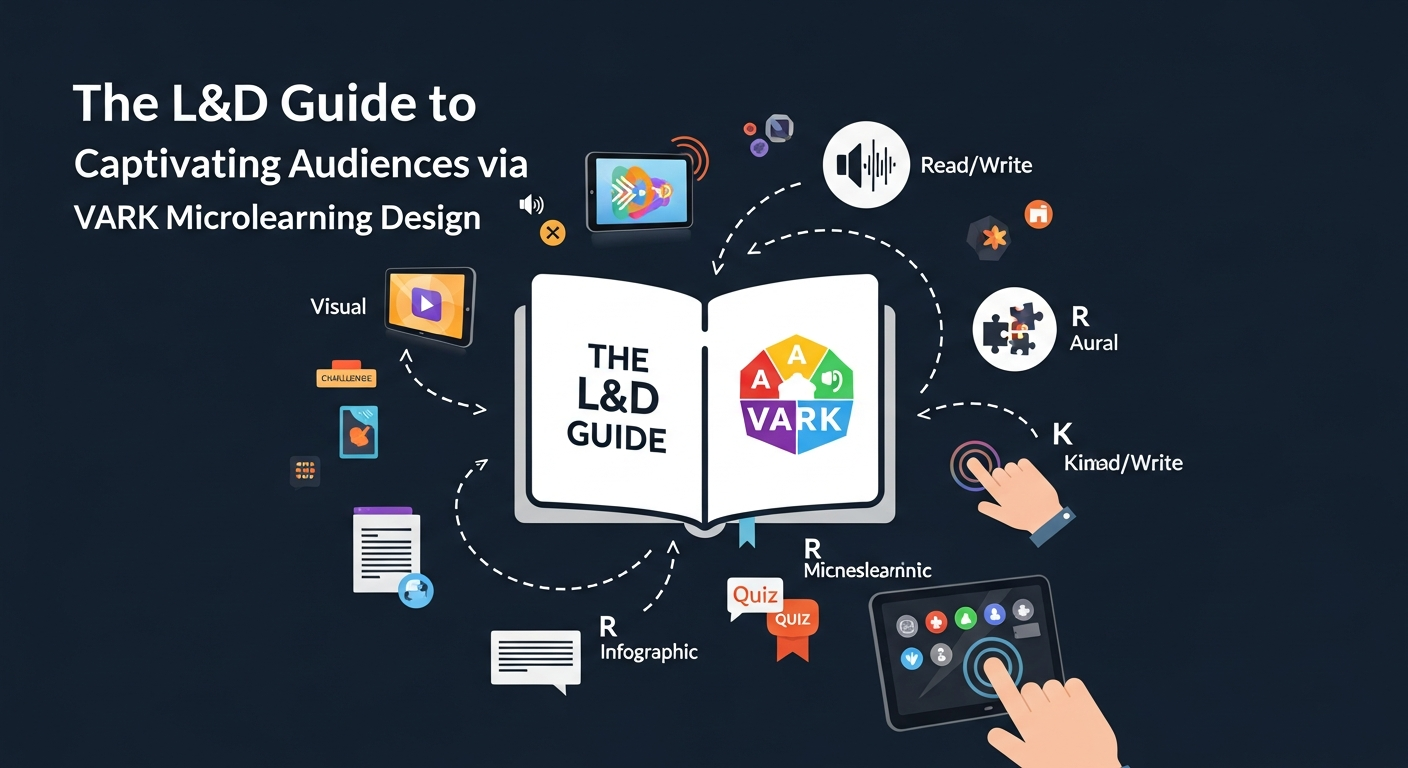
The VARK model, developed by Neil Fleming, categorizes learning preferences into four primary types:
- Visual (V): Learners who prefer to see information presented visually, through diagrams, charts, infographics, videos, and demonstrations.
- Auditory (A): Learners who prefer to hear information, through lectures, discussions, podcasts, and verbal instructions.
- Read/Write (R): Learners who prefer to learn through text, by reading articles, manuals, reports, and taking notes.
- Kinesthetic (K): Learners who prefer hands-on experience, through practical exercises, simulations, role-playing, and real-world application.
Understanding these preferences is the first step towards designing training that truly speaks to every learner. Integrating these insights into your learning content management system is key.
The Undeniable Power of Microlearning
Microlearning, characterized by short, focused bursts of content (typically 3-10 minutes), is not just a trend; it's a strategic response to the demands of the modern learner and the need for agile skill development. Its benefits are numerous:
- Enhanced Retention: Shorter modules reduce cognitive overload, making information easier to absorb and recall.
- Increased Engagement: Bite-sized content is less intimidating and more approachable, fostering higher completion rates.
- Flexibility and Accessibility: Learners can access content anytime, anywhere, on any device, fitting learning into their workflow.
- Targeted Skill Development: Focuses on specific learning objectives, ensuring relevance and immediate application.
- Cost-Effective Updates: Easier and faster to create, update, and deploy new content, keeping training current.
A sophisticated learning management software facilitates the seamless delivery and tracking of these micro-modules. This approach is particularly effective for Risk-focused Training in highly regulated industries like Banking, Pharma, and Oil & Gas, where precise, up-to-date information is paramount.
VARK Meets Microlearning: Designing for Maximum Impact
The true magic happens when VARK principles are meticulously woven into the fabric of microlearning design. This creates a highly personalized and effective learning journey, regardless of the subject matter, from sales techniques in Retail to complex compliance procedures in Finance.
Designing for Visual Learners
- Video Snippets: Short explainer videos, animated tutorials, or demonstrations.
- Infographics & Visual Guides: Condense complex information into easily digestible charts, diagrams, and process flows.
- Interactive Simulations: Show, don't just tell, especially for software training or procedural tasks.
Designing for Auditory Learners
- Podcast-style Mini-Lessons: Short audio clips explaining concepts, interviews with experts, or success stories.
- Audio Summaries: A quick verbal recap of key takeaways.
- Discussion Prompts: Encouraging verbal reflection or group discussions (even if asynchronous).
Designing for Read/Write Learners
- Concise Articles & Summaries: Brief text-based modules, job aids, or checklists.
- Interactive Quizzes & Assessments: Reinforce learning through written responses and feedback.
- Glossaries & Definitions: Quick reference guides for key terms, particularly useful in technical or legal fields.
Designing for Kinesthetic Learners
- Interactive Quizzes & Drag-and-Drop Exercises: Activities that require physical interaction.
- Mini-Simulations & Role-Plays: Short scenarios where learners can practice skills in a safe environment.
- "Try It Yourself" Challenges: Prompting immediate application of a concept in a real-world or simulated context.
Leveraging a Adaptive Learning approach within your microlearning strategy allows for the dynamic delivery of content tailored to each learner's identified VARK preference, ensuring maximum engagement and effectiveness.
Leveraging Technology for VARK Microlearning
To implement this sophisticated approach, L&D departments require more than just a basic learning management system. They need an advanced learning management solutions that can handle the complexity of varied content types, personalized paths, and robust tracking. An enterprise learning management solution designed for microlearning is crucial.
- A dedicated Microlearning LMS offers features specifically tailored for bite-sized content, making it easy to create, organize, and deliver modules efficiently.
- Integrating a Gamified LMS layer can significantly boost engagement, providing points, badges, and leaderboards that appeal to all VARK types by adding an element of interactive challenge.
- An Adaptive Learning engine within the LMS ensures that learners receive content not just based on their progress, but also on their inferred learning preferences, creating a truly personalized journey.
- For content creation, an AI Powered Authoring Tool can dramatically accelerate the development of diverse microlearning assets, automatically suggesting visual aids, summarizing text, or even generating interactive exercises to cater to different VARK styles.
By opting for a cloud based learning management system like MaxLearn LMS, organizations ensure scalability, accessibility, and robust data analytics, allowing for continuous improvement of their training programs.
AI-Driven Insights for Optimal Engagement
The integration of artificial intelligence takes VARK microlearning to an entirely new level, offering unprecedented capabilities for L&D leaders.
Question: How can L&D leaders identify and address diverse learning preferences across a globally distributed workforce efficiently?
Answer: AI plays a pivotal role by analyzing learner interactions within the learning management system – completion rates, time spent on content types, quiz performance, and even navigation patterns. This data allows AI to infer individual VARK preferences, even without explicit learner input. For a sales team spread across continents or healthcare professionals in various facilities, AI can then dynamically recommend specific microlearning formats (e.g., more videos for visual learners, interactive simulations for kinesthetic learners) and pathways, ensuring each individual receives content optimized for their learning style, regardless of their location or role.
Question: What technologies can ensure consistent, high-quality microlearning delivery to employees spread across different regions and time zones, such as in Oil and Gas or Hospitality?
Answer: Cloud-based learning management software, particularly a robust LCMS, is the backbone. These platforms provide a centralized repository for all microlearning content, ensuring consistent delivery standards. AI enhances this by automating content localization (language, cultural nuances) and even adjusting the pacing or complexity of micro-modules based on regional learning patterns. For a global Oil and Gas operation or an international Hospitality chain, this means every employee, from a rig worker in the North Sea to a front desk manager in Tokyo, receives relevant, high-quality, and culturally appropriate training instantly.
Question: Beyond basic content delivery, how can L&D leverage advanced tools to foster deeper engagement and measurable skill development in complex topics like compliance or financial regulations?
Answer: AI-driven analytics track granular engagement metrics within the microlearning modules, identifying where learners struggle or disengage. This allows the system to intervene proactively, perhaps by offering an alternative format (e.g., a visual infographic instead of text for a compliance rule). For financial regulations or complex healthcare protocols, AI-powered simulations and virtual labs provide safe environments for practice, offering personalized feedback that adapts to the learner's actions. Furthermore, AI can predict potential skill gaps based on performance data and recommend prescriptive microlearning paths for continuous improvement, ensuring measurable skill development and competence.
Measuring Success and Iterating
The beauty of a data-driven approach, supported by a sophisticated learning management system, is the ability to continuously measure and refine. L&D leaders should track KPIs such as:
- Module completion rates across different VARK types.
- Time to completion and knowledge retention scores.
- Learner feedback on content relevance and format preference.
- Direct impact on performance metrics (e.g., sales quotas, compliance adherence, error rates).
This iterative process, informed by data and AI insights, ensures that your VARK microlearning strategy remains dynamic, effective, and truly captivating for your diverse audience.
Conclusion
Captivating today's demanding workforce requires more than just good intentions; it demands a strategic, data-driven approach to learning design. By skillfully combining the principles of VARK learning styles with the agility of microlearning, and supercharging this synergy with cutting-edge AI and a powerful MaxLearn LMS, L&D leaders can transform corporate training. This isn't just about delivering content; it's about crafting personalized, engaging, and highly effective learning experiences that drive measurable business outcomes across every industry. Embrace this methodology, and watch your workforce not just learn, but truly excel.


Comments
Post a Comment