Step-by-Step Guide: Implementing DDE Framework in Corporate Training
Elevate Your L&D: A Step-by-Step Guide to Implementing the DDE Framework in Corporate Training
In today's fast-paced corporate landscape, traditional training methods often fall short of meeting the dynamic needs of employees and businesses. Vice Presidents, Directors, and Senior Managers in Learning & Development are constantly seeking frameworks that deliver measurable impact, drive engagement, and foster continuous growth. Enter the Discover, Design, Evaluate (DDE) framework – a robust, iterative approach to corporate training that promises to revolutionize how your organization approaches learning.
From ensuring compliance in highly regulated sectors like Banking, Finance, and Pharma, to boosting sales performance in Retail and Hospitality, or enhancing safety protocols in Oil & Gas and Mining, the DDE framework provides a structured pathway to impactful learning. This guide will walk you through each critical step, helping you implement DDE effectively to create world-class training programs that resonate across all segments and industries.
Understanding the DDE Framework: A Foundation for Success
The DDE framework is a continuous cycle built on three core pillars:
- Discover: Thoroughly understanding the needs, objectives, and context for training.
- Design: Crafting effective learning experiences based on the insights gathered.
- Evaluate: Measuring the impact of training and using data to refine future iterations.
Unlike linear models, DDE emphasizes feedback loops and continuous improvement, ensuring that your training initiatives remain agile, relevant, and effective.
Discover: Unearthing Core Needs
This initial phase is about asking the right questions. It involves a deep dive into organizational goals, employee skill gaps, and current performance metrics. Without a clear understanding of what needs to be achieved, any training initiative risks missing the mark.
Design: Crafting Impactful Learning Journeys
Once needs are identified, the design phase focuses on developing the actual learning content and strategies. This includes defining learning objectives, selecting appropriate methodologies, and leveraging technology to create engaging and effective learning experiences.
Evaluate: Measuring Success and Iterating
The final, but continuous, phase is evaluation. This involves assessing whether the training achieved its objectives, gathering feedback, and analyzing data to inform improvements for subsequent training cycles. This iterative process is what makes DDE exceptionally powerful.
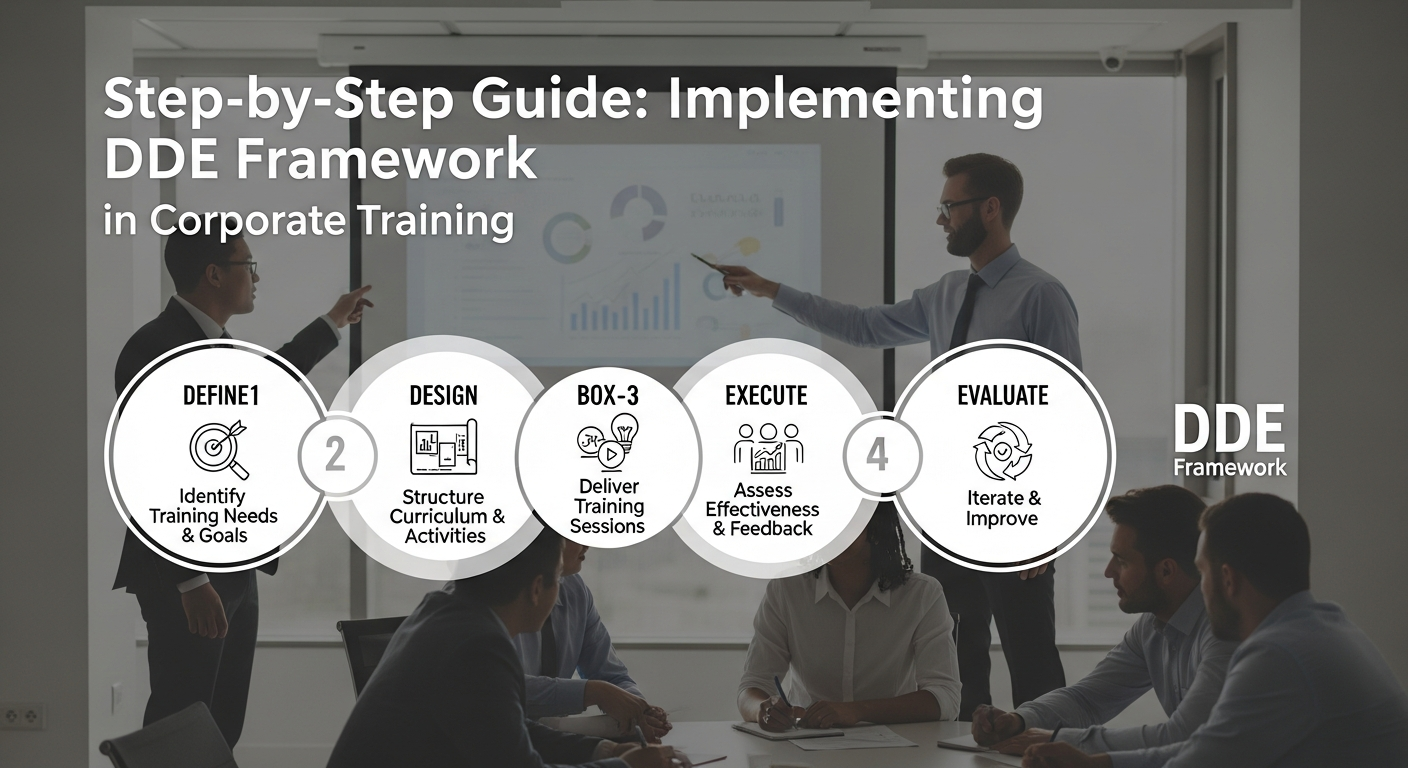
Step-by-Step Implementation Guide for the DDE Framework
Step 1: Discover – Defining Your Training Imperatives
The first step in implementing DDE is a comprehensive discovery phase. This is where you uncover the 'why' behind your training needs.
- Conduct a Thorough Needs Assessment: Engage with stakeholders from various departments – operations, HR, sales, legal, etc. Use surveys, interviews, focus groups, and performance data to identify specific skill gaps, knowledge deficits, or behavioral changes required. For instance, in Healthcare, this might involve identifying new compliance regulations, or in Sales, pinpointing specific product knowledge gaps.
- Align with Business Objectives: Every training program must directly support a strategic business goal. Is it to reduce compliance violations, increase sales figures, improve customer satisfaction, or enhance operational efficiency? Clearly define the desired business outcome.
- Understand Your Audience: Profile your learners. What are their existing knowledge levels, preferred learning styles, technological access, and motivational drivers? Tailoring content to your audience is crucial for engagement.
Thought-provoking Question: How can we accurately identify the most critical skill gaps across our diverse global workforce, ensuring our training addresses the most pressing needs efficiently?
Insight: By leveraging advanced data analytics platforms integrated with HRIS and performance management systems, L&D can pinpoint specific areas where performance deviates from benchmarks, even across geographically dispersed teams. This data-driven approach minimizes guesswork and targets training where it will have the most significant impact.
Step 2: Design – Building Engaging and Effective Learning Experiences
With a clear understanding of your needs, the next phase is to design the learning solution. This is where instructional design principles meet innovative technology.
- Develop Learning Objectives: Based on your discovery, create SMART (Specific, Measurable, Achievable, Relevant, Time-bound) learning objectives for each module or course.
- Select Instructional Strategies: Consider methodologies that best suit your objectives and audience. This could include simulations, case studies, role-playing, interactive workshops, or problem-based learning. For engaging and digestible content, consider leveraging a Microlearning LMS.
- Curate or Create Content: Develop high-quality learning materials. Think about using a blend of formats – videos, infographics, interactive quizzes, and short modules. An AI Powered Authoring Tool can significantly streamline the creation of diverse and relevant content, especially for rapidly evolving topics or large content libraries.
- Integrate Technology: Your choice of technology is paramount. A modern learning management system (LMS) is essential. Explore platforms that offer a Gamified LMS experience to boost learner motivation and completion rates. Look into solutions that support Adaptive Learning paths, ensuring content adjusts to individual learner progress and preferences.
Thought-provoking Question: What’s the most effective way to personalize learning paths for hundreds of employees with varying skill levels and job roles, ensuring maximum relevance and engagement for each individual?
Insight: Modern learning management software, particularly those with embedded AI capabilities, can dynamically tailor content recommendations and learning sequences based on a learner's pre-assessment results, job function, performance data, and even their interaction history within the platform. This creates highly individualized journeys, maximizing the efficiency and impact of the learning management system.
Step 3: Deploy – Engaging Your Learners
This stage focuses on rolling out your designed training programs effectively.
- Choose Delivery Methods: Determine the best way to deliver your content – whether entirely online, blended, or instructor-led. A robust cloud based learning management system can handle diverse delivery needs, ensuring accessibility for all employees, regardless of location.
- Communicate and Promote: Effectively communicate the value and benefits of the training to your employees. Create excitement and clearly outline how the training will benefit them personally and professionally.
- Provide Support: Ensure learners have access to technical support and resources if they encounter any issues with the platform or content. User experience is key to successful adoption of any enterprise learning management initiative.
A comprehensive learning management system (LMS) acts as the central hub for deployment, tracking, and management of all your corporate learning initiatives, whether it's compliance training for Banking or product knowledge for Pharma. Organizations often find immense value in an advanced learning content management system (LCMS) which provides more granular control over content creation, management, and reuse, optimizing efficiency for an extensive learning management system.
Step 4: Evaluate – Measuring Impact and Driving Iteration
The evaluation phase closes the loop, providing critical data to assess effectiveness and inform future improvements.
- Define Success Metrics: Go beyond completion rates. Measure actual learning (knowledge retention), behavioral change (application of skills on the job), and business impact (ROI). For instance, did sales training lead to increased conversions? Did compliance training reduce incidents?
- Collect Feedback: Utilize surveys, post-training assessments, manager feedback, and peer reviews. This qualitative and quantitative data is invaluable.
- Analyze and Report: Use the analytics capabilities of your learning management solutions to analyze data and generate reports. This provides actionable insights into what worked well and what needs improvement. Pay particular attention to data related to Risk-focused Training to ensure critical areas are being addressed effectively.
- Iterate and Improve: Based on your evaluation, refine your training programs. The DDE framework is iterative – the insights from evaluation feed directly back into the 'Discover' and 'Design' phases for continuous optimization.
Thought-provoking Question: Beyond completion rates, how can we truly measure the ROI of our training programs in terms of business impact and demonstrate tangible value to executive leadership?
Insight: True ROI measurement involves correlating training data with key business metrics like sales increases, reduction in errors, improved customer satisfaction scores, or decreased employee turnover. Advanced analytics within an enterprise learning management system or a dedicated business intelligence platform can help link learning outcomes directly to performance indicators, providing a holistic view of training effectiveness and justifying investment.
Why DDE Matters for Your Organization
Implementing the DDE framework transforms corporate training from a cost center into a strategic business driver:
- Increased ROI: By aligning training with business objectives and rigorously evaluating impact, you ensure every dollar spent on L&D yields tangible returns.
- Enhanced Learner Engagement: Tailored, relevant, and engaging content, often supported by a modern LMS like MaxLearn LMS, leads to higher participation and retention rates.
- Agility and Adaptability: The iterative nature of DDE allows your L&D function to quickly adapt to changing market conditions, new regulations (especially crucial in Compliance or Finance), or evolving skill requirements across any industry.
- Data-Driven Decisions: Moving beyond intuition, DDE empowers L&D leaders to make informed decisions based on concrete data, fostering a culture of continuous improvement.
Choosing the Right Technology Partner
The success of your DDE implementation heavily relies on the technology infrastructure you choose. A powerful and flexible learning management system (LMS) is not just a tool; it's a strategic partner. Look for a comprehensive learning management software that offers robust features for content creation, delivery, tracking, and analytics. A strong learning content management system (LCMS) component ensures efficient content lifecycle management. Consider MaxLearn LMS for its ability to support dynamic, personalized, and measurable learning experiences, making it a leading choice among learning management solutions.
Conclusion
The DDE framework offers a structured, yet flexible, roadmap for L&D leaders aiming to elevate their corporate training initiatives. By systematically discovering needs, designing impactful learning experiences, and rigorously evaluating their effectiveness, organizations can build a learning ecosystem that not only upskills employees but also directly contributes to strategic business success. Embrace the DDE framework, and empower your workforce with learning that truly drives performance and innovation across all your operations.


Comments
Post a Comment