Step-by-Step: Designing Multimodal Microlearning Lessons That Captivate Learners
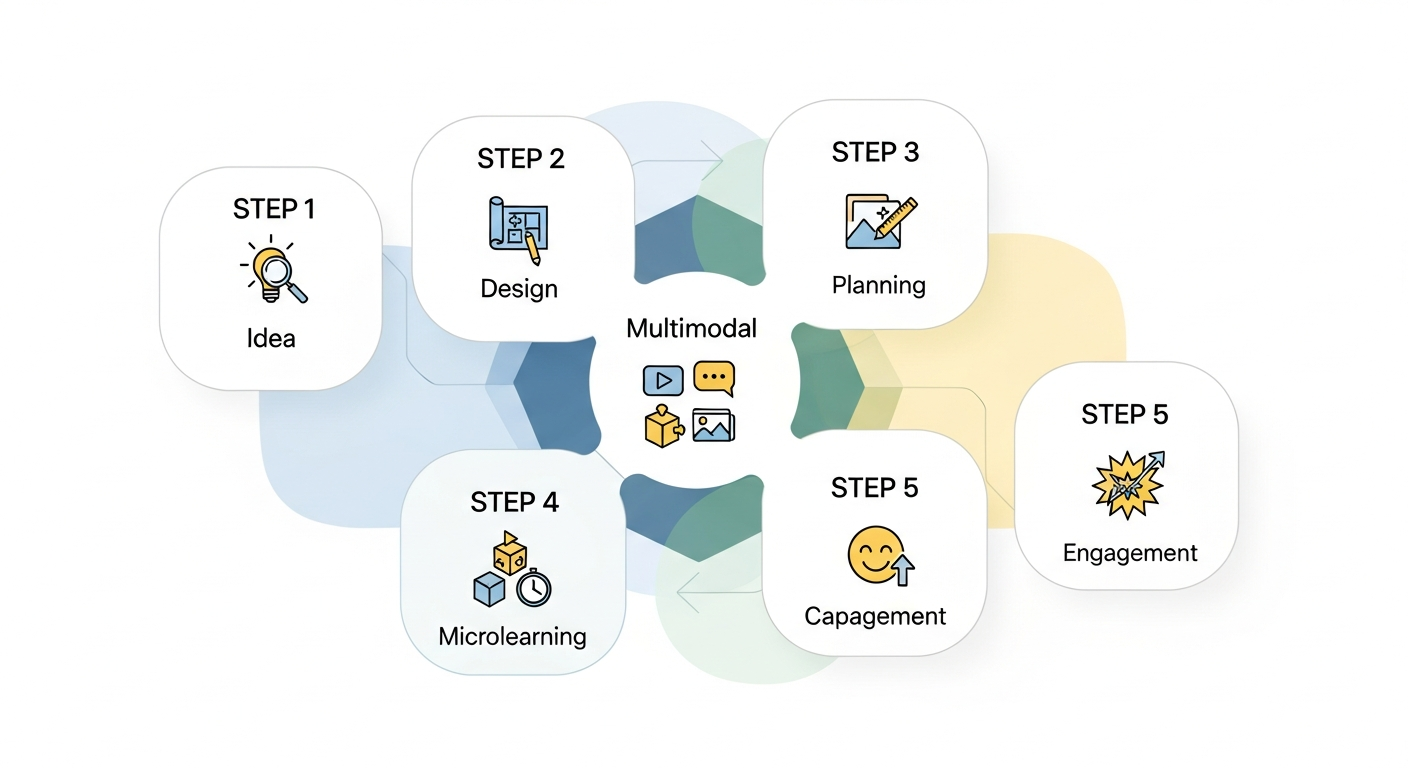
Step-by-Step: Designing Multimodal Microlearning Lessons That Captivate Learners
In today's fast-paced corporate landscape, the challenge for Learning & Development (L&D) leaders is not just to deliver training, but to deliver training that sticks. Traditional, lengthy courses often fall short, struggling to capture and retain the attention of busy professionals. This is where multimodal microlearning emerges as a powerful solution. By combining diverse media formats with bite-sized content, L&D departments can create highly effective, engaging, and adaptable learning experiences.
For Vice Presidents, Directors, Senior Managers, and Managers of L&D across industries like Compliance, Sales, Banking, Finance, Insurance, Retail, Pharma, Health care, Hospitality, Oil and Gas, and Mining, understanding how to design these lessons is crucial. This article provides a professional, step-by-step guide to crafting multimodal microlearning that truly captivates learners and drives measurable results.
Why Multimodal Microlearning is Indispensable for Modern L&D
Multimodal microlearning isn't just a trend; it's a strategic imperative. It addresses several critical pain points faced by organizations:
- Enhanced Engagement: By appealing to various senses and learning preferences, it keeps learners actively involved, preventing cognitive overload and boredom.
- Improved Retention & Recall: Short, focused bursts of information, reinforced through different media, are easier for the brain to process, store, and retrieve.
- Flexibility & Accessibility: Learners can access content anytime, anywhere, on any device, fitting learning seamlessly into their demanding schedules.
- Efficiency & Agility: It enables L&D teams to rapidly create, update, and deploy relevant training, responding quickly to market changes or new compliance requirements.
- Personalized Learning Paths: Different modalities allow for varied approaches, catering to individual learning styles and needs, a key component of effective Adaptive Learning strategies.
The Step-by-Step Guide to Designing Captivating Multimodal Microlearning
1. Define Crystal-Clear Learning Objectives
Before designing any content, pinpoint what learners should know or be able to do upon completion of each micro-lesson. These objectives must be SMART: Specific, Measurable, Achievable, Relevant, and Time-bound. For instance, instead of "understand sales techniques," aim for "demonstrate how to overcome common customer objections using the ABC framework within a 2-minute role-play scenario." Clear objectives are the foundation of effective learning, guiding content creation and assessment.
2. Chunk Content into Bite-Sized Modules
The essence of microlearning is brevity. Break down complex topics into small, digestible units, each addressing a single learning objective. Ideally, each module should take no more than 3-7 minutes to complete. This could be a single concept, a specific skill, or a piece of information. This process prevents cognitive overload and maintains learner focus.
3. Embrace a Rich Tapestry of Modalities
This is where "multimodal" comes into play. Don't rely on just text or video. Combine them strategically to reinforce messages and cater to diverse preferences. Consider incorporating:
- Short Videos: Explanations, demonstrations, scenarios, expert interviews.
- Interactive Infographics & Visuals: Data representation, process flows, key takeaways.
- Audio Snippets: Podcasts, explanations, quick tips for on-the-go learning.
- Brief Texts: Summaries, definitions, case studies, policy excerpts.
- Quizzes & Assessments: Quick checks for understanding, application questions.
- Simulations & Scenarios: Realistic problem-solving exercises.
The goal is to provide learners with multiple ways to interact with and understand the same core concept, enhancing comprehension and recall.
4. Design for Engagement and Interactivity
Passive viewing or reading isn't enough. Multimodal microlearning thrives on active participation. Integrate interactive elements frequently:
- Drag-and-drop exercises
- Clickable hotspots on images
- Decision-making scenarios
- Branching paths in videos
- Gamified elements like points, badges, and leaderboards, often facilitated by a robust Gamified LMS.
- Reflective questions and prompts
These elements not only make learning more fun but also deepen understanding and application.
5. Leverage Technology and Intelligent Systems
The scalability and effectiveness of multimodal microlearning are significantly boosted by advanced technology. A modern Microlearning LMS is essential for delivering, tracking, and managing these diverse learning assets.
Consider the role of smart technology in optimizing your initiatives:
Question: How can artificial intelligence personalize the learning journey for individual employees?
Answer: Sophisticated algorithms analyze a learner's performance, preferences, and job role to recommend relevant content, suggest personalized learning paths, and even adapt the difficulty of challenges in real-time. This ensures each learner receives the most pertinent and impactful training, moving beyond a one-size-fits-all approach.
Question: What are the considerations for deploying cutting-edge learning technologies across a global enterprise?
Answer: For multinational organizations, key considerations include scalability, robust security protocols for sensitive data, ensuring content is localized for different cultural contexts and languages, and having a reliable, high-performance cloud based learning management system that can handle diverse user loads and regional regulations. A strong enterprise learning management system facilitates seamless global deployment.
An AI Powered Authoring Tool can dramatically accelerate content creation, helping L&D teams to generate scripts, design interactive elements, and even translate content, freeing up valuable time for strategic planning and instructional design refinement. This significantly enhances the efficiency of your learning content management system.
Question: Beyond content delivery, how does smart technology enhance the overall learning experience?
Answer: Intelligent systems provide advanced analytics, offering deep insights into learner engagement, performance trends, and knowledge gaps. This data empowers L&D leaders to continuously refine content, identify areas for improvement, and demonstrate the ROI of training initiatives. Furthermore, such systems can provide immediate, targeted feedback to learners, simulating a more interactive coaching experience.
6. Implement Feedback and Iteration
Learning design is not a one-and-done process. Collect feedback from learners regularly through surveys, informal check-ins, and performance data from your learning management system. Analyze completion rates, engagement metrics, and assessment scores. Use these insights to iterate and refine your micro-lessons. This continuous improvement cycle ensures your content remains relevant, effective, and truly captivating.
Integrating with a Robust Learning Platform
To truly leverage the power of multimodal microlearning, a sophisticated learning management software is indispensable. A comprehensive learning management system (LMS) like the Microlearning LMS platform, designed for modern corporate training, provides the infrastructure to deliver, manage, and analyze your multimodal content effectively. It acts as the central hub for your lms learning management system needs.
Whether you're in a high-stakes environment requiring Risk-focused Training, or need to onboard new hires rapidly, a purpose-built learning management solution supports diverse learning modalities and tracking capabilities. It's crucial for managing the entire lifecycle of your learning content management system (LCMS), from creation to delivery and assessment. An advanced enterprise learning management system helps L&D teams streamline operations and focus on strategic initiatives, ensuring that MaxLearn LMS and similar platforms deliver exceptional value.
Conclusion
Designing multimodal microlearning lessons that captivate learners is a strategic advantage for any L&D leader aiming to elevate their organization's training effectiveness. By meticulously defining objectives, chunking content, embracing diverse modalities, fostering interactivity, leveraging advanced technology, and committing to continuous improvement, you can create learning experiences that are not only engaging but also highly impactful.
Invest in this approach, supported by a powerful learning management system, and watch your learners transform into knowledgeable, skilled, and highly engaged professionals, ready to drive your business forward.


Comments
Post a Comment