Optimizing Corporate Training ROI with VARK-Driven Microlearning Strategies
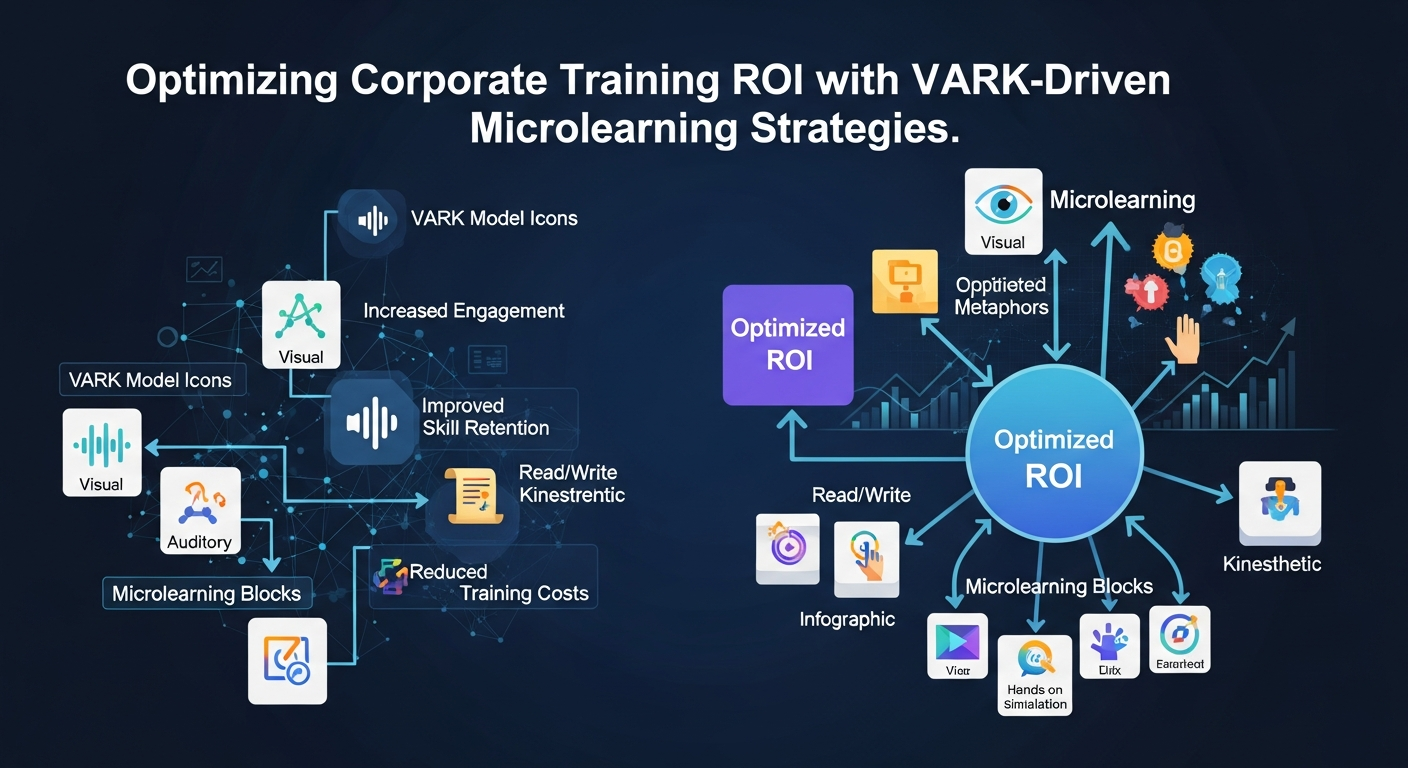
Optimizing Corporate Training ROI with VARK-Driven Microlearning Strategies
In today's fast-paced corporate landscape, traditional training methods often fall short of meeting the dynamic needs of a diverse workforce. As L&D leaders, VPs, Directors, and Managers across industries like Compliance, Sales, Banking, Finance, Insurance, Retail, Pharma, Health care, Hospitality, Oil and Gas, and Mining, you face the persistent challenge of demonstrating tangible Return on Investment (ROI) for your training initiatives. High engagement, effective knowledge retention, and measurable skill application are not just desirable outcomes; they are critical for business growth and competitive advantage.
This article explores a powerful synergy: combining the well-established VARK learning styles model with agile microlearning strategies. By tailoring content to individual preferences and delivering it in bite-sized, accessible formats, organizations can significantly boost training effectiveness, reduce costs, and ultimately optimize their corporate training ROI.
Understanding the VARK Model for Diverse Learners
The VARK model categorizes learning preferences into four distinct types: Visual, Auditory, Read/Write, and Kinesthetic. Recognizing these preferences is fundamental to crafting training that truly resonates with every employee, from a new hire in retail to a seasoned executive in finance.
- Visual (V): Learners prefer seeing information presented through charts, graphs, diagrams, videos, and infographics.
- Auditory (A): Learners absorb information best by hearing it spoken, through lectures, discussions, podcasts, and audio explanations.
- Read/Write (R): Learners thrive on text-based information, including articles, reports, lists, notes, and written assignments.
- Kinesthetic (K): Learners prefer hands-on experience, practical demonstrations, simulations, role-playing, and real-world application.
Traditional, one-size-fits-all training often caters predominantly to one or two styles, leaving a significant portion of the workforce disengaged and struggling to retain information. By acknowledging the VARK diversity within your teams, you lay the groundwork for a more inclusive and effective learning environment.
The Transformative Power of Microlearning
Microlearning delivers learning content in short, focused bursts, typically ranging from 2 to 10 minutes. This approach stands in stark contrast to lengthy workshops or extensive e-learning modules, offering numerous advantages crucial for modern enterprises seeking an efficient learning content management system.
- Improved Retention: Shorter modules reduce cognitive overload, making information easier to process and remember.
- Enhanced Engagement: Quick, relevant content fits seamlessly into busy schedules, encouraging higher completion rates.
- Flexibility and Accessibility: Learners can access content anytime, anywhere, on any device, making it ideal for mobile workforces in industries like Sales or Hospitality.
- Faster Deployment and Updates: Microlearning modules are quicker to create and easier to update, ensuring training always reflects the latest compliance regulations or product features.
- Cost-Effectiveness: Reduced development time and elimination of traditional training logistics contribute to significant savings.
An effective Microlearning LMS is essential for delivering this agile content efficiently, providing a robust learning management software solution for any organization.
Synthesizing VARK and Microlearning for Unprecedented ROI
The true power emerges when VARK-driven strategies meet microlearning's agility. This combination allows for personalized learning paths that cater to individual preferences while maintaining the benefits of bite-sized content. Imagine the impact on enterprise learning management:
Tailoring Content to Each VARK Style with Microlearning:
- Visual Learners: Provide short animated videos explaining complex processes (e.g., financial regulations), infographics summarizing key data, or interactive simulations demonstrating equipment operation in Oil and Gas.
- Auditory Learners: Offer 3-minute podcast snippets on ethical guidelines for Banking, audio explanations accompanying visuals, or short discussions with subject matter experts on new Pharma products.
- Read/Write Learners: Deliver concise policy documents in Compliance, quick articles on market trends for Insurance agents, bullet-point summaries of sales techniques, or interactive quizzes with detailed feedback.
- Kinesthetic Learners: Implement mini-simulations for customer service scenarios in Retail or Hospitality, interactive drag-and-drop exercises for identifying risks in Mining, or gamified challenges where learners apply concepts immediately. A Gamified LMS is particularly effective here, turning learning into an engaging experience.
By offering multiple content formats for the same learning objective, organizations ensure that every employee can engage with the material in a way that maximizes their understanding and retention. This approach forms the core of an Adaptive Learning strategy.
Implementing VARK-Driven Microlearning: A Strategic Approach
Successfully integrating VARK-driven microlearning requires a thoughtful, strategic roadmap:
- Assess Learner Preferences: Utilize quick online questionnaires or assessments to identify dominant VARK styles within your workforce. This data informs content development.
- Curate and Create Diverse Content: Develop a rich library of microlearning modules covering various VARK styles for each topic. Leveraging an AI Powered Authoring Tool can significantly accelerate this process, generating varied content formats efficiently.
- Leverage a Robust LMS: A sophisticated lms learning management system is crucial for delivering, tracking, and managing diverse microlearning content. Look for a platform that supports multiple media types and personalized learning paths.
- Promote and Personalize: Encourage learners to select modules aligned with their preferred styles. The learning management system should ideally recommend content based on past interactions and identified preferences.
- Analyze and Iterate: Continuously monitor engagement rates, completion data, and performance metrics. Use this feedback to refine content and delivery, ensuring ongoing relevance and effectiveness. For industries requiring high accuracy, like healthcare or finance, implementing Risk-focused Training in a microlearning format can significantly mitigate potential errors.
AI and the Future of Personalized Training
Artificial intelligence is revolutionizing how organizations approach personalized training and content delivery within a comprehensive LCMS.
Question: How can AI help our training content reach the right learners at the right time?
Answer: AI algorithms can analyze learner profiles, performance data, and job roles to dynamically recommend the most relevant microlearning modules. This means a compliance officer automatically receives updates on new regulations in a read/write format, while a sales team member gets a short video on a new product feature just before a client meeting. AI enhances the internal search capabilities of a learning management system, ensuring that specific content is surfaced to individuals most likely to benefit from it, maximizing impact and efficiency.
Question: Can AI tailor training experiences for our global workforce, considering regional differences?
Answer: Absolutely. AI can facilitate content localization, translating and adapting microlearning modules to suit diverse linguistic and cultural contexts. For a multinational corporation in Oil and Gas, AI can ensure that safety protocols are not only translated but also presented with regionally specific examples and imagery. It helps deliver content that is not just technically accurate but also culturally resonant, addressing unique operational environments and local regulatory requirements.
Question: How does AI help understand what our learners truly need and intend to learn?
Answer: AI analyzes interactions within the learning management solutions platform – what content learners engage with, their performance in assessments, and their stated career goals. This allows AI to predict skill gaps and proactively suggest training paths that align with both individual aspirations and organizational objectives. For example, if an employee in Banking is frequently searching for information on data privacy, AI can recommend a series of microlearning modules on GDPR compliance, anticipating their learning intent and professional development needs.
Measuring the ROI of VARK-Driven Microlearning
Demonstrating ROI is paramount for L&D leaders. With VARK-driven microlearning, measuring impact becomes clearer and more compelling:
- Reduced Training Time & Costs: Shorter modules and self-paced learning reduce instructor-led hours, travel expenses, and operational overhead. A cloud based learning management system further streamlines this.
- Improved Performance Metrics: Track tangible improvements such as increased sales figures post-training, reduced compliance violations, fewer safety incidents in Mining, or higher customer satisfaction scores in Hospitality.
- Enhanced Knowledge Retention & Application: Assess through post-training quizzes, practical simulations, and direct observation of skill application in the workplace.
- Higher Employee Engagement & Satisfaction: Surveys can gauge learner perception of the training's relevance and effectiveness, leading to better talent retention.
By leveraging the robust analytics offered by a modern LMS, organizations can precisely quantify these benefits, solidifying the business case for optimized training strategies.
Conclusion
Optimizing corporate training ROI is no longer a luxury but a strategic imperative. By thoughtfully integrating the VARK learning model with flexible microlearning strategies, L&D professionals can create highly effective, personalized, and engaging learning experiences across all sectors, from the highly regulated Pharma industry to dynamic Retail environments. This approach not only caters to diverse learning styles but also aligns perfectly with the demands of today's fast-paced workforce.
Embrace VARK-driven microlearning to transform your training programs from mere obligations into powerful engines of employee development and significant business growth. Solutions like the MaxLearn LMS provide the technological backbone to make this vision a reality, delivering measurable value that resonates directly with your organization's bottom line.


Comments
Post a Comment