Monolithic General Intelligence vs. Multidimensional Cognition in Workplace Upskilling
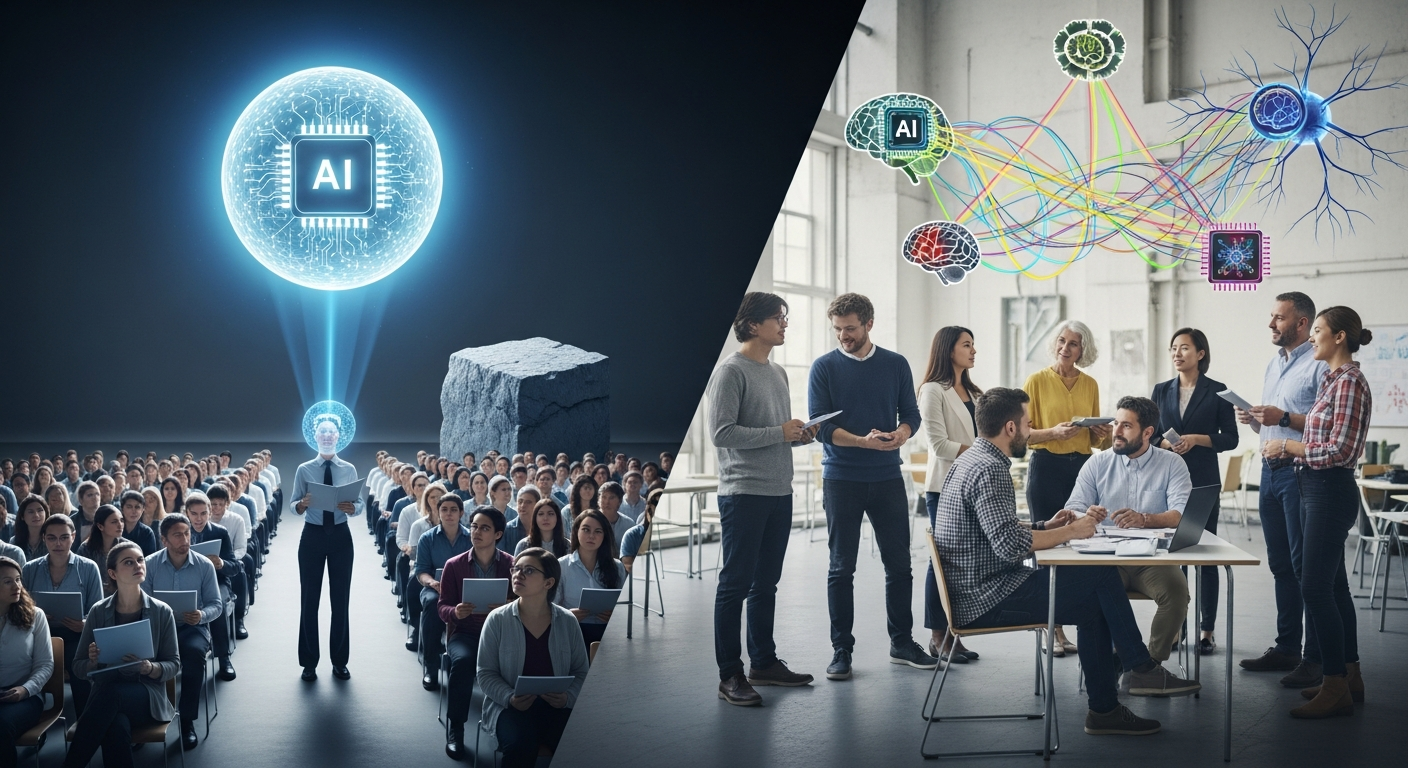
Monolithic General Intelligence vs. Multidimensional Cognition in Workplace Upskilling
The landscape of workplace skills is undergoing a profound transformation. For Learning & Development (L&D) leaders, the strategic imperative is no longer just about filling knowledge gaps but about cultivating a workforce equipped for an unpredictable future. This shift necessitates a re-evaluation of how we approach upskilling, moving beyond the traditional pursuit of a "monolithic general intelligence" (MGI) towards fostering "multidimensional cognition" (MDC).
In an era increasingly shaped by advanced algorithms and automation, the human advantage lies not in accumulating vast, generic information, but in developing nuanced, adaptable, and deeply specialized cognitive abilities. Understanding this distinction is crucial for crafting effective talent development strategies across industries from Finance to Healthcare, and from Sales to Oil & Gas.
The Fading Relevance of Monolithic General Intelligence
Historically, a "generalist" was highly valued – someone with a broad understanding across many domains, capable of connecting disparate ideas. This represented a form of monolithic general intelligence, where the emphasis was on a wide, if sometimes shallow, intellectual capacity. The goal of upskilling often revolved around expanding this general knowledge base, assuming that a well-rounded individual could tackle most challenges.
However, the modern professional environment, amplified by technological advancements, has exposed the limitations of this approach. Routinely, tasks requiring broad but superficial knowledge are increasingly being automated. For instance, consider the sheer volume of data analytics or regulatory compliance information that can now be processed and interpreted by machines.
What does sophisticated computing mean for the need for broad human understanding? As intelligent algorithms become adept at information retrieval, synthesis, and even pattern recognition across vast datasets, the human brain’s capacity to merely store and recall general facts becomes less of a differentiator. This challenges the very foundation of training programs that prioritize expansive but undifferentiated knowledge acquisition.
Embracing Multidimensional Cognition: The New Paradigm
Multidimensional cognition stands in stark contrast to MGI. It advocates for the development of a diverse array of specialized cognitive skills that enable individuals to think critically, solve complex problems, innovate, and adapt within specific contexts. It's about depth, flexibility, and application, rather than just breadth. Key facets of MDC include:
- Critical Thinking & Problem Solving: Analyzing complex situations, identifying root causes, and devising novel solutions.
- Strategic & Conceptual Thinking: Understanding overarching goals, predicting future trends, and planning accordingly.
- Creativity & Innovation: Generating new ideas, approaches, and products.
- Emotional & Social Intelligence: Understanding and managing emotions, building relationships, and collaborating effectively.
- Adaptability & Learning Agility: Rapidly acquiring new skills, adjusting to change, and thriving in dynamic environments.
- Ethical Reasoning: Navigating moral dilemmas and making principled decisions, particularly critical in sectors like Banking, Pharma, and Compliance.
What specific mental abilities will hold the most value as artificial intelligence grows more capable? The answer lies in these uniquely human, multidimensional cognitive skills. While automation handles the repetitive and data-intensive, humans are needed for the ambiguous, the empathetic, and the truly innovative.
Consider a sales professional who excels not just at product knowledge (MGI), but also at reading customer emotions, adapting their pitch in real-time, and creatively solving unique client challenges (MDC). Or a finance expert who can not only interpret regulations but also anticipate market shifts and design innovative risk mitigation strategies. These are the hallmarks of multidimensional cognition.
Fostering Multidimensional Cognition Through Strategic Upskilling
The transition from an MGI to an MDC mindset in upskilling demands a shift in L&D strategy and the tools we employ. It’s no longer about force-feeding information but cultivating capabilities.
Designing for Depth and Application
- Personalized Learning Journeys: Recognizing that individuals have different starting points and needs, Adaptive Learning platforms are essential. They tailor content and pace, ensuring learners develop specific cognitive muscles rather than passively absorbing generic information.
- Contextualized & Experiential Learning: Training must move beyond theoretical knowledge to practical application. Case studies, simulations, and project-based learning are vital. For industries like Healthcare, this means simulating patient interactions; for Mining, it means virtual safety drills.
- Continuous Skill Reinforcement: Multidimensional skills are built over time. Short, focused learning bursts delivered via a Microlearning LMS can effectively reinforce complex concepts and provide regular opportunities for practice and feedback.
- Engagement Through Interaction: A Gamified LMS can transform skill development into an engaging experience, encouraging active participation, problem-solving, and competitive skill-building.
Leveraging Advanced Technology for Cognitive Development
A modern LMS is not merely a content delivery system; it's a strategic platform for cultivating multidimensional cognition. A robust learning content management system or learning management software offers the flexibility and analytical power needed.
Can advanced systems help design more effective skill development programs? Absolutely. An AI Powered Authoring Tool, for example, can assist instructional designers in creating highly relevant, personalized, and interactive content faster, targeting specific cognitive skills. This transforms an ordinary learning management system into a dynamic engine for talent growth.
Furthermore, how can global teams access consistent, high-quality skill development? A cloud based learning management system ensures equitable access to critical training, allowing large enterprises in sectors like Oil & Gas or multinational Banking firms to deploy uniform yet adaptable programs across diverse geographies, fostering a consistent baseline of multidimensional cognitive skills.
For high-stakes environments, incorporating Risk-focused Training within an enterprise learning management solution is paramount. This specialized training helps employees in Compliance, Finance, or Health Care develop the critical ethical and decision-making cognition required to navigate complex regulations and potential pitfalls, often overlooked by traditional, broad-brush approaches.
Ultimately, the objective of an advanced lms learning management system or LCMS like MaxLearn LMS is to provide the infrastructure for a truly comprehensive learning management solution that nurtures multidimensional cognition.
Real-World Impact Across Industries
- Banking & Finance: Beyond regulatory knowledge, upskilling focuses on ethical decision-making, predictive analytics interpretation, and adaptive client advisory.
- Compliance: Rather than memorizing rules, employees develop cognitive skills for nuanced interpretation, risk identification, and proactive mitigation.
- Sales & Retail: Training shifts from product features to empathy, psychological persuasion, conflict resolution, and innovative customer engagement.
- Pharma & Healthcare: Professionals cultivate critical diagnostic reasoning, compassionate communication, and rapid assimilation of new medical science.
- Hospitality: Employees develop sophisticated problem-solving for guest issues, cultural sensitivity, and proactive service innovation.
- Oil & Gas / Mining: Upskilling emphasizes complex system thinking, predictive maintenance, and critical safety judgment in high-risk scenarios.
Conclusion: The Future is Multidimensional
For L&D leaders, the choice is clear: clinging to the diminishing returns of monolithic general intelligence or embracing the strategic advantage of multidimensional cognition. The latter is not just about equipping individuals with more skills, but with the right kinds of cognitive abilities that allow them to thrive alongside, and often leveraging, intelligent technologies.
By prioritizing personalized, contextualized, and continuous learning experiences, powered by advanced learning management systems like MaxLearn LMS, organizations can cultivate a workforce that is adaptable, innovative, and critically important for future success. The investment in fostering multidimensional cognition today is an investment in human resilience and competitive edge tomorrow.


Comments
Post a Comment