How to Map Corporate Training Content to Different Learning Styles
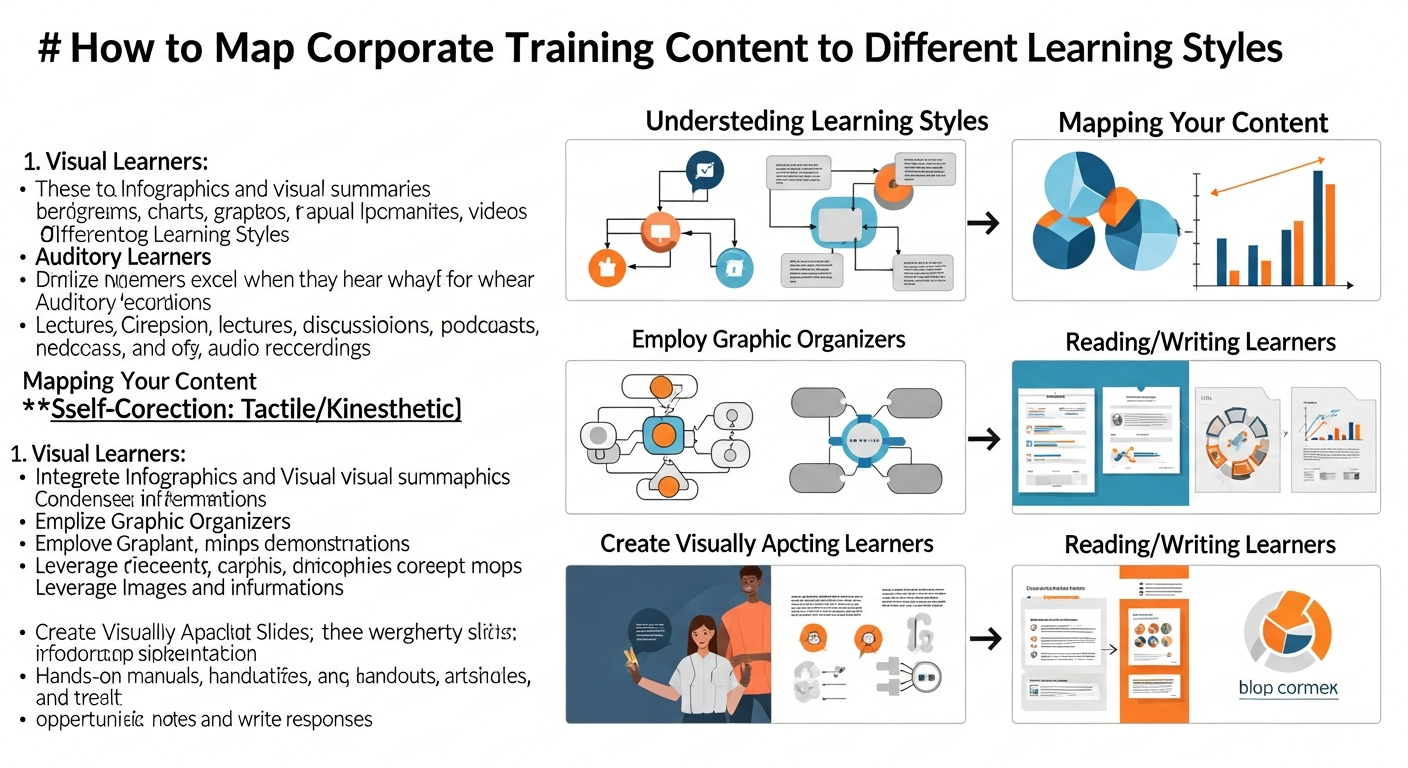
How to Map Corporate Training Content to Different Learning Styles
In the dynamic landscape of corporate learning and development, the "one-size-fits-all" approach to training is rapidly becoming a relic of the past. As L&D leaders, VPs, Directors, and Managers, you understand that your workforce is a mosaic of diverse backgrounds, experiences, and, crucially, learning preferences. To truly maximize engagement, knowledge retention, and ultimately, your organization's human capital potential, understanding and strategically mapping corporate training content to different learning styles is not just beneficial—it's imperative.
Effective training leads to higher productivity, reduced error rates, and a more skilled workforce across all industries, from Compliance and Sales to Banking, Healthcare, and Oil and Gas. This article will explore why this mapping is critical, delve into practical strategies, and highlight how modern Microlearning LMS solutions can be your most powerful ally in this endeavor.
Why Learning Styles Matter in Corporate Training
Imagine trying to teach a visual artist through an audiobook or a kinetic learner through a lengthy text document. The frustration would be palpable, and the learning minimal. The same holds true for your corporate learners.
- Enhanced Engagement: When content aligns with a learner's preferred style, they are more likely to actively participate and stay focused. This is especially critical for complex or mandatory training, such as Risk-focused Training in finance or compliance modules.
- Improved Knowledge Retention: Information presented in a preferred format is processed more deeply and remembered for longer periods. This translates to a stronger skill set and better on-the-job application.
- Higher Training ROI: Engaged learners who retain information effectively mean your training investments yield greater returns, impacting everything from sales performance to operational efficiency.
- Inclusive Learning Environment: Catering to diverse learning styles fosters an inclusive environment where every employee feels supported and has an equal opportunity to succeed.
Understanding Common Learning Style Models
While numerous models exist, one of the most widely recognized and practical for content mapping is the VARK model, which categorizes learners into Visual, Auditory, Read/Write, and Kinesthetic preferences.
The VARK Model and Content Mapping Strategies
Let's break down how to map your corporate training content to each VARK preference:
-
Visual Learners
These learners best absorb information when they can see it. Think diagrams, charts, graphs, videos, and visual metaphors. For industries like Healthcare, this could mean anatomical diagrams; for Oil and Gas, flowcharts of processes; or for Retail, visual merchandising guides.
- Content Formats: Infographics, instructional videos, interactive simulations, animated presentations, mind maps, detailed images.
- LMS Application: A robust Microlearning LMS can host a rich library of visual assets, making them easily accessible.
-
Auditory Learners
Auditory learners learn best by hearing information. They benefit from discussions, lectures, and audio explanations. In Banking, this might involve listening to ethical dilemma scenarios; in Sales, listening to mock client calls.
- Content Formats: Podcasts, webinars, audio lessons, group discussions, lectures, role-playing with emphasis on dialogue, verbal instructions.
- LMS Application: Ensure your Gamified LMS or standard learning management system supports embedded audio files, live webinar functionality, and discussion forums.
-
Read/Write Learners
These individuals prefer information displayed as words. They excel with text-based content, reading manuals, taking notes, and writing summaries. Compliance training in any sector, or detailed policy documents in Pharma, are prime examples.
- Content Formats: Detailed articles, e-books, training manuals, case studies, written assignments, reports, comprehensive guides, annotated slides.
- LMS Application: A modern Microlearning LMS should offer robust text display capabilities, searchable content, and note-taking features.
-
Kinesthetic Learners
Kinesthetic learners learn by doing, experiencing, and interacting. Hands-on activities, simulations, and real-world application are key. This is crucial for practical skills in Hospitality, Health Care, or field operations in Mining.
- Content Formats: Simulations, role-playing, interactive exercises, hands-on labs, practical demonstrations, case studies with problem-solving tasks, field trips, virtual reality (VR) training.
- LMS Application: Leveraging a Gamified LMS can provide interactive quizzes and simulations, while platforms with Adaptive Learning capabilities can guide learners through activity-based paths.
Leveraging Technology for Personalized Learning Experiences
Modern learning technologies are game-changers in delivering content tailored to diverse learning styles. An advanced `LMS` (learning management system) serves as the central hub for managing, delivering, and tracking these varied learning experiences.
Harnessing Intelligent Systems for Dynamic Content Delivery
How can intelligent systems dynamically adapt training content to individual learner preferences? Advanced `learning management software` can employ algorithms to analyze learner interactions, progress, and preferences, then dynamically recommend or present content in the most suitable format. For instance, if a learner struggles with text modules but excels with videos, the system can prioritize video content for future topics.
Which organizational roles benefit most from advanced content personalization? L&D professionals, instructional designers, and training managers benefit immensely, as these systems reduce the manual effort of tailoring content. Employees across all segments – from Sales to Pharma – experience more effective and engaging training, directly impacting their performance and skill development.
In what contexts are smart learning platforms most effective for tailoring content? Smart learning platforms, particularly a Microlearning LMS, are highly effective in contexts requiring continuous upskilling, compliance updates, or rapid knowledge transfer. Their ability to deliver bite-sized content in various formats allows learners to access information quickly and in their preferred style, whether it’s a quick visual guide for a new retail product or an auditory briefing on an updated banking regulation.
- Microlearning for Flexibility: Microlearning LMS platforms are ideal for delivering content in short, digestible modules. This approach naturally lends itself to diverse formats, allowing a learner to choose a 3-minute video, an infographic, or a quick interactive quiz based on their preference for a particular concept. This flexibility is key for industries like Sales, where quick access to product information is vital.
- Gamification for Engagement: A Gamified LMS can significantly boost engagement, especially for kinesthetic and competitive learners. Incorporating points, badges, leaderboards, and interactive challenges can transform dry compliance modules into an engaging experience. This is particularly useful in industries like Banking and Finance, where complex regulations require consistent attention.
- Adaptive Learning Paths: Adaptive Learning systems leverage AI to personalize the learning journey. By assessing a learner's progress, proficiency, and even their preferred content format, the system can automatically adjust the path, content delivery method, and difficulty, ensuring optimal learning for each individual. This is a powerful tool for complex topics in Pharma or technical training in Mining.
- AI-Powered Authoring: An AI Powered Authoring Tool can dramatically speed up the creation of diverse content formats. It can assist in converting text to audio, generating quizzes from video transcripts, or suggesting visual elements for textual content, making it easier for L&D teams to produce multi-modal training materials.
Implementation Best Practices for Your Enterprise Learning Management Strategy
To successfully map your corporate training content, consider these best practices within your `enterprise learning management` strategy:
- Conduct Learner Needs Assessments: Utilize surveys, interviews, and pre-assessments to understand the learning preferences of your employees. A good `LCMS` can help manage this data.
- Modular Content Creation: Break down complex topics into smaller, self-contained modules that can be delivered in various formats. This allows learners to choose their preferred pathway.
- Blended Learning Approaches: Combine self-paced online modules (delivered via your `learning management system`) with instructor-led sessions, workshops, and peer discussions. This ensures all learning styles are addressed at some point.
- Utilize a Robust Learning Content Management System: A comprehensive `learning content management system` or `cloud based learning management system` is essential for organizing, delivering, and tracking diverse content types. Look for a solution like MaxLearn LMS that offers flexibility and advanced features.
- Continuous Feedback and Iteration: Gather feedback on the effectiveness of different content formats and adjust your strategy accordingly.
- Promote Learner Choice: Where possible, empower learners to choose the content format that works best for them. This autonomy significantly boosts engagement.
Conclusion
Mapping corporate training content to different learning styles is no longer a luxury but a strategic necessity for L&D leaders. By understanding the diverse preferences within your workforce and leveraging the power of modern `learning management solutions` and technologies, you can create a truly impactful and inclusive learning environment.
Embracing a comprehensive `lms learning management system` strategy that integrates microlearning, gamification, and adaptive learning, supported by tools like an AI-powered authoring tool, will ensure your training initiatives resonate with every employee. This not only elevates individual performance but propels your entire organization forward, ensuring a skilled, engaged, and adaptable workforce ready to tackle tomorrow's challenges across all industries.


Comments
Post a Comment