How to Design Personalized Learning Paths Using Multiple Intelligences
How to Design Personalized Learning Paths Using Multiple Intelligences
In today's fast-paced corporate world, effective talent development is no longer a luxury but a strategic imperative. Learning and Development (L&D) leaders, from Vice Presidents to Managers, are constantly seeking innovative ways to boost employee engagement, knowledge retention, and ultimately, organizational performance. The traditional one-size-fits-all training model is increasingly proving inadequate in addressing the diverse needs of a modern workforce. This is where personalized learning paths, especially those designed using the framework of Multiple Intelligences, offer a transformative solution.
Imagine a learning environment where every individual's unique cognitive strengths are not just acknowledged but actively leveraged to optimize their learning journey. This is the promise of integrating Howard Gardner's theory of Multiple Intelligences into corporate training. By understanding and catering to different intellectual strengths, L&D professionals can create highly engaging, relevant, and impactful learning experiences across industries like Compliance, Sales, Banking, Finance, Insurance, Retail, Pharma, Healthcare, Hospitality, Oil and Gas, and Mining.
Understanding Multiple Intelligences in L&D
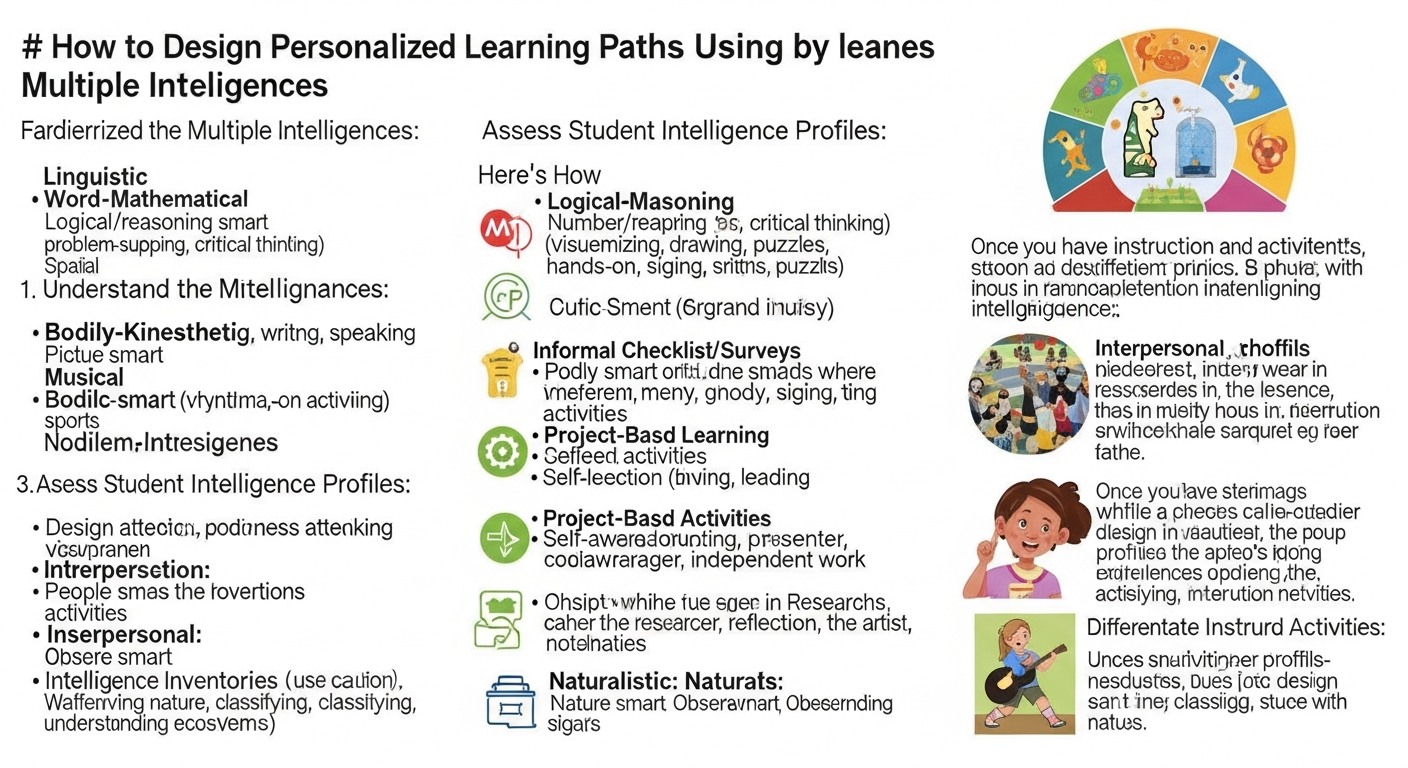
Howard Gardner's theory posits that intelligence is not a single, monolithic entity but rather a collection of distinct capabilities or "intelligences." While Gardner originally identified seven, he later expanded the list. For L&D purposes, focusing on the most relevant ones can provide a powerful framework:
- Linguistic Intelligence: Strong with words, language, reading, and writing.
- Logical-Mathematical Intelligence: Excels at reasoning, problem-solving, numbers, and logical analysis.
- Spatial Intelligence: Good at visualizing, understanding maps, charts, and spatial relationships.
- Bodily-Kinesthetic Intelligence: Learns best through doing, hands-on activities, movement, and physical interaction.
- Musical Intelligence: Sensitive to rhythm, sound, pitch, and tone; learns well through auditory cues.
- Interpersonal Intelligence: Understands and interacts effectively with others; thrives in group settings.
- Intrapersonal Intelligence: Strong self-awareness, introspection, and understanding one's own motivations.
- Naturalistic Intelligence: Understands patterns in nature, recognizes and categorizes elements.
By recognizing that a sales professional might have strong interpersonal intelligence, while a compliance officer might excel in logical-mathematical and linguistic areas, L&D can move beyond generic modules to truly resonate with each learner.
Why Personalization Matters in Corporate Learning
The benefits of personalized learning extend far beyond mere novelty. For L&D leaders, the impact on key performance indicators is significant:
- Increased Engagement: When learning aligns with an individual's natural strengths, it feels less like a chore and more like an enjoyable challenge. This dramatically boosts participation and motivation.
- Improved Knowledge Retention: Content delivered in a preferred format is processed more deeply and remembered longer.
- Enhanced Application & Performance: Learners are better equipped to apply new skills and knowledge in real-world scenarios, leading to tangible improvements in job performance and business outcomes.
- Reduced Training Time & Costs: Efficient learning means less time spent on unproductive training methods and a quicker return on investment.
- Future-Proofing Talent: Investing in personalized development fosters a culture of continuous learning and adaptability.
Modern LMS platforms are central to making this vision a reality, providing the infrastructure to deliver, track, and manage diverse learning paths.
Steps to Design MI-Based Personalized Learning Paths
1. Assess Learner Intelligences
The first step is to understand your audience. This doesn't require a formal psychological evaluation. Simple, self-assessment surveys, pre-course questionnaires, or even observational insights from managers can help identify dominant intelligences. For example, asking learners how they prefer to learn new complex concepts (reading a manual, watching a video, discussing with peers, hands-on practice) can provide valuable clues.
2. Curate and Create Diverse Content
Once you know your learners' preferences, the real work of content transformation begins. Instead of a single video or text module, offer multiple formats for the same core objective:
- Linguistic: E-books, articles, case studies, written reports, debates, journaling.
- Logical-Mathematical: Data analysis exercises, problem-solving simulations, logic puzzles, coding challenges, financial modeling.
- Spatial: Infographics, interactive diagrams, virtual reality (VR) simulations, visual storytelling, concept mapping.
- Bodily-Kinesthetic: Role-playing, hands-on simulations (e.g., operating machinery, medical procedures), field trips, practical workshops.
- Musical: Jingle creation for key concepts, background music to aid concentration, mnemonic songs.
- Interpersonal: Group projects, collaborative discussions, peer coaching, mentorship programs.
- Intrapersonal: Reflective assignments, self-paced modules, personalized goal setting, emotional intelligence exercises.
Leveraging an AI Powered Authoring Tool can significantly streamline the creation of varied content types, transforming existing material into engaging formats tailored for different intelligences.
3. Structure Adaptive Learning Paths
Personalization isn't just about content; it's also about the journey. This is where Adaptive Learning comes into play. Design branching scenarios where learners can choose their preferred content formats or follow paths optimized for their strengths. A modern Microlearning LMS is ideal for delivering bite-sized content tailored to individual needs, allowing learners to navigate at their own pace and in their chosen style.
4. Enhance Engagement with Strategic Features
To keep learners motivated, integrate features that appeal to different intelligences:
- Gamification: A Gamified LMS uses points, badges, leaderboards, and challenges to appeal to competitive (Logical-Mathematical) and social (Interpersonal) learners.
- Social Learning: Discussion forums, peer reviews, and collaborative projects cater to Interpersonal intelligence.
- Real-World Scenarios: Case studies and simulations make learning practical and relevant for Logical-Mathematical and Bodily-Kinesthetic learners.
- Risk-focused Training: Presenting challenges that require critical thinking and strategic planning resonates with Logical-Mathematical and Intrapersonal learners, especially in industries like Banking and Insurance.
Implementing with Advanced Learning Technology
The successful deployment of MI-based personalized learning paths relies heavily on a robust learning management system. A sophisticated learning management software provides the essential tools for:
- Content Delivery: Seamlessly distribute diverse multimedia content.
- Learner Tracking: Monitor progress, engagement, and performance across different paths.
- Analytics: Gain insights into which learning strategies are most effective for different learner profiles.
- Scalability: A cloud based learning management system can efficiently support thousands of learners across multiple regions and departments, crucial for enterprise learning management.
For L&D leaders looking to consolidate and manage a vast array of learning content types, an LCMS (Learning Content Management System) integrated into the LMS is invaluable. It helps ensure consistency and ease of updates across varied formats.
MaxLearn LMS is an example of a comprehensive learning management solution that offers the features necessary to implement such dynamic and personalized strategies. By integrating microlearning, gamification, and adaptive paths, a modern LMS learning management system like MaxLearn empowers L&D professionals to create truly impactful learning experiences.
Exploring Intelligent System Capabilities
Q: How can smart algorithms enhance individual learning experiences?
Smart algorithms, often referred to as artificial intelligence, are pivotal in enhancing individual learning experiences by acting as a dynamic tutor and content curator. They analyze learner data—such as performance, engagement patterns, preferred content types, and time spent on topics—to provide real-time, tailored feedback and content recommendations. These systems can predict areas where a learner might struggle, proactively suggest remedial modules, or recommend advanced challenges for those demonstrating mastery. This personalized guidance ensures that each learner receives the most relevant and impactful material at precisely the right moment, optimizing their path to competency and maximizing knowledge retention.
Q: What are the key considerations for deploying advanced learning technology across different regions or departments?
Deploying advanced learning technology globally requires careful consideration of several factors. Scalability is paramount, ensuring the system can handle a growing user base and vast amounts of content without performance degradation. Multi-language support and cultural relevance are critical for engagement in diverse regions, necessitating localization of content and interfaces. Data privacy and compliance with regulations like GDPR or HIPAA must be rigorously addressed, as data handling laws vary significantly across geographies. Furthermore, seamless integration with existing HRIS, CRM, and other enterprise systems is crucial for a unified employee experience and data flow, minimizing disruption and maximizing operational efficiency across departments.
Q: Beyond basic tracking, how can intelligent systems truly transform learner engagement and outcomes?
Intelligent systems move beyond basic tracking by offering sophisticated capabilities that profoundly transform engagement and outcomes. They enable true adaptive content delivery, dynamically adjusting the difficulty, format, and sequence of learning materials based on individual progress and learning style. AI-driven personalized feedback goes beyond right/wrong answers, offering insights into reasoning and suggesting specific areas for improvement. Virtual coaches or intelligent tutors can provide on-demand support and answer queries, simulating human interaction. Furthermore, these systems can perform advanced skill gap analysis, proactively identifying areas for development and suggesting career-aligned learning paths, thereby fostering continuous growth and directly impacting organizational talent readiness and overall business outcomes.
Conclusion
The future of corporate learning is undeniably personalized. By embracing Howard Gardner's theory of Multiple Intelligences and leveraging advanced learning content management system capabilities, L&D leaders can move beyond generic training to create truly resonant and effective learning experiences. The shift to designing personalized learning paths using multiple intelligences isn't just about adopting a new trend; it's about making a strategic investment in your workforce's potential, ensuring higher engagement, better retention, and superior performance.
Explore how a modern learning management system can empower your organization to unlock the full potential of every learner. The era of individualized growth and unparalleled talent development is here.


Comments
Post a Comment