How to Apply the DDE Framework for Game Design in Microlearning
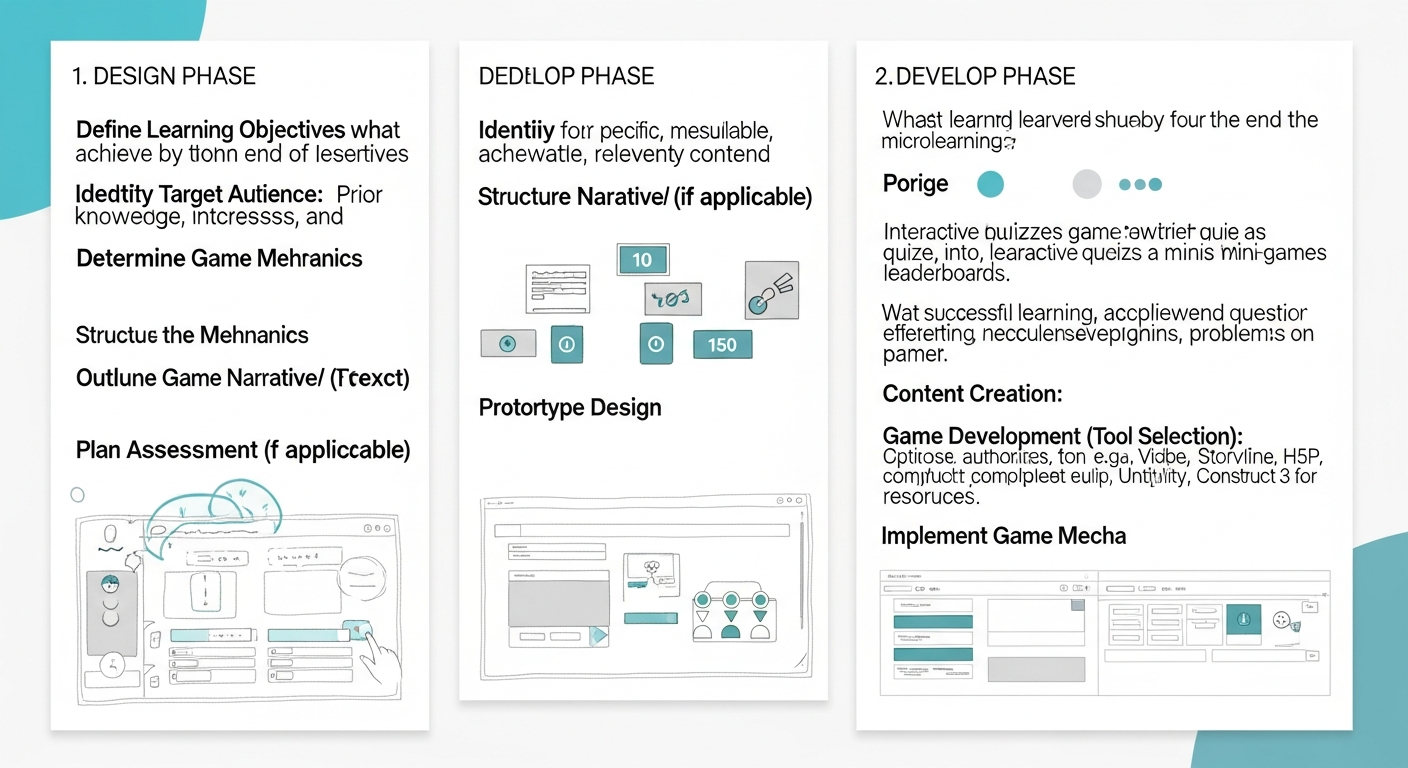
Applying the DDE Framework for Game Design in Microlearning
In today's fast-paced corporate world, where attention spans are shrinking and the demand for continuous skill development is paramount, traditional long-form training modules often fall short. Learning and Development (L&D) leaders are constantly seeking innovative strategies to boost engagement, improve knowledge retention, and deliver measurable business impact. Enter microlearning, a powerful approach to delivering bite-sized, focused content. But how do you make microlearning not just effective, but truly captivating? The answer lies in blending it with game design principles, guided by the robust Define, Design, Evaluate (DDE) framework.
For Vice Presidents, Directors, and Senior Managers in L&D across sectors like Compliance, Sales, Banking, Finance, Insurance, Retail, Pharma, Healthcare, Hospitality, Oil and Gas, and Mining, understanding how to leverage the DDE framework for gamified microlearning can be a game-changer. It promises not just enhanced learner experience but also a significant return on investment in training initiatives.
Deconstructing the DDE Framework for Engaging Learning
The DDE framework, originating from game development, provides a structured approach to creating compelling interactive experiences. It's a cyclical process that ensures your learning solutions are not only well-conceived but also continuously refined to meet evolving needs.
1. Define: Laying the Strategic Foundation
The "Define" stage is where you establish the core objectives, target audience, and desired outcomes for your microlearning game. This isn't just about what you want to teach, but why it matters and who needs to learn it. For a Microlearning LMS, this means identifying specific learning gaps and performance metrics that need improvement.
- Learning Objectives: What specific skills or knowledge should learners acquire? For instance, in banking, it might be understanding new compliance regulations; in sales, mastering a new product feature.
- Target Audience Analysis: Who are your learners? What are their existing knowledge levels, motivations, and pain points? A frontline retail associate needs a different approach than a pharmaceutical sales representative.
- Key Performance Indicators (KPIs): How will you measure success? Is it reduced compliance violations, increased sales conversions, fewer safety incidents in mining, or improved customer service scores in hospitality?
- Content Scope: What specific content will be covered in each micro-module? Keep it focused and concise, ideal for Gamified LMS environments.
- Game Mechanics & Dynamics: What kind of challenges, rewards, and interactions will best achieve the learning objectives? Think points, badges, leaderboards, interactive scenarios, and simulations.
In this phase, clarity is paramount. A well-defined problem and objective lead to a much more effective and engaging solution.
2. Design: Crafting the Interactive Experience
With clear definitions in place, the "Design" phase brings your microlearning game to life. This is where instructional design meets game design, creating an immersive and effective learning journey.
- Narrative & Storytelling: Create a compelling story or scenario that contextualizes the learning. For instance, a healthcare scenario where a learner is a nurse making critical decisions, or an oil and gas simulation for safety protocols.
- Game Mechanics Integration: Integrate points, levels, challenges, quests, and rewards that directly relate to the learning content. For example, completing a module on risk management in finance earns a "Compliance Champion" badge.
- User Interface (UI) & User Experience (UX): Design an intuitive, visually appealing, and easy-to-navigate interface. Microlearning thrives on simplicity and immediate feedback.
- Content Authoring: Develop the actual microlearning content – short videos, interactive quizzes, infographics, quick simulations. An AI Powered Authoring Tool can significantly speed up this process, generating initial drafts or suggesting interactive elements.
- Feedback Mechanisms: Implement immediate and constructive feedback loops. Learners should understand why they succeeded or failed, enhancing the learning curve.
The design should foster active participation, problem-solving, and a sense of achievement, making the learning process inherently rewarding.
3. Evaluate: Measuring Impact and Iterating for Success
The "Evaluate" stage is critical for assessing the effectiveness of your gamified microlearning modules and identifying areas for improvement. This isn't a one-time event but an ongoing process of data collection and refinement.
- Performance Metrics: Track completion rates, scores, time spent, and engagement levels within the Gamified LMS.
- Learning Outcomes Assessment: Did learners achieve the defined objectives? Use pre/post-assessments, skill tests, or observed behavioral changes.
- Feedback Collection: Gather qualitative feedback through surveys, interviews, and focus groups to understand learner perceptions and experiences.
- Business Impact Analysis: Connect learning outcomes back to the organizational KPIs defined earlier. Did the compliance training reduce incidents? Did sales training boost numbers? This is crucial for demonstrating ROI to senior leadership.
- Iteration and Refinement: Based on the evaluation data, identify what worked well and what didn't. Then, go back to the Define or Design phase to make necessary adjustments, ensuring continuous improvement. This iterative cycle is the core strength of the DDE framework.
Effective evaluation ensures that your L&D efforts are not just engaging but also strategically aligned with business goals, making the learning management system a strategic asset.
The Role of Advanced Technology: AI and Adaptive Learning
Modern learning platforms significantly amplify the power of the DDE framework. Technologies like artificial intelligence (AI) and adaptive learning are transforming how we define, design, and evaluate microlearning experiences.
Smarter Game Design with AI
Consider how intelligent systems can reshape your approach to game-based learning:
Q: How can advanced computational capabilities personalize game challenges for individual learners?
A: Advanced algorithms can analyze a learner's performance, strengths, and weaknesses in real-time. This allows the system to dynamically adjust the difficulty, content, and type of game challenges presented. For example, if a banking professional struggles with a specific regulatory concept, the system can provide additional microlearning games or simulations focused on that area, ensuring a truly personalized and adaptive learning path. This form of Adaptive Learning ensures optimal engagement and accelerates skill acquisition.
Q: What insights can intelligent data processing offer to optimize the content and design of learning games?
A: Sophisticated data analysis can pinpoint exactly where learners are getting stuck, what content is most engaging, and which game mechanics yield the best learning outcomes across large groups. For a healthcare organization rolling out new protocols, this data could reveal that animated scenarios are more effective than text-based quizzes for procedural training. Such insights enable L&D teams to refine game design elements and content with precision, leading to more impactful Risk-focused Training and better overall performance.
Q: How can intelligent systems help forecast training needs and tailor content for specific geographical or departmental requirements?
A: By analyzing performance data, skill gaps, and even external market trends, intelligent systems can predict future training needs. For a global retail chain, this means identifying regional compliance updates or product knowledge requirements and automatically suggesting or generating relevant microlearning modules. This allows for highly targeted and relevant learning content, optimizing resource allocation and ensuring timely skill development across diverse operational landscapes.
An AI Powered Authoring Tool, integrated within a modern LMS, can assist in developing these adaptive pathways, generating scenario ideas, or even creating basic game templates based on defined learning objectives, making the "Design" phase more efficient and intelligent.
Implementing the DDE Framework with an LMS
A robust learning management system is the operational backbone for implementing the DDE framework for gamified microlearning. It provides the infrastructure for delivering, tracking, and evaluating your learning initiatives.
- Content Delivery: An LMS acts as a central repository for all microlearning modules and game elements, ensuring easy access for learners.
- Tracking & Reporting: Essential for the "Evaluate" phase, an LMS tracks learner progress, scores, completion rates, and generates detailed reports, providing crucial data for refinement. This is a core function of any effective learning management software.
- Gamification Features: A Gamified LMS offers built-in features like leaderboards, badges, points, and certifications, streamlining the integration of game mechanics.
- Scalability: For large enterprises in Pharma or Oil and Gas, a cloud based learning management system ensures that your gamified microlearning can be deployed to thousands of employees efficiently, regardless of their location.
- Integration: Many enterprise learning management platforms integrate with HRIS and other business systems, allowing for seamless user management and data flow. This makes the LCMS a powerful tool for holistic talent development.
- Authoring Capabilities: Some lms learning management system solutions, especially those with an integrated AI Powered Authoring Tool, simplify the content creation and update process, aligning perfectly with the DDE cycle.
Leveraging a comprehensive learning content management system like MaxLearn LMS enables L&D leaders to define clear objectives, design engaging experiences, and evaluate their impact, driving tangible improvements in workforce capabilities and business outcomes.
Conclusion
The DDE framework provides a powerful, structured methodology for L&D leaders to design and implement highly effective gamified microlearning solutions. By meticulously defining objectives, creatively designing interactive experiences, and rigorously evaluating outcomes, organizations can transform their training programs from mundane obligations into engaging, impactful journeys. With the strategic integration of advanced learning management solutions and intelligent technologies, the potential for personalized, adaptive, and truly transformative learning is within reach. Embrace the DDE framework to elevate your microlearning strategy and empower your workforce for future success.


Comments
Post a Comment