How Does Gardner’s Multiple Intelligences Theory Apply to Microlearning?
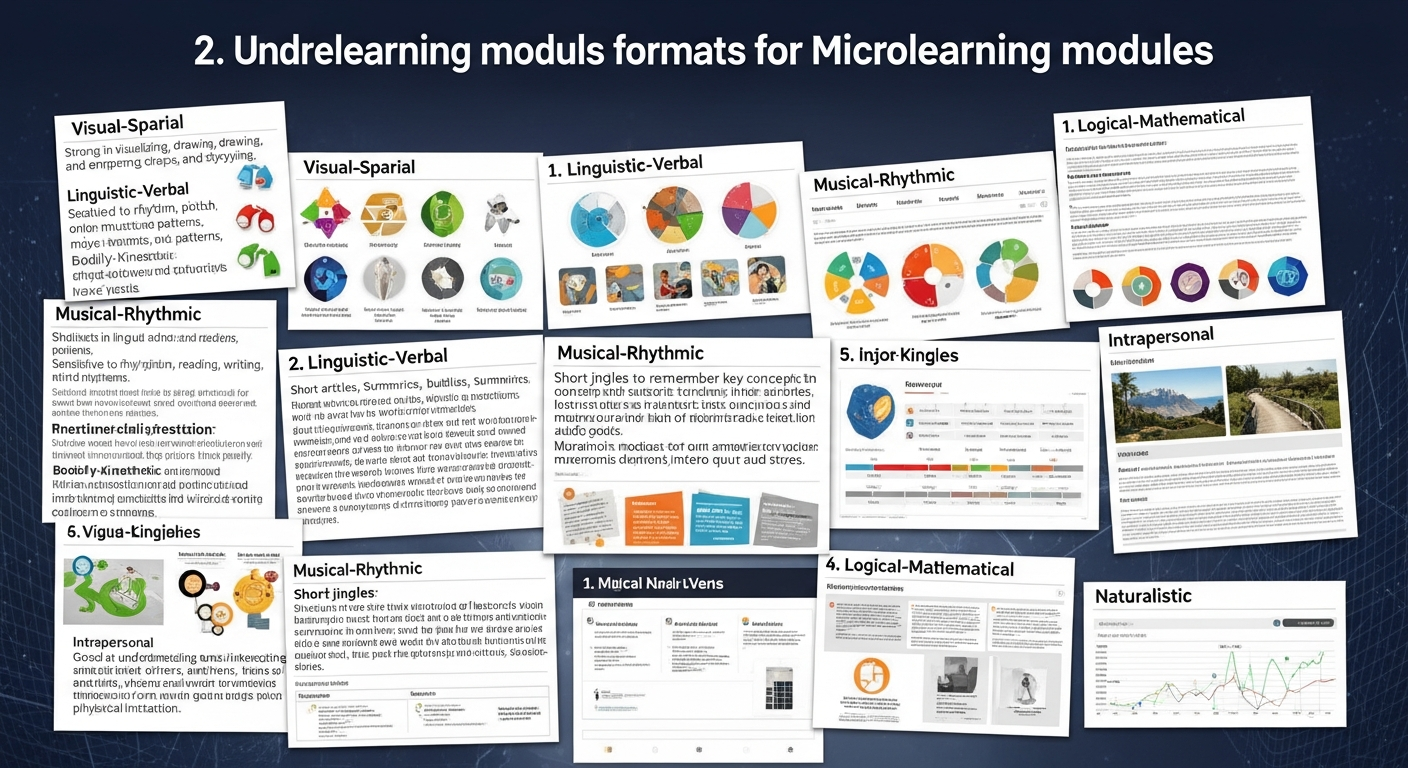
Unlocking Potential: How Gardner’s Multiple Intelligences Theory Applies to Microlearning
As L&D leaders, you navigate a complex landscape of evolving learning needs, diverse workforces, and the constant demand for measurable impact. In this dynamic environment, the quest for highly effective, engaging, and scalable training solutions is paramount. This article delves into the powerful synergy between Howard Gardner’s theory of Multiple Intelligences and the strategic application of microlearning, offering a blueprint for optimizing corporate training across industries like Compliance, Sales, Banking, Finance, Insurance, Retail, Pharma, Healthcare, Hospitality, Oil and Gas, and Mining.
Imagine a training program that truly resonates with every individual, regardless of their primary learning style or cognitive strengths. This isn't an aspirational dream; it's an achievable reality when you combine the nuanced understanding of human intelligence with the agile delivery of microlearning. By segmenting complex topics into digestible, targeted learning bursts, and then tailoring these bursts to appeal to different intelligences, organizations can achieve unprecedented engagement, retention, and performance improvements.
Understanding Gardner's Multiple Intelligences Theory
In 1983, psychologist Howard Gardner proposed his groundbreaking theory of Multiple Intelligences, challenging the traditional view of a single, monolithic intelligence. Instead, Gardner suggested that humans possess at least eight distinct intelligences, each representing a different way of processing information and interacting with the world. These intelligences are not mutually exclusive; rather, individuals typically exhibit a unique blend, with some intelligences being more dominant than others.
The core intelligences identified by Gardner include:
- Linguistic Intelligence: The ability to use words effectively, both orally and in writing. Think writers, speakers, lawyers.
- Logical-Mathematical Intelligence: The capacity for logical reasoning, problem-solving, and abstract thinking. Common in scientists, mathematicians, and engineers.
- Spatial Intelligence: The ability to perceive the visual world accurately and to mentally manipulate objects. Essential for artists, architects, and navigators.
- Bodily-Kinesthetic Intelligence: Expertise in using one's body to express ideas and feelings, and proficiency in physical coordination. Found in athletes, dancers, and surgeons.
- Musical Intelligence: The capacity to perceive, discriminate, transform, and express musical forms. Musicians, composers, and sensitive listeners.
- Interpersonal Intelligence: The ability to understand and interact effectively with others. Leaders, teachers, and salespeople often excel here.
- Intrapersonal Intelligence: The capacity for self-understanding, to know one's own strengths, weaknesses, desires, and intelligence. Philosophers and psychologists.
- Naturalistic Intelligence: The ability to recognize and categorize plants, animals, and other features of the natural world. Biologists, environmentalists, and farmers.
While an existential intelligence is also often discussed, focusing on profound questions about life, death, and existence, the initial eight provide a robust framework for L&D professionals.
The Power of Microlearning
Microlearning, characterized by short, focused learning units designed to achieve a specific learning outcome, has revolutionized corporate training. Its brevity, accessibility, and relevance make it ideal for today's fast-paced work environments. Microlearning segments can take many forms: a 2-minute video, an infographic, a quick quiz, an interactive simulation, or a short article. This approach combats information overload and aligns perfectly with modern attention spans, fostering continuous learning and skill development.
For L&D leaders seeking an efficient Microlearning LMS, the benefits are clear: higher completion rates, improved knowledge retention, and the ability to deliver just-in-time training for critical tasks, such as compliance updates in banking or new product features in retail.
The Synergy: Applying Multiple Intelligences to Microlearning
The true power emerges when these two concepts intertwine. By designing microlearning modules that deliberately cater to multiple intelligences, you create a richer, more inclusive, and ultimately more effective learning experience. Here’s how:
1. Catering to Linguistic Intelligence
- Microlearning Application: Short articles on policy updates for compliance, concise summaries of new sales techniques, quick-read email guides for banking professionals, or brief narrative case studies in healthcare.
- Example: A 5-minute module on "The ABCs of Anti-Money Laundering" featuring a clear, bulleted summary and a brief scenario-based text.
2. Engaging Logical-Mathematical Intelligence
- Microlearning Application: Interactive quizzes assessing problem-solving skills, short analytical challenges, data interpretation exercises for finance, or quick logic puzzles related to system troubleshooting in IT.
- Example: A bite-sized module in Pharma training presenting a patient case with various symptoms, requiring learners to identify potential drug interactions through a series of logical choices.
3. Stimulating Spatial Intelligence
- Microlearning Application: Infographics illustrating complex processes (e.g., oil and gas extraction), short animated videos demonstrating equipment operation in manufacturing, interactive diagrams of human anatomy for healthcare, or visual guides for retail store layouts.
- Example: A 3-minute animated video explaining a new software interface for bank tellers, using clear visuals and hotspots for interaction.
4. Activating Bodily-Kinesthetic Intelligence
- Microlearning Application: Click-through simulations for operating machinery in mining, virtual reality snippets for emergency protocols in hospitality, interactive drag-and-drop exercises for product assembly, or quick "demonstrate and record" tasks for sales pitch practice.
- Example: A micro-simulation where a sales professional practices navigating a CRM system to input customer data, with immediate feedback.
5. Incorporating Musical Intelligence (Subtly)
- Microlearning Application: While less direct, this can involve mnemonic devices set to simple tunes for memorizing facts, background music during reflective exercises, or rhythmic cues in guided meditations for stress management.
- Example: A short jingle or catchy phrase to help healthcare staff remember the "5 Rights of Medication Administration."
6. Developing Interpersonal Intelligence
- Microlearning Application: Short role-playing scenarios with virtual avatars, peer feedback mini-exercises, quick collaboration challenges for customer service teams, or discussion prompts designed for team chat platforms.
- Example: A micro-scenario for insurance agents on handling a difficult customer objection, with multiple choice responses and analysis of the best approach.
7. Fostering Intrapersonal Intelligence
- Microlearning Application: Self-reflection prompts after a module, short journaling exercises, personalized feedback based on quiz performance, or goal-setting templates for individual development plans.
- Example: A 2-minute module concluding with a prompt: "Reflect on how this compliance update impacts your daily workflow and identify one change you will implement."
8. Harnessing Naturalistic Intelligence
- Microlearning Application: Case studies based on real-world environmental factors affecting business (e.g., supply chain disruptions due to natural events for retail), classification tasks of industry-specific resources, or modules exploring sustainable practices in oil and gas.
- Example: A short module for agricultural finance specialists on identifying different crop diseases based on visual cues.
Benefits for L&D Leaders
Adopting this integrated approach offers tangible benefits for L&D leaders:
- Enhanced Engagement: Learning becomes more appealing when it speaks to an individual's natural strengths, leading to higher participation and completion rates.
- Improved Knowledge Retention: Multi-modal delivery reinforces concepts, aiding in deeper understanding and longer-term recall.
- Personalized Learning Paths: While not fully individualized, offering diverse microlearning formats allows learners to gravitate towards content that aligns with their preferred intelligence, leading to an Adaptive Learning experience.
- Increased Business Impact: Better-trained employees translate directly to improved performance, compliance adherence, and ultimately, business growth. This is especially vital for Risk-focused Training in regulated industries.
- Efficient Content Creation: Modern platforms with an AI Powered Authoring Tool can streamline the creation of diverse microlearning assets.
Leveraging Technology: The Role of a Modern Learning Platform
Implementing a sophisticated, intelligence-aware microlearning strategy requires the right technological backbone. A robust Microlearning LMS is essential. Such a learning management system should offer features that support various content formats, track learner progress across diverse module types, and provide analytics on engagement and effectiveness. A Gamified LMS, for instance, can introduce elements of competition and reward, appealing particularly to logical-mathematical and interpersonal intelligences.
For L&D leaders operating across diverse global teams, a pertinent question often arises: how can we ensure this personalized microlearning approach effectively reaches and resonates with a geographically dispersed workforce?
The answer lies in cloud-based learning management solutions that offer accessibility from any device, anywhere. Furthermore, the integration of intelligent translation and localization features within a sophisticated learning content management system can automatically adapt content to various cultural and linguistic contexts, ensuring equitable learning opportunities for all. An enterprise learning management solution with strong multi-language support and an intuitive user interface makes this global deployment seamless.
Another common inquiry from L&D leadership focuses on the bottom-line: what kind of results can organizations expect from integrating these methodologies?
Organizations can anticipate significant improvements in key performance indicators such as a reduction in compliance violations, faster onboarding times, higher sales conversion rates, and increased employee satisfaction. Data from the learning management software (LMS) can provide concrete evidence, showing which microlearning formats are most effective for specific learning objectives and target groups. The continuous tracking capabilities of a modern Microlearning LMS like MaxLearn LMS allow L&D to demonstrate clear ROI from their training investments, transforming learning from a cost center into a strategic business driver.
Conclusion
By understanding and applying Gardner's Multiple Intelligences theory within a microlearning framework, L&D leaders have an unparalleled opportunity to create training programs that are truly inclusive, deeply engaging, and highly effective. This approach moves beyond one-size-fits-all training, fostering a culture of continuous development where every employee can learn in a way that maximizes their inherent strengths. Embracing modern learning management solutions is crucial to unlock this potential, ensuring your organization's workforce is not just trained, but truly empowered to excel.


Comments
Post a Comment