How Do You Cater to Diverse Learning Styles in 5-Minute Modules?
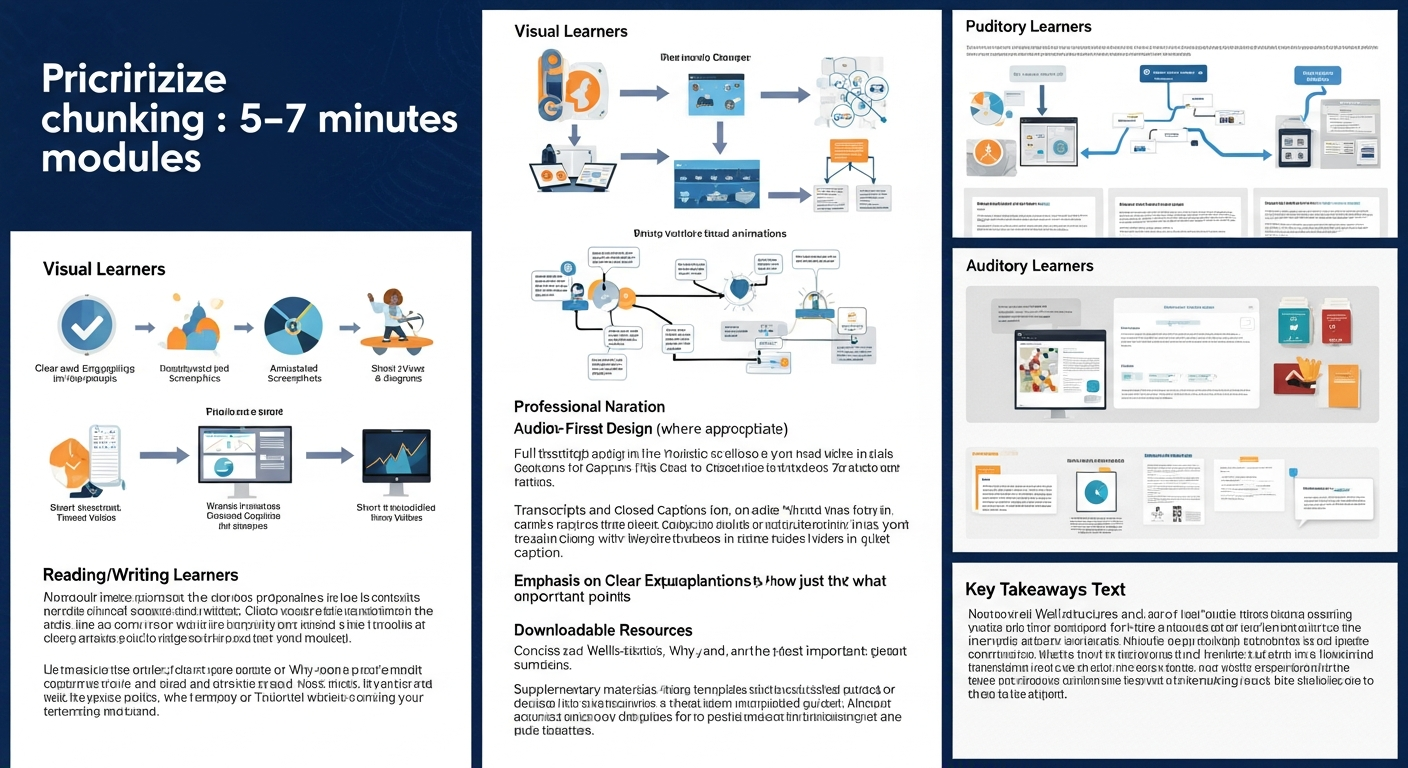
How Do You Cater to Diverse Learning Styles in 5-Minute Modules?
In the fast-paced world of corporate learning and development, the demand for efficient, impactful training is paramount. L&D leaders, from VPs to managers, are constantly seeking innovative ways to deliver crucial knowledge, especially across diverse industries like Compliance, Sales, Banking, Finance, Insurance, Retail, Pharma, Health care, Hospitality, Oil and Gas, and Mining. The advent of 5-minute learning modules, or microlearning, has emerged as a powerful solution. However, a persistent challenge remains: how do you effectively cater to a spectrum of diverse learning styles within such compressed timeframes?
The answer lies in strategic design, technological leverage, and a deep understanding of learner needs. This article explores how L&D professionals can master this art, ensuring every minute of training delivers maximum impact, regardless of an individual's preferred learning approach.
The Power and Peril of Microlearning for Diverse Styles
Microlearning's appeal is undeniable. Its brevity combats dwindling attention spans, fits seamlessly into busy schedules, and facilitates just-in-time learning. For organizations implementing a robust Microlearning LMS, it’s a game-changer for scalability and deployment. Yet, the very conciseness that makes microlearning powerful can also make it challenging to address varied learning preferences. A 5-minute video might captivate a visual learner but leave an auditory or kinesthetic learner wanting more.
The goal isn't to create five different versions of a module. Instead, it's about crafting modules that are inherently versatile, blending elements that appeal to multiple styles, and leveraging intelligent platforms to personalize the experience where possible. This requires a sophisticated approach to content creation and delivery, often supported by an advanced LMS or a comprehensive learning content management system.
Strategies for Blending Learning Styles in 5-Minute Modules
To effectively engage all learners within a brief window, consider a multi-modal approach. Each 5-minute module should aim to touch upon at least two, if not more, learning styles.
1. Engaging Visual Learners
- Infographics & Animated Explanations: Visual learners thrive on information presented graphically. A concise infographic or a short, animated video can convey complex concepts (e.g., a new compliance procedure or a financial product breakdown) far more effectively than text alone.
- Interactive Diagrams: Allow learners to click on parts of a diagram to reveal key information, such as components of a machine in the Oil and Gas sector or steps in a healthcare protocol.
- Visual Storytelling: Use compelling images and short video clips to illustrate real-world scenarios, making the content relatable and memorable for industries like Retail or Hospitality.
2. Captivating Auditory Learners
- Voiceovers & Podcasts: Even a predominantly visual module can incorporate a professional voiceover explaining concepts. For purely auditory learners, a 5-minute podcast snippet or an expert interview delivering key insights can be highly effective, especially for topics requiring nuanced explanation in Banking or Insurance.
- Concise Audio Summaries: At the end of a module, a quick audio recap reinforces key takeaways for auditory learners.
3. Empowering Kinesthetic & Experiential Learners
- Mini-Simulations & Scenarios: Even in 5 minutes, a quick decision-making simulation or a branching scenario can provide hands-on experience. For Sales training, this could be a rapid role-play challenge; for Pharma, a quick patient interaction scenario.
- Interactive Quizzes & Drag-and-Drop Activities: These activities demand interaction, allowing learners to apply knowledge immediately. A Gamified LMS excels at making these engaging, turning learning into a fun challenge.
- Click-to-Explore Modules: Allow learners to actively navigate and uncover information at their own pace within the module, fostering a sense of control and engagement.
4. Supporting Reading/Writing Learners
- Bullet-Point Summaries & Quick Guides: Alongside visual and interactive elements, provide clear, concise text summaries or downloadable quick reference guides. These are invaluable for learners who prefer to read and process information at their own speed.
- Short Articles & Case Studies: A focused 5-minute read on a specific topic, perhaps detailing a successful strategy in Mining or a challenging customer service situation in Retail, can be highly impactful.
Leveraging Technology for Personalized Microlearning
The true power in catering to diverse learning styles within micro-modules comes from the intelligent application of technology. Modern learning management solutions offer features that transcend basic content delivery.
- Microlearning LMS: A dedicated platform designed for short, focused content can track learner preferences and progress, helping L&D teams understand which formats resonate most.
- Gamified LMS: Beyond engagement, gamification can motivate learners to try different modalities, rewarding them for interacting with various content types.
- Adaptive Learning Paths: The most advanced lms learning management system can dynamically adjust the learning path based on a learner's performance and stated preferences. If a learner struggles with a text-based module, the system might offer a video explanation next.
- AI Powered Authoring Tool: These tools are revolutionizing content creation, enabling L&D teams to quickly generate multi-modal content from a single source, saving significant time and resources.
Implementing a sophisticated cloud based learning management system like MaxLearn LMS, which often includes LCMS capabilities, allows L&D leaders to manage, deploy, and analyze the effectiveness of diverse microlearning assets across their enterprise.
AI and the Future of Personalized 5-Minute Modules
Artificial intelligence is rapidly transforming how L&D approaches personalized learning, especially within the constraints of micro-modules. For L&D leaders exploring an enterprise learning management strategy, understanding AI's role is crucial.
How can AI algorithms help L&D identify the most effective content formats for different learning styles within a 5-minute module?
AI can analyze vast amounts of data, including past learner performance, engagement metrics (e.g., completion rates, time spent, interaction points), and explicit learner preferences. By identifying patterns, AI algorithms can predict which content formats (video, interactive simulation, text summary) are most likely to resonate with specific individuals or groups based on their profiles. This allows for intelligent recommendations, ensuring a visual learner is presented with an animated explainer, while a reading/writing learner receives a concise summary for optimal knowledge transfer.
What generative AI capabilities are emerging to craft personalized 5-minute learning experiences tailored for unique industry compliance or sales scenarios?
Generative AI is proving instrumental in creating highly contextualized and personalized content. L&D teams can leverage these tools to rapidly generate scenario-based questions, adaptive feedback, and varied examples that are directly relevant to specific industry challenges – whether it's navigating complex financial regulations, understanding new healthcare protocols, or perfecting a sales pitch for a specific product in the retail sector. An AI Powered Authoring Tool, for instance, can quickly draft multiple versions of a 5-minute module's interactive quiz, each tailored to a different regional compliance standard or sales market, significantly accelerating content development for focused, Risk-focused Training.
In what ways does artificial intelligence analyze learner interactions within micro-modules to continuously enhance engagement and knowledge retention?
AI continuously monitors learner interactions within each 5-minute module, tracking everything from click-through rates and time spent on specific elements to correct/incorrect answers in quizzes and even patterns of revisiting certain sections. By analyzing these interaction data points, AI can identify areas where learners struggle, lose interest, or excel. This intelligence allows the learning management software to dynamically adjust the presentation of content, offer alternative explanations, or provide supplementary materials to optimize engagement and boost knowledge retention over time. It transforms a static module into a responsive, ever-improving learning experience.
Conclusion
Catering to diverse learning styles within 5-minute modules is not merely a best practice; it's a strategic imperative for L&D leaders aiming to maximize training effectiveness and ROI across industries. By embracing multi-modal design, leveraging advanced learning management system features, and integrating the power of AI, organizations can create microlearning experiences that are not only efficient but profoundly impactful.
The future of corporate learning is personalized, agile, and intelligent. For those at the helm of L&D, investing in platforms and methodologies that champion diverse learning styles within microlearning is an investment in a highly skilled, engaged, and adaptable workforce ready to meet any challenge.


Comments
Post a Comment