Comprehensive Guide: Applying VARK Modalities to Microlearning Platforms
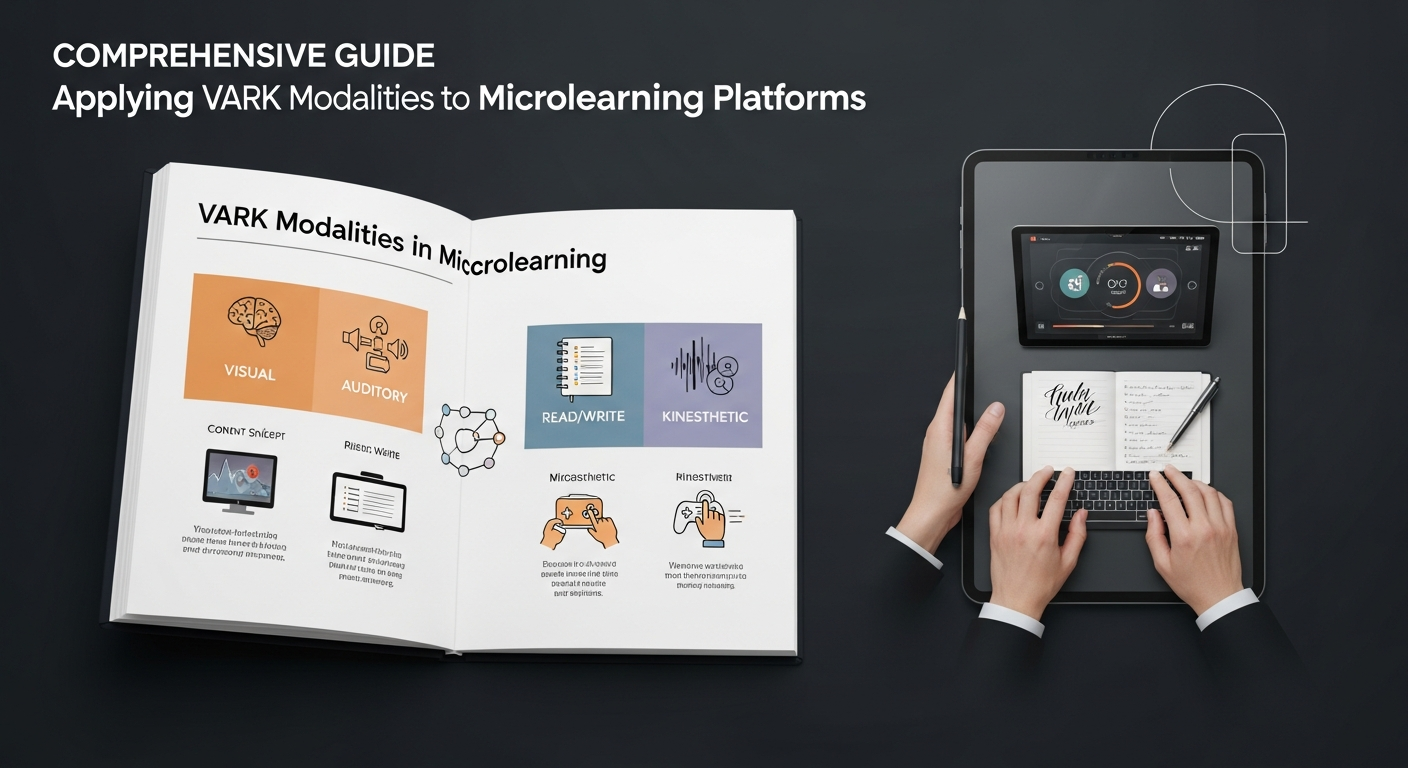
Comprehensive Guide: Applying VARK Modalities to Microlearning Platforms
In today's fast-paced corporate environment, continuous learning is not just a benefit—it's a strategic imperative. For L&D leaders, the challenge lies in crafting training programs that are not only effective and engaging but also scalable across diverse teams and industries, from compliance to sales, banking to healthcare. The answer often lies in the convergence of personalized learning styles with agile content delivery. This guide explores how to master this synergy by applying VARK learning modalities to modern microlearning platforms, thereby enhancing learner engagement, knowledge retention, and overall organizational performance.
Traditional one-size-fits-all training models often fall short in meeting the unique needs of adult learners. A more effective approach recognizes that individuals absorb and process information differently. This is where the VARK model—Visual, Aural, Read/Write, and Kinesthetic—provides an invaluable framework. When combined with the bite-sized, accessible nature of microlearning, L&D professionals can create highly impactful and personalized learning experiences.
Understanding VARK Modalities
The VARK model, developed by Neil Fleming, categorizes learners into four distinct preferences for processing information. Recognizing these preferences is the first step toward building truly adaptive and inclusive learning solutions within an Microlearning LMS.
Visual Learners
- Prefer information presented graphically: charts, diagrams, infographics, videos, and visual metaphors.
- Learn best by seeing rather than by reading or listening.
- Benefit from clear visual aids that illustrate concepts and relationships.
Aural (Auditory) Learners
- Grasp information best through listening: lectures, discussions, podcasts, audiobooks, and verbal instructions.
- Enjoy group activities where they can talk through ideas and hear others' perspectives.
- Often remember what they hear in a discussion better than what they read.
Read/Write Learners
- Excel through text-based information: reading articles, manuals, reports, and writing notes, summaries, or essays.
- Prefer to process information by taking detailed notes, reading deeply, and rephrasing concepts in their own words.
- Benefit from well-structured text, lists, and written exercises.
Kinesthetic Learners
- Learn by doing, experiencing, and interacting.
- Prefer hands-on activities, simulations, role-playing, practical exercises, and real-world examples.
- Benefit from direct involvement and application of concepts to practical scenarios.
The Power of Microlearning
Microlearning delivers training content in short, focused bursts, typically ranging from 2 to 10 minutes. This approach is perfectly suited for today's busy professionals, enabling them to learn on demand, at the point of need, and without disrupting their workflow. Its inherent flexibility and accessibility make it an ideal fit for enterprise learning management across various industries, from updating compliance protocols in finance to product knowledge for retail sales teams.
- Increased Engagement: Short modules prevent cognitive overload and maintain focus.
- Better Retention: Spaced repetition and immediate application reinforce learning.
- Flexibility and Accessibility: Learners can access content anytime, anywhere, on any device.
- Cost-Effective: Easier and faster to produce and update than lengthy traditional courses.
- Targeted Learning: Addresses specific knowledge gaps or skill requirements efficiently.
Integrating VARK into Microlearning Platforms
The true power emerges when these two methodologies converge. A robust Microlearning LMS allows L&D teams to design and deliver content tailored to each VARK modality, ensuring that every learner has an optimal pathway to proficiency.
For Visual Learners
- Short Video Explanations: Animated explainers, whiteboard videos, or instructor-led demos.
- Infographics & Visual Summaries: Quick reference guides for complex topics in banking or pharma.
- Interactive Diagrams: Clickable flowcharts illustrating processes in oil and gas or healthcare.
- Image-Based Quizzes: Matching images to concepts or identifying components.
For Aural Learners
- Audio Snippets: Podcasts, short narratives, or expert interviews explaining concepts.
- Voice-Over Presentations: Slides with engaging narration.
- Discussion Prompts: Open-ended questions that encourage verbal processing (even if responses are text-based, the initial thought process is auditory).
- Q&A Segments: Short recorded answers to common questions.
For Read/Write Learners
- Brief Articles & Case Studies: Concise summaries of key information, perfect for compliance or legal training.
- Bullet-Point Lists: Key takeaways, checklists, and process steps.
- Interactive Text Documents: Fill-in-the-blank exercises, drag-and-drop text sequences.
- Journaling Prompts: Encouraging learners to write reflections or apply concepts in writing.
For Kinesthetic Learners
- Mini-Simulations: Interactive scenarios for sales training or customer service in retail.
- Click-Through Demos: Step-by-step guides for software or machinery operation.
- Role-Playing Scenarios: Short, interactive decision-making exercises in a Gamified LMS.
- Quizzes with Immediate Feedback: Hands-on interaction that reinforces learning.
- "Try-It-Yourself" Challenges: Encouraging direct application after a short lesson.
Leveraging Technology for Personalized Learning
Modern learning management solutions go beyond simple content delivery. A sophisticated learning content management system (LCMS) with embedded Adaptive Learning capabilities can dynamically adjust the learning path based on a learner's identified VARK preference or even their performance within the module. Imagine a system where an AI Powered Authoring Tool helps generate multiple content formats from a single source, automatically catering to different VARK types.
For industries like finance, healthcare, or oil and gas, where stakes are high, Risk-focused Training can be delivered through a personalized blend of microlearning modules. For example, a compliance officer who is a visual learner might receive animated scenarios illustrating regulatory pitfalls, while a kinesthetic learner might engage with interactive decision-tree simulations.
AI's Role in Optimizing VARK-Microlearning Synergy
Artificial intelligence is transforming the landscape of learning and development. Its capabilities are particularly potent when combined with microlearning and VARK principles, offering unparalleled personalization and efficiency in any enterprise learning management system. Here are some common inquiries about AI's impact:
How can smart algorithms enhance content delivery based on individual learning preferences?
Smart algorithms can analyze a learner's historical data, performance patterns, and declared preferences to recommend or even generate microlearning content in their preferred VARK modality. For instance, if a learner consistently performs well after watching videos and poorly after reading text, the system can prioritize video-based micro-lessons for future topics. This creates a truly personalized learning management system experience, ensuring optimal engagement and comprehension.
Can intelligent systems help scale personalized microlearning experiences across diverse organizational structures or geographical locations?
Absolutely. Intelligent systems can manage vast libraries of multi-modal microlearning content and deliver it precisely to learners regardless of their location or department within an organization. By automating the matching of content to individual learning styles, these systems overcome the logistical challenges of manual personalization across dispersed teams in banking, retail, or mining sectors. This scalability ensures that a consistent, high-quality, and personalized learning experience is available to everyone.
How does artificial intelligence contribute to optimizing learning outcomes and engagement in microlearning environments?
AI significantly enhances learning outcomes by constantly analyzing learner interactions, identifying knowledge gaps, and dynamically adjusting the learning path. This might involve recommending prerequisite micro-modules, suggesting alternative content formats (e.g., an audio summary instead of a text brief for an aural learner), or even prompting spaced repetition exercises. By providing highly relevant and modality-appropriate content, AI ensures that learners remain engaged and effectively master the material, ultimately leading to improved performance metrics and a more robust LMS learning management system.
Implementation Strategies for L&D Leaders
For VPs, Directors, and Managers of L&D, implementing a VARK-infused microlearning strategy involves thoughtful planning and leveraging the right tools, such as MaxLearn LMS. This is crucial for industries like healthcare, pharma, and hospitality, where continuous staff development is key.
- Assess Learner Preferences: Start by using VARK questionnaires or pre-assessments to understand your workforce's dominant learning styles. This data is invaluable for initial content design.
- Curate Diverse Content Libraries: Develop or source microlearning content in multiple formats (videos, audio clips, short articles, interactive simulations) to cater to all VARK types. A cloud based learning management system facilitates this.
- Leverage Adaptive Technology: Invest in a learning management software that supports Adaptive Learning paths, allowing learners to navigate content based on their preferences and performance.
- Pilot and Iterate: Launch pilot programs with specific departments (e.g., sales training, compliance teams) to gather feedback and refine your approach before a broader rollout.
- Measure Impact: Track key metrics such as completion rates, knowledge retention, time to proficiency, and most importantly, business impact (e.g., reduced errors in compliance, improved sales figures).
- Continuous Improvement: Regularly update content and adjust learning paths based on evolving learner needs and technological advancements, utilizing tools like an AI Powered Authoring Tool.
Conclusion
The synergy between VARK learning modalities and microlearning platforms represents a paradigm shift in corporate training. By acknowledging and catering to the diverse ways employees learn, L&D leaders can unlock unprecedented levels of engagement, knowledge retention, and skill development. Investing in an advanced Microlearning LMS that embraces these principles will not only future-proof your learning strategy but also drive measurable business outcomes across all segments, from effective Risk-focused Training to boosting sales performance with a Gamified LMS. Embrace this comprehensive approach to empower your workforce and elevate your organization's competitive edge in any industry.


Comments
Post a Comment