Combining Cognitive Load Theory and Multiple Intelligences for Better Retention
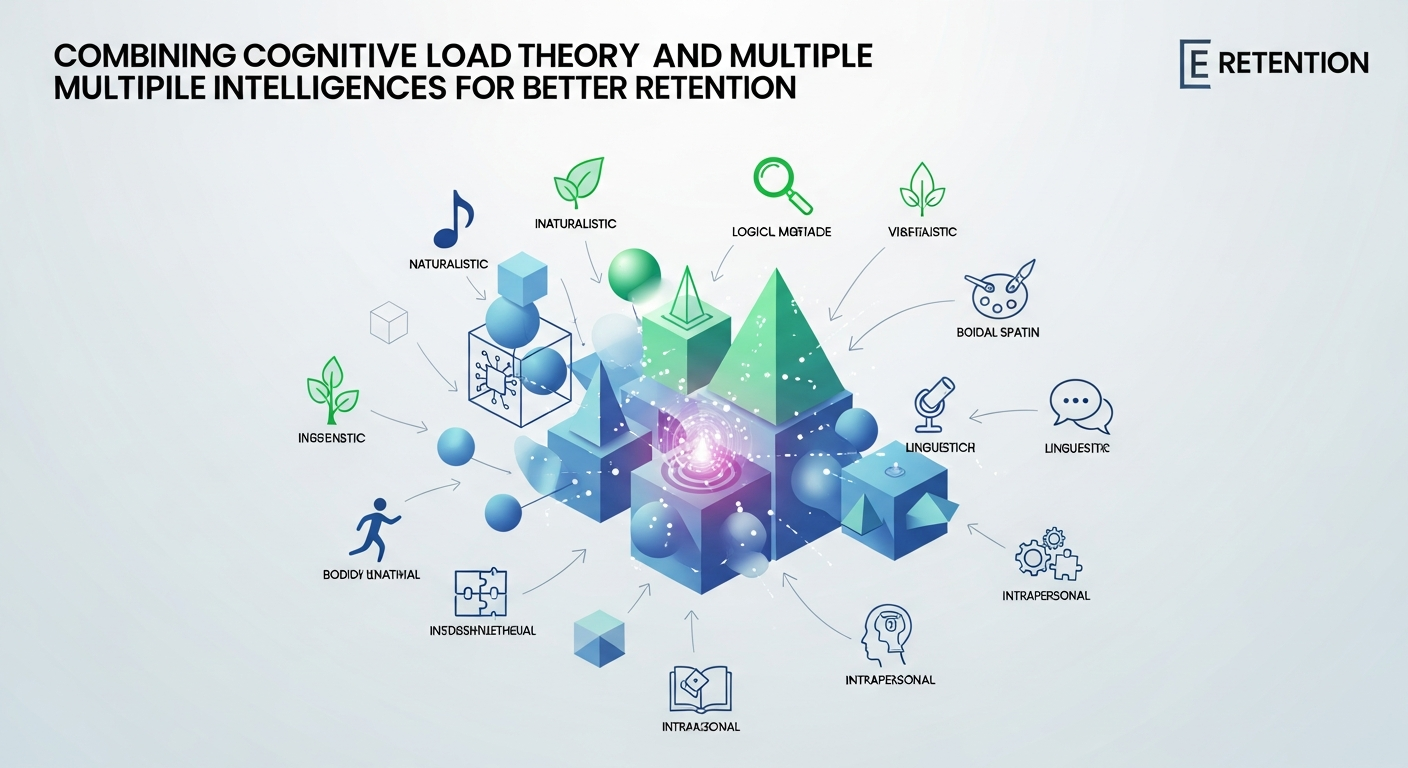
Boosting Retention: The Synergy of Cognitive Load Theory and Multiple Intelligences in eLearning
In the dynamic landscape of corporate learning and development, the ultimate goal remains consistent: ensuring that employees not only consume information but truly retain and apply it. For L&D Vice Presidents, Directors, and Managers across sectors like Compliance, Sales, Banking, Finance, Insurance, Retail, Pharma, Healthcare, Hospitality, Oil and Gas, and Mining, the challenge of effective knowledge transfer is paramount. Traditional training methods often fall short, leading to forgotten information and wasted resources. However, by strategically combining two powerful educational frameworks—Cognitive Load Theory (CLT) and the Theory of Multiple Intelligences (MI)—organizations can revolutionize their eLearning strategies for unparalleled retention and impact.
This article delves into how these theories, often considered separately, can converge to create a highly effective, personalized, and engaging learning experience, optimized for today's diverse workforce.
Understanding Cognitive Load Theory: Optimizing Mental Workload
Cognitive Load Theory, first proposed by John Sweller, posits that our working memory has a limited capacity. When instructional materials overwhelm this capacity, learning and retention suffer. CLT identifies three types of cognitive load:
Intrinsic Load: The Inherent Complexity of the Subject
- This load is determined by the nature of the information itself – how complex or interconnected it is. For example, understanding the intricacies of financial regulations for banking professionals inherently carries a high intrinsic load.
- **Optimization:** While intrinsic load can't be eliminated, it can be managed by sequencing content logically, breaking down complex topics into smaller, digestible Microlearning LMS modules, and presenting prerequisites clearly.
Extraneous Load: Inefficient Instructional Design
- This is the mental effort imposed by the way information is presented, rather than the information itself. Poorly designed visuals, irrelevant text, excessive navigation, or distracting multimedia elements contribute to extraneous load.
- **Optimization:** L&D leaders must prioritize clean, concise, and direct instructional design. Eliminate redundancy, use clear visuals, and ensure user-friendly interfaces. A streamlined Adaptive Learning approach can help reduce this by tailoring content to individual needs.
Germane Load: The Effort Leading to Schema Formation
- This is the "good" cognitive load – the mental effort required to process information deeply, relate it to existing knowledge, and construct mental schemas, which are essential for long-term retention.
- **Optimization:** Foster germane load by encouraging critical thinking, problem-solving, and reflection. Incorporate activities that require learners to apply what they've learned, such as simulations for sales training or interactive scenarios for compliance. A Gamified LMS can be particularly effective here, turning abstract concepts into engaging challenges.
Harnessing Multiple Intelligences: Catering to Diverse Learning Styles
Howard Gardner's Theory of Multiple Intelligences proposes that intelligence is not a single, monolithic entity but rather a range of distinct capabilities. Recognizing and catering to these different intelligences can significantly enhance engagement and retention in corporate training.
Why Multiple Intelligences Matter for Diverse Learners
- **Linguistic Intelligence:** Learners who excel with words, reading, writing, and storytelling.
- **Logical-Mathematical Intelligence:** Those who thrive with logic, numbers, problem-solving, and critical thinking.
- **Spatial Intelligence:** Learners who think in images and space, enjoying visual aids, maps, and diagrams.
- **Bodily-Kinesthetic Intelligence:** Individuals who learn best through movement, doing, and hands-on experience.
- **Musical Intelligence:** Those sensitive to rhythm, pitch, and tone, who might benefit from auditory learning or rhythmic patterns.
- **Interpersonal Intelligence:** Learners who thrive in group settings, discussions, and collaborative projects.
- **Intrapersonal Intelligence:** Individuals who prefer self-reflection, independent study, and understanding their own feelings.
- **Naturalistic Intelligence:** Those who connect well with patterns in nature and environmental awareness (often relevant in industries like Oil and Gas, Mining, or Pharma for understanding biological processes).
By designing training that appeals to multiple intelligences, L&D professionals can ensure broader engagement and deeper understanding across their diverse workforce, whether it's an enterprise learning management initiative for a global bank or specific Risk-focused Training for an insurance firm.
The Synergy: Combining CLT and MI for Enhanced Retention
The true power emerges when CLT and MI are integrated. Imagine designing a compliance module for a financial institution:
- **CLT Application:** Break down complex regulations into small, digestible chunks (reducing intrinsic load). Use clear, jargon-free language and intuitive navigation (reducing extraneous load). Include interactive scenarios where learners must apply rules to real-world cases (increasing germane load).
- **MI Application:** For linguistic learners, provide comprehensive written explanations and case studies. For logical-mathematical learners, offer flowcharts and decision trees. Spatial learners benefit from infographics and animated explanations of processes. Bodily-kinesthetic learners could engage with interactive simulations where they "act out" compliance procedures. Interpersonal learners might participate in group discussions or peer feedback.
By blending these approaches, you create a rich, multi-faceted learning experience that manages cognitive load while simultaneously engaging different intelligences, leading to significantly better retention and practical application.
AI's Role in Optimizing Learning Pathways
In today's digital age, Artificial Intelligence offers unprecedented opportunities to supercharge the integration of CLT and MI. As L&D leaders, you might wonder:
How can technology help us personalize training and manage cognitive effort?
Smart learning platforms can dynamically adjust content difficulty based on a learner's performance, a core principle of adaptive learning. An Adaptive Learning system, powered by AI, can identify when a learner is struggling with a concept (high intrinsic load) and automatically provide supplementary materials or simplify explanations. Conversely, it can challenge high-performing learners with more complex scenarios to boost germane load.
What tools are available to reduce cognitive overload in complex industry training?
AI-driven content curation tools can analyze vast amounts of information and automatically chunk it into Microlearning LMS modules, ensuring that content is presented in bite-sized, manageable pieces. An AI Powered Authoring Tool can even help instructional designers identify potential sources of extraneous load in their content, suggesting clearer phrasing, better visual design, and eliminating redundant information.
As an L&D leader, what should I look for in a modern learning platform to ensure high retention for a diverse workforce?
Look for a robust LMS or MaxLearn LMS that supports multimodal content delivery – video, audio, text, interactive simulations – catering to various intelligences. Seek out features like Gamified LMS elements to increase engagement and germane load, and AI-driven analytics to identify learning patterns and personalize pathways. A cloud based learning management system with enterprise learning management capabilities can offer the flexibility and scalability needed to deploy these sophisticated approaches across diverse teams and regions.
Practical Applications in Specific Industries
- **Compliance (Banking, Insurance):** Implement scenario-based Microlearning LMS modules with decision trees to manage intrinsic load, while offering visual flowcharts for spatial learners and interactive quizzes for logical learners. Risk-focused Training benefits greatly from clear, concise presentations that avoid extraneous cognitive load.
- **Sales (Retail, Finance):** Utilize Gamified LMS platforms with role-playing simulations for bodily-kinesthetic and interpersonal learners. Provide concise product knowledge via an AI Powered Authoring Tool, reducing extraneous load.
- **Healthcare (Pharma, Hospitality):** For complex medical procedures, use 3D animations and interactive diagrams for spatial learners. Incorporate collaborative case studies for interpersonal intelligence. Leverage Adaptive Learning to ensure mastery of critical skills, minimizing intrinsic load by offering scaffolded support.
- **Oil and Gas, Mining:** Visual simulations of operational processes appeal to spatial learners, while problem-solving challenges address logical-mathematical intelligence. Safety protocols can be presented via short, impactful videos and interactive checklists to manage cognitive load effectively within a learning management software.
Leveraging Modern eLearning Solutions
To effectively implement these combined strategies, organizations require a sophisticated learning management system (LMS). A modern LMS serves as the backbone for delivering engaging, retention-focused training. A cutting-edge MaxLearn LMS, for instance, offers features like a comprehensive learning content management system, robust learning management software capabilities, and scalable learning management solutions that are crucial for today's global enterprises. Such an lms learning management system, especially a cloud based learning management system, provides the agility for enterprise learning management across various departments and industries. Whether it's an LCMS to manage extensive content libraries or a platform for rapid course creation, the right technology empowers L&D teams to deliver impactful learning experiences.
Conclusion
For L&D leaders committed to maximizing employee potential and organizational performance, embracing the synergy of Cognitive Load Theory and Multiple Intelligences is not just an educational best practice—it's a strategic imperative. By consciously designing eLearning to manage cognitive effort while appealing to a spectrum of intelligences, reinforced by the intelligent capabilities of modern LMS platforms, you can foster deeper understanding, enduring retention, and a more skilled, adaptable workforce. The investment in these nuanced approaches will yield significant returns in terms of efficiency, compliance, productivity, and overall business growth.


Comments
Post a Comment