Why Do Corporate Training Programs Fail and How Can Microlearning Fix It?
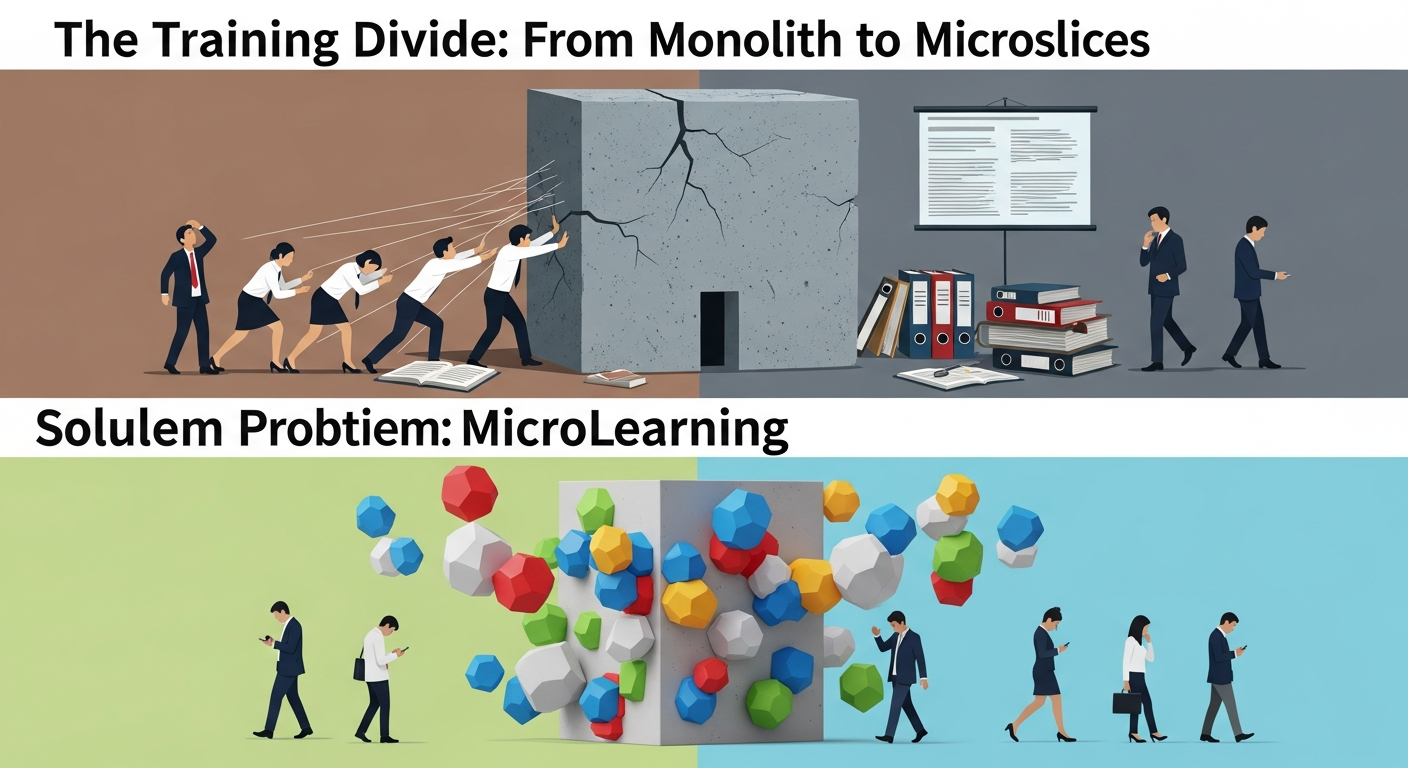
Why Your Corporate Training Fails: Microlearning is the Strategic Fix
Corporate training is a cornerstone of organizational growth, employee development, and maintaining a competitive edge. Yet, despite significant investments in learning and development (L&D) programs, many initiatives fall short, failing to deliver the desired impact. Vice Presidents, Directors, and Managers in L&D across industries like Compliance, Sales, Banking, Finance, Insurance, Retail, Pharma, Healthcare, Hospitality, Oil and Gas, and Mining grapple with persistent challenges: disengaged learners, poor knowledge retention, and an inability to demonstrate a clear return on investment. This article will dissect the common pitfalls of traditional corporate training and introduce microlearning as the strategic, modern solution to build a highly skilled and adaptable workforce.
The Cracks in Traditional Corporate Training
Traditional training methodologies, often characterized by lengthy sessions and dense materials, are increasingly ill-suited for today’s fast-paced corporate environment. The reasons for their failure are manifold:
- Lack of Engagement: Long, monotonous presentations or hours of e-learning modules often lead to learner fatigue and disinterest. Employees struggle to maintain focus, especially when the content feels overwhelming or disconnected from their immediate needs.
- Information Overload: Cramming too much information into a single session overwhelms learners, making it difficult to absorb and apply new concepts effectively. This often results in a superficial understanding rather than deep learning.
- Irrelevance and Lack of Context: Generic training programs often fail to address the specific, immediate challenges employees face in their roles. When training isn't directly applicable or lacks context, learners perceive it as a waste of valuable time.
- Poor Retention: The "forgetting curve" is a significant adversary. Without regular reinforcement and opportunities to apply new knowledge, much of what is learned in traditional settings is quickly forgotten, negating the training's purpose.
- Time Constraints: Employees, especially in busy sectors like Pharma or Finance, are constantly juggling demanding schedules. Pulling them away for full-day workshops or extensive courses disrupts workflow and can be met with resistance.
- Difficulty in Measuring ROI: Tracking the direct impact of lengthy training programs on performance and business outcomes can be complex and inexact, making it hard to justify the investment to executive leadership.
Microlearning: A Paradigm Shift for Effective Training
Enter microlearning – a revolutionary approach that breaks down complex information into digestible, bite-sized learning units. This method is perfectly aligned with how the modern brain processes information and how today's workforce prefers to learn. A robust Microlearning LMS is at the heart of this transformation, offering a flexible and efficient way to deliver learning.
The core principles of microlearning include:
- Bite-sized Content: Learning modules are short, typically 2-10 minutes, focusing on a single learning objective or concept. This could be a short video, an infographic, a quick quiz, or an interactive simulation.
- Focused and Targeted: Each piece of content is highly relevant and directly applicable to a specific skill gap or knowledge need. This ensures that learners get precisely what they need, when they need it.
- Accessibility and Flexibility: Microlearning content is often delivered via a Microlearning LMS, accessible on demand, anywhere, and on any device. This flexibility allows employees to integrate learning into their workflow seamlessly, during commutes, between meetings, or whenever they have a spare moment.
- Engagement and Interactivity: Short formats lend themselves well to engaging multimedia, interactive elements, and gamification, keeping learners actively involved. A Gamified LMS can significantly boost participation and motivation.
- Reinforcement and Repetition: Microlearning facilitates spaced repetition, delivering small chunks of information over time, which dramatically improves knowledge retention compared to one-off extensive training.
How Microlearning Addresses Corporate Training Failures
Microlearning isn't just a trend; it's a strategic imperative that directly combats the shortcomings of traditional training:
- Boosting Engagement and Retention: By making learning brief, relevant, and interactive, microlearning captures and sustains learner attention. The shorter format reduces cognitive load, enhancing comprehension and recall. A powerful Adaptive Learning approach within a microlearning framework ensures content is personalized, further boosting engagement.
- Providing Relevant and Timely Information: Microlearning allows for rapid content updates and delivery, ensuring employees always have access to the most current and relevant information, critical for industries like Compliance or Healthcare. This makes the learning experience more immediate and impactful.
- Optimizing Time and Resources: With concise modules, employees can learn without significant disruption to their daily tasks. For L&D teams, creating and updating microlearning content can be more agile and cost-effective than developing lengthy courses.
- Facilitating Continuous Learning: Microlearning supports a culture of continuous learning, allowing employees to constantly upskill and reskill in small increments, crucial for evolving roles in Sales or Technology.
- Measuring Impact with Precision: The granular nature of microlearning allows L&D professionals to track completion rates, performance on quizzes, and even real-world application with greater precision, providing clearer metrics for ROI.
Leveraging Technology for Microlearning Success
To truly harness the power of microlearning, organizations need sophisticated learning management solutions. A modern LMS is no longer just a repository for courses; it's an ecosystem for dynamic learning. MaxLearn LMS, for instance, offers a comprehensive Microlearning LMS designed to empower L&D teams.
With features like an AI Powered Authoring Tool, L&D professionals can rapidly create engaging microlearning modules tailored for specific needs, whether it's for Sales training, onboarding in Hospitality, or critical updates in Banking. This significantly reduces content development time and enhances scalability. For sectors like Oil and Gas or Mining, where safety and compliance are paramount, Risk-focused Training delivered through microlearning can ensure critical information is absorbed and retained, mitigating potential hazards.
A robust learning management software goes beyond simple delivery. It often includes a Learning content management system (LCMS) that allows for easy management, versioning, and repurposing of learning assets. Implementing a cloud based learning management system like MaxLearn LMS ensures global accessibility and scalability, essential for large enterprises. This kind of enterprise learning management system provides the infrastructure for an lms learning management system that supports various learning modalities, from bite-sized modules to comprehensive learning paths.
AI-Driven Insights for Smarter L&D Strategies
In today's data-rich environment, leveraging artificial intelligence within a learning management system can provide unparalleled insights, helping L&D leaders make more informed, strategic decisions.
Frequently Asked Questions:
- Understanding Learning Priorities: What training topics are most critical for our workforce right now to address skill gaps and future business needs? AI analytics can analyze performance data, job descriptions, and industry trends to identify the most urgent learning demands, ensuring resources are allocated effectively.
- Tailoring Content for Global Teams: How do training needs vary across different regional offices or global teams, and how can we customize content accordingly? AI can process demographic data, local regulations (crucial for Compliance), and cultural nuances to suggest localized content adjustments, ensuring relevance and cultural sensitivity across your enterprise.
- Optimizing Individual Learning Paths: Which learning formats and paces resonate best with individual employees for optimal engagement and knowledge retention? By analyzing learner interactions, completion rates, and assessment scores, AI can recommend personalized learning paths, module types (e.g., video, interactive quiz), and even optimal delivery times, making the learning experience truly adaptive and effective for each person. This ensures that every employee, whether in Retail or Pharma, receives the most impactful training for them.
Conclusion: Paving the Way for a Smarter Learning Future
The era of one-size-fits-all, lengthy corporate training programs is drawing to a close. As organizations strive for agility, efficiency, and a truly skilled workforce, microlearning emerges as the undeniable champion. By embracing bite-sized, relevant, and engaging content delivered through a sophisticated Microlearning LMS like MaxLearn LMS, L&D leaders can overcome the pervasive failures of traditional training. Integrating Gamified LMS features, Adaptive Learning methodologies, and an AI Powered Authoring Tool, companies can foster a culture of continuous learning, drive employee engagement, and achieve measurable business outcomes. For industries ranging from Banking to Hospitality, investing in smart, efficient learning management solutions isn't just about training; it's about strategic growth and future-proofing your talent. It's time to transform your L&D strategy from failing to flourishing, ensuring your organization is equipped with the knowledge and skills needed to thrive in a dynamic global landscape.


Comments
Post a Comment