What is the DDE Framework in Microlearning Game Design?
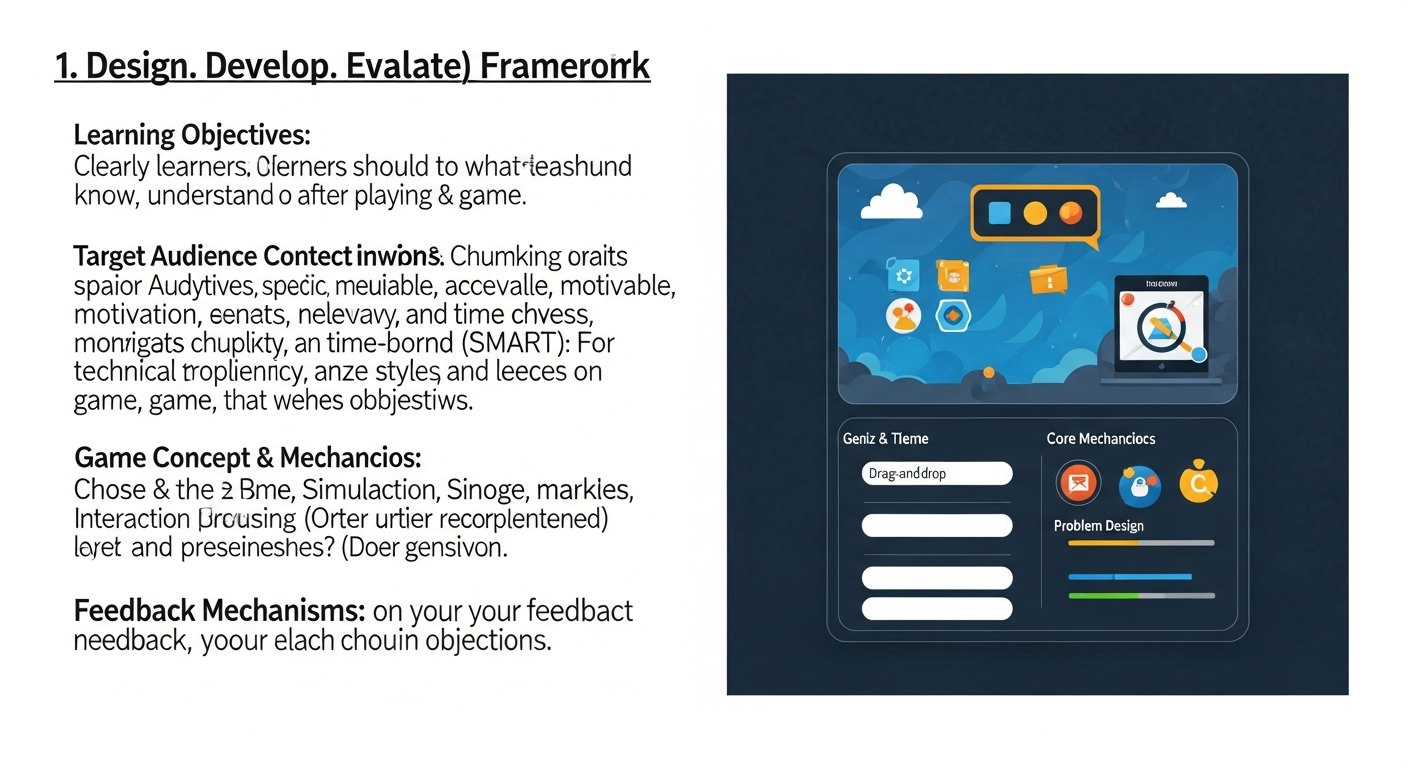
Unlocking Learning Potential: The DDE Framework in Microlearning Game Design
In today’s fast-paced corporate world, traditional lengthy training sessions are increasingly ineffective. Learning & Development (L&D) leaders across industries – from Compliance and Sales to Banking, Finance, Insurance, Retail, Pharma, Health Care, Hospitality, Oil and Gas, and Mining – are constantly seeking innovative solutions to engage employees, improve retention, and drive measurable performance. This is where microlearning, fused with game design principles, emerges as a powerful strategy. But how do you systematically design truly impactful microlearning games? The answer lies in the Discover, Design, Evaluate (DDE) Framework.
The DDE Framework offers a structured, iterative approach to creating engaging and effective microlearning game experiences. It’s not just about making learning fun; it’s about strategically building knowledge and skills in bite-sized, interactive formats that resonate with modern learners and deliver tangible business outcomes. For L&D Vice Presidents, Directors, Senior Managers, and Managers, understanding and implementing DDE can revolutionize their training initiatives, ensuring higher ROI and a more competent workforce.
What is the DDE Framework?
The DDE Framework is a cyclical model comprising three core phases: Discover, Design, and Evaluate. Each phase builds upon the last, providing a comprehensive blueprint for developing microlearning games that are not only captivating but also aligned with specific learning objectives and business goals. This iterative nature allows for continuous improvement, ensuring that learning experiences remain relevant and impactful over time.
Discover: Unearthing Learning Needs and Opportunities
The "Discover" phase is the foundational step, akin to market research for your training program. It's about deeply understanding your audience, identifying critical learning gaps, and defining the precise outcomes you aim to achieve. Without a clear understanding of these elements, even the most engaging game can miss its mark.
- Audience Analysis: Who are your learners? What are their existing knowledge levels, their preferred learning styles, their daily challenges, and their motivations? Understanding your target demographic is crucial for tailoring content and game mechanics.
- Defining Learning Objectives: What specific knowledge, skills, or behaviors should learners acquire or change? These objectives must be clear, measurable, and directly tied to business needs. For instance, in banking, it might be understanding new compliance regulations; in sales, it could be mastering a new product feature.
- Content Identification: What existing or new content needs to be transformed into microlearning modules? This phase helps in breaking down complex topics into digestible, short segments suitable for gameification. A robust Microlearning LMS can be instrumental here, providing tools to analyze existing course data and learner engagement patterns.
- Pain Point Analysis: Where are employees struggling? What common errors or inefficiencies need to be addressed? Pinpointing these areas ensures your microlearning games provide targeted solutions.
Common question often asked: "What kind of data analytics can artificial intelligence provide to help identify precise training gaps in a corporate environment?"
Answer: Artificial intelligence can analyze vast amounts of data, including performance metrics, past training results, employee feedback, and even operational data, to pinpoint specific skill deficiencies and knowledge gaps across different roles or departments. This predictive analysis helps L&D teams prioritize training needs with greater accuracy, ensuring resources are directed where they will have the most significant impact.
Design: Crafting Engaging Experiences
Once you understand *what* needs to be learned and *by whom*, the "Design" phase focuses on *how* to deliver that learning in an interactive, game-like format. This is where creativity meets instructional design, transforming objectives into captivating challenges.
- Game Mechanics and Dynamics: What game elements will be used? Think points, badges, leaderboards, levels, challenges, quests, progress bars, and immediate feedback. A Gamified LMS provides the built-in features to easily implement these mechanics, enhancing engagement.
- Narrative and Storytelling: How can a compelling story or scenario be woven into the learning? This provides context, meaning, and motivation, making the learning memorable. For example, a compliance training might be framed as a detective solving a regulatory puzzle.
- Micro-Content Creation: Develop the actual bite-sized learning content – short videos, interactive quizzes, scenarios, infographics – optimized for quick consumption and retention. An AI Powered Authoring Tool can dramatically speed up this process, helping generate content, suggest game elements, and even personalize learning paths based on learner profiles.
- Instructional Design Integration: Ensure that despite the game elements, solid pedagogical principles are at play. Content must be clear, relevant, and structured to facilitate genuine learning and skill development.
Common question often asked: "How can machine learning personalize game pathways for different learner profiles within a microlearning module?"
Answer: Machine learning algorithms can analyze a learner's past performance, engagement levels, preferred learning pace, and even their role-specific requirements to dynamically adjust the game's difficulty, content presentation, and branching scenarios. This ensures each learner receives a tailored experience that maximizes their learning efficiency and keeps them optimally challenged, rather than bored or overwhelmed.
Evaluate: Measuring Impact and Iterating for Success
The "Evaluate" phase closes the loop, assessing the effectiveness of your microlearning games and providing crucial data for refinement. This isn't just about pass/fail rates; it's about understanding real-world impact and continuous improvement.
- Data Collection and Analytics: Utilize the tracking capabilities of your learning management system (LMS) to gather data on completion rates, time spent, scores, repeat attempts, and specific areas of struggle. This forms the backbone of your evaluation.
- Feedback Mechanisms: Collect qualitative feedback from learners through surveys, interviews, or in-game comments. Their perspective on engagement, clarity, and perceived value is invaluable.
- Performance Metrics: Beyond learning metrics, track how the training impacts actual job performance. Are sales teams closing more deals? Are compliance violations decreasing? This demonstrates the ROI of your microlearning initiatives. This is particularly crucial for Risk-focused Training, where mitigating potential issues is paramount.
- Continuous Improvement: Based on evaluation data, iterate and refine your microlearning games. The DDE Framework is cyclical, meaning insights from evaluation feed back into the Discover and Design phases for the next iteration, ensuring the learning content remains fresh, relevant, and maximally effective. This aligns perfectly with the principles of Adaptive Learning, where content evolves based on learner interaction.
Common question often asked: "What are the key performance indicators that AI-driven analytics can track to measure the real-world impact of microlearning games on employee performance?"
Answer: AI-driven analytics can track a wide array of KPIs, including skill mastery scores, speed of task completion post-training, reduction in errors, compliance adherence rates, customer satisfaction scores (if relevant), and even employee retention rates. By correlating these operational metrics with microlearning engagement data, AI provides a holistic view of the training's tangible business impact, moving beyond simple completion rates.
Why DDE Matters for L&D Leaders
For L&D leaders, adopting the DDE Framework offers several compelling advantages:
- Increased Engagement and Retention: Microlearning games, when designed correctly using DDE, inherently boost learner engagement, leading to better knowledge retention and application.
- Measurable ROI: The "Evaluate" phase ensures that training effectiveness is not just assumed but measured against clear objectives and business outcomes, proving the value of L&D investments.
- Agility and Adaptability: The iterative nature of DDE allows L&D teams to quickly adapt training to evolving business needs, market changes, or new regulatory requirements, especially in fast-moving sectors like Finance or Pharma.
- Scalability: Well-designed microlearning content, housed within a robust LMS or learning content management system, can be easily scaled across large organizations and diverse segments, whether it's for onboarding in Hospitality or critical safety training in Oil and Gas and Mining.
- Enhanced Employee Experience: By providing relevant, enjoyable, and effective learning opportunities, L&D can significantly contribute to employee satisfaction and professional development.
An advanced learning management system (LMS) or lms learning management system, particularly a cloud based learning management system like MaxLearn LMS, is crucial for supporting the DDE Framework. It acts as the central hub for deploying, tracking, and managing all microlearning game content, providing the analytics necessary for the "Evaluate" phase and facilitating seamless content updates. It’s more than just learning management software; it's a strategic platform for enterprise learning management.
Implementing DDE with the Right Tools
To truly leverage the DDE Framework, L&D departments need a sophisticated ecosystem of tools. This includes not just a powerful learning management solution, but also authoring tools that can create engaging, interactive content, and analytics capabilities to provide deep insights. A modern LCMS (Learning Content Management System) integrated within an LMS can streamline the entire process, from content creation and organization to delivery and performance tracking.
Conclusion
The DDE Framework for microlearning game design is more than just a methodology; it's a strategic imperative for L&D leaders striving for impactful, engaging, and measurable corporate training. By systematically Discovering needs, Designing captivating experiences, and continually Evaluating impact, organizations can cultivate a culture of continuous learning that directly translates into improved performance, higher compliance, and sustained business growth across all industries. Embrace DDE, and transform your training from a necessity into a competitive advantage.


Comments
Post a Comment