What is Adaptive Learning and Why Are Traditional LMS Platforms Failing?
What is Adaptive Learning and Why Are Traditional LMS Platforms Failing?
In the rapidly evolving corporate landscape, the demand for highly skilled, continuously educated employees has never been greater. For Vice Presidents, Directors, and Senior Managers in Learning & Development, the challenge isn't just delivering training, but ensuring that training is impactful, retained, and directly contributes to business objectives. While the concept of an LMS has been foundational for decades, many organizations are discovering that their traditional learning content management system is no longer fit for purpose. The shift towards dynamic, personalized education points to one critical evolution: adaptive learning.
This article delves into what adaptive learning entails and why the static, one-size-fits-all approach of many conventional learning management software platforms is increasingly falling short in today's fast-paced industries, from compliance and finance to healthcare and oil & gas.
What Exactly is Adaptive Learning?
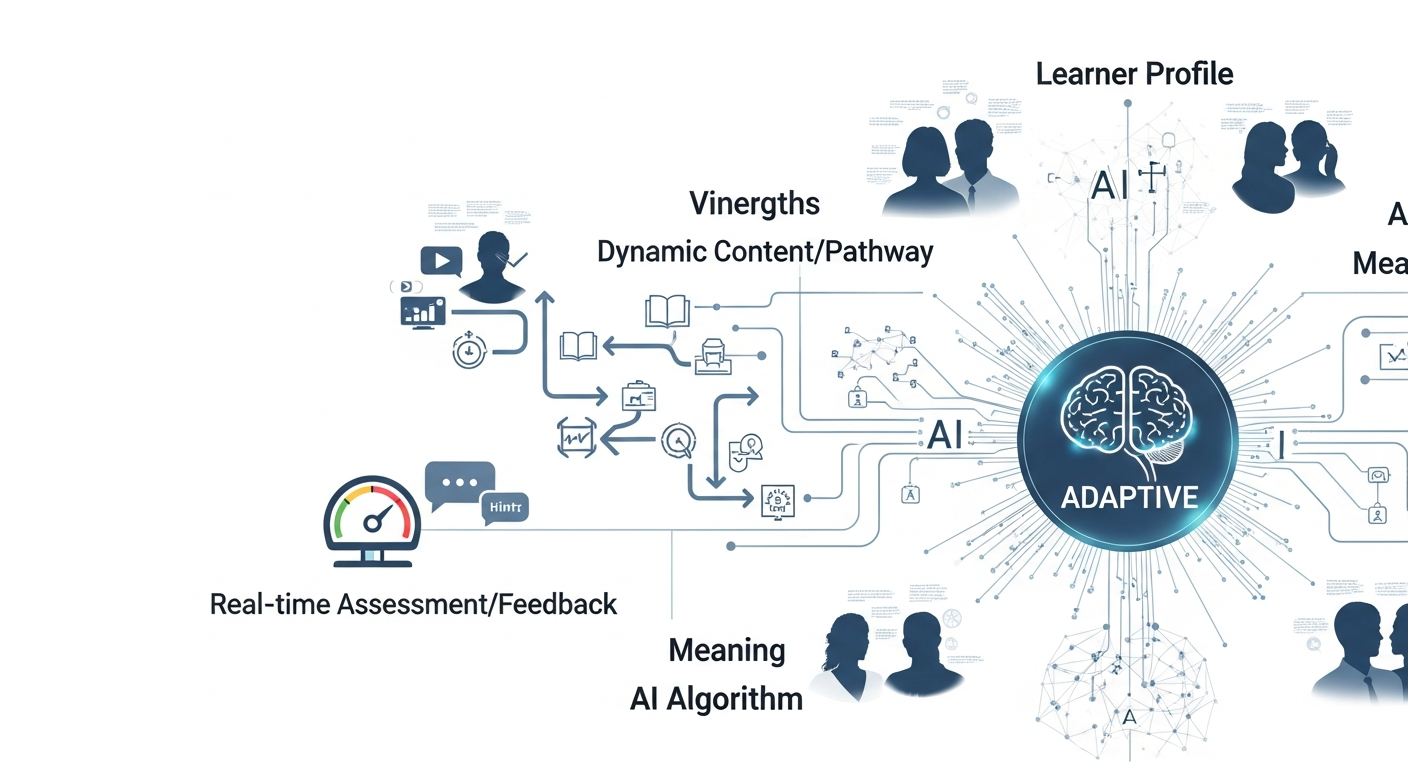
Adaptive learning represents a paradigm shift from passive content consumption to active, personalized engagement. At its core, Adaptive Learning utilizes algorithms and data analytics to tailor the learning experience to each individual. This means content, pace, and instructional methods adjust in real-time based on a learner's performance, preferences, and knowledge gaps.
Imagine a system that understands an employee's strengths and weaknesses, then provides targeted content to bridge those gaps, rather than making them wade through information they already know or don't yet need. This approach drastically improves efficiency and effectiveness.
Key Characteristics of Adaptive Learning:
- Personalized Pathways: No two learners follow the exact same path. The system dynamically adjusts the sequence and selection of learning materials.
- Real-time Feedback: Learners receive immediate feedback, allowing for prompt correction and deeper understanding.
- Assessment-Driven Progression: Mastery of concepts dictates progression, not just completion of modules. This ensures genuine skill acquisition.
- Data-Powered Insights: Comprehensive analytics provide L&D leaders with invaluable data on learner performance, content effectiveness, and overall program ROI.
Question: How can organizations ensure their training programs are globally relevant and locally impactful?
Answer: Adaptive learning platforms can tailor content to specific regional regulations, cultural nuances, and individual job roles, ensuring highly localized relevance and impact for global teams.
Question: What's the best way to accelerate skill development for high-potential employees?
Answer: By identifying existing knowledge and customizing learning paths, an adaptive system allows high-potential employees to bypass irrelevant material and focus on advanced skills, accelerating their growth.
The Shortcomings of Traditional LMS Platforms
For years, a standard learning management system served as the central repository for courses, tracking completions and basic assessments. While this was a step up from purely manual training, the traditional model often struggles with engagement, retention, and demonstrating true business impact. Many a learning management software has become little more than a content dumping ground.
The "One-Size-Fits-All" Trap:
- Disengagement: Forcing all employees through identical content, regardless of prior knowledge or learning style, leads to boredom and disinterest.
- Inefficiency: Learners waste time on redundant material, while critical knowledge gaps remain unaddressed due to a lack of personalization.
- Poor Retention: Without active engagement and relevance, information is quickly forgotten, leading to a shallow understanding rather than deep learning.
- Lack of Real-time Relevance: In industries like finance or healthcare, where regulations and best practices change constantly, static content quickly becomes outdated.
- Limited Insights: Most traditional enterprise learning management systems offer basic completion rates, but struggle to provide granular data on *why* learners succeed or fail, or the direct impact on job performance.
These issues are particularly acute for large enterprises using legacy learning management solutions or a basic cloud based learning management system that lacks advanced features. They are functional for administration but fall short on pedagogical effectiveness.
Why Traditional Approaches Fail in Modern Industries
Consider the diverse needs across different sectors:
- Compliance: In banking, insurance, or pharma, failing to understand complex regulations can lead to massive fines. Traditional methods often rely on lengthy, annual refreshers that are easily forgotten. Effective Risk-focused Training is paramount, demanding continuous, adaptive reinforcement.
- Sales: Sales professionals need immediate access to product knowledge and objection handling. A static learning management system can't keep pace with new product launches or evolving market demands, making sales training ineffective. An AI Powered Authoring Tool can help create dynamic, up-to-date content much faster.
- Healthcare: Clinical staff require up-to-the-minute information on patient care, equipment, and protocols. Outdated content could have serious consequences.
- Retail & Hospitality: Front-line staff need agile training that adapts to seasonal changes, new promotions, or evolving customer service standards.
- Oil & Gas/Mining: Safety procedures are non-negotiable. Adaptive approaches can ensure critical safety knowledge is not just learned but deeply understood and retained, reducing incident rates.
The core problem is that these industries demand agility, precision, and demonstrable competence, something generic lms learning management system offerings struggle to provide. A traditional LCMS simply cannot keep up with the dynamic learning needs of a global workforce.
Question: How can a large financial institution ensure all employees, regardless of role or location, are compliant with the latest regulations?
Answer: An adaptive learning platform can deliver targeted regulatory updates based on individual roles and locations, continuously assessing comprehension and providing remedial content where needed, significantly reducing compliance risk.
The Power of Adaptive Learning for L&D Leaders
For L&D Vice Presidents and Directors, adaptive learning isn't just a trend; it's a strategic imperative. It offers solutions to many of the long-standing challenges associated with corporate training:
- Increased Engagement & Retention: Personalized, relevant content and interactive formats, often integrated with a Gamified LMS, keep learners motivated and improve knowledge retention.
- Improved Performance & Productivity: By focusing on specific skill gaps, employees gain competence faster, leading to direct improvements in job performance and overall productivity.
- Measurable ROI: Adaptive platforms provide rich data analytics, allowing L&D leaders to track learner progress, identify effective content, and demonstrate the tangible impact of training on business outcomes.
- Agility & Scalability: Easily update and deploy content to a global workforce, adapting to market changes, new products, or policy shifts with speed and efficiency.
- Cost-Effectiveness: By reducing redundant training and improving efficiency, organizations can achieve better results with optimized resource allocation.
Many forward-thinking organizations are adopting a Microlearning LMS approach within an adaptive framework. This delivers bite-sized, highly focused content that is perfectly suited for on-demand, just-in-time learning, further enhancing the adaptive experience.
Question: What's the most efficient way to onboard new employees across diverse roles and departments?
Answer: An adaptive system can create individualized onboarding paths, delivering specific modules relevant to each role, accelerating time-to-competence and ensuring consistency across the organization.
Implementing Adaptive Learning: A Path Forward
The transition to adaptive learning doesn't have to be daunting. It begins with identifying your organization's critical learning needs and exploring modern learning management solutions designed for this purpose. Platforms like MaxLearn LMS are at the forefront, offering robust features that empower L&D professionals to create truly engaging and effective learning experiences.
Embracing adaptive learning means moving beyond the limitations of basic content delivery. It's about leveraging technology to create a dynamic, responsive, and ultimately more effective learning ecosystem that prepares your workforce for the challenges and opportunities of tomorrow.
The time for traditional, static training is over. The future of corporate learning is adaptive, personalized, and driven by data, ensuring that every learning minute counts towards meaningful business growth and individual development.


Comments
Post a Comment