What are the 3 Core Elements of the DDE Framework in Corporate Training?
What are the 3 Core Elements of the DDE Framework in Corporate Training?
In the dynamic landscape of modern business, effective corporate training isn't just a compliance checkbox; it's a strategic imperative for growth, innovation, and talent retention. Learning and Development (L&D) leaders, from Vice Presidents to Senior Managers, are constantly seeking robust frameworks to ensure their training initiatives yield measurable results. One such foundational approach gaining significant traction is the DDE Framework. But what exactly are its core elements, and how can they revolutionize your organization's learning strategy?
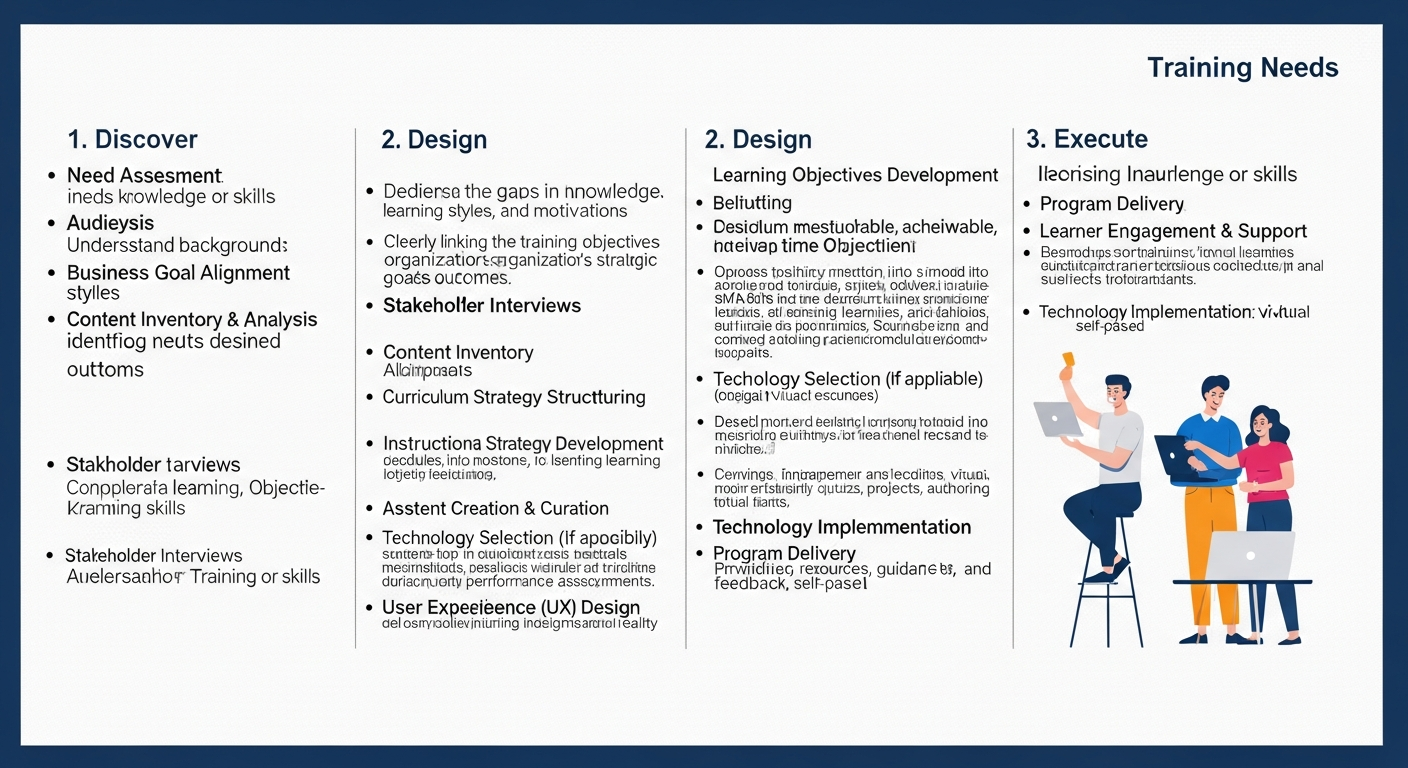
The DDE Framework, standing for Discover, Design, and Execute, provides a systematic and agile approach to developing and delivering impactful corporate training. It moves beyond traditional, one-off training events, advocating for a continuous cycle of improvement rooted in clear objectives and measurable outcomes. For any LMS or learning content management system to truly shine, the underlying strategy must be sound. The DDE framework offers that strategic backbone, making it indispensable for sectors ranging from Compliance and Sales to Banking, Finance, Healthcare, and Oil and Gas.
1. Discover: Unearthing the True Needs
The "Discover" phase is the bedrock of the DDE Framework. It’s where L&D teams thoroughly investigate the current state, identify performance gaps, and pinpoint the specific knowledge, skills, and attitudes required to achieve desired business outcomes. This isn't just about asking what people "want" to learn; it's about deep-diving into what they need to learn to perform better and contribute to the company's strategic goals. This critical first step ensures that subsequent efforts are precisely targeted, preventing wasted resources on irrelevant training.
Key Activities in Discovery:
- Needs Analysis: Comprehensive assessment of organizational, departmental, and individual performance gaps. This might involve surveys, interviews, focus groups, and performance data review.
- Audience Analysis: Understanding the learners' existing knowledge, learning styles, technological proficiency, motivations, and cultural background.
- Goal Setting: Defining clear, measurable, achievable, relevant, and time-bound (SMART) learning objectives directly linked to business objectives. For instance, in sales, a goal might be to increase conversion rates by 15% using new product knowledge.
- Resource Assessment: Identifying available resources, technologies, and constraints (budget, time, expertise) that will influence the training solution.
Ignoring this phase often leads to generic, ineffective training programs that fail to address the root causes of performance issues. A robust learning management system can aid in data collection and analysis during this phase, by tracking existing skill sets and performance metrics.
Common Training Queries Addressed in Discovery:
- How do modern L&D teams accurately pinpoint training needs? By employing a blend of quantitative data analysis (performance reviews, sales figures, customer feedback) and qualitative methods (stakeholder interviews, observation, surveys), often facilitated by advanced enterprise learning management platforms.
- Are there specific discovery methodologies effective across diverse global teams? Yes, adaptable methodologies that combine local cultural insights with universal performance indicators are crucial. Tools that support multi-language data collection and analysis within a cloud based learning management system prove highly effective.
- What immediate benefits can 'Discovery' bring to our corporate training initiatives? It ensures alignment with business strategy, prevents resource waste on irrelevant training, and fosters buy-in from stakeholders by demonstrating a data-driven approach.
2. Design: Crafting the Learning Experience
Once the needs are clearly defined, the "Design" phase begins. This is where instructional designers, subject matter experts, and L&D technologists collaborate to blueprint the learning solution. It’s about transforming raw objectives into engaging, effective, and efficient learning experiences that resonate with the target audience and achieve the established goals. This phase demands creativity, pedagogical expertise, and a keen understanding of modern learning technologies.
Key Activities in Design:
- Curriculum Development: Structuring the learning journey, outlining modules, topics, and learning pathways. This often involves creating a comprehensive LCMS to manage content.
- Content Creation Strategy: Deciding on the most appropriate content formats (e.g., videos, interactive simulations, infographics, quizzes, job aids) for different learning objectives. Considerations include Microlearning LMS approaches for bite-sized, accessible content.
- Instructional Strategies: Selecting pedagogical methods such as problem-based learning, scenario-based training, simulations, or Gamified LMS elements to boost engagement and retention.
- Technology Integration: Identifying and leveraging appropriate learning technologies. This includes the selection of a robust learning management software and authoring tools that support interactive and immersive content. An lms learning management system like MaxLearn LMS is crucial here.
- Assessment Planning: Designing formative and summative assessments that accurately measure learning outcomes and ensure transfer of skills to the workplace. Adaptive Learning principles can be integrated to personalize assessment paths.
The design phase is where the blueprint of effective training takes shape. It leverages insights from the Discovery phase to ensure relevance and applies sound instructional design principles to ensure efficacy. A well-designed program, supported by a sophisticated learning management solutions suite, significantly enhances the learner experience and outcomes.
Common Training Queries Addressed in Design:
- What instructional design principles are most effective for digital learning content? Principles like cognitive load theory, multimedia learning, spaced repetition, and active recall, often facilitated by interactive elements within an lms learning management system, prove highly effective.
- Can a single design approach serve varying cultural learning preferences? While core principles remain, successful global design often incorporates modularity and localization, allowing for cultural nuances in examples, scenarios, and language, all managed within a flexible cloud based learning management system.
- How can we leverage technology to create engaging and personalized learning paths? By utilizing features like Gamified LMS elements, Adaptive Learning algorithms, and interactive content authoring tools, organizations can tailor experiences to individual learner needs and progress.
3. Execute: Delivering and Optimizing Impact
The final core element, "Execute," brings the meticulously designed training program to life. This phase involves the actual delivery of content, facilitating learner engagement, and continuous monitoring to ensure the program achieves its intended impact. It’s not just about pressing "go"; it's about managing the learning environment, providing support, and being prepared to iterate based on initial feedback and performance data.
Key Activities in Execution:
- Content Delivery: Deploying the learning modules through the chosen learning management system (LMS), whether it's instructor-led, self-paced e-learning, blended learning, or a combination.
- Facilitation and Support: Providing trainers, mentors, and technical support to learners. For Microlearning LMS deployments, this might involve nudges and curated content recommendations.
- Learner Engagement: Implementing strategies to maintain learner motivation and participation, such as discussion forums, peer learning groups, and Gamified LMS components.
- Initial Assessment and Feedback: Gathering immediate reactions and initial performance data through quizzes, surveys, and observation. An AI Powered Authoring Tool can help streamline assessment creation and analysis.
- Data Collection and Reporting: Systematically collecting data on completion rates, assessment scores, engagement metrics, and initial impact. This is where a robust enterprise learning management solution truly adds value.
- Iteration and Refinement: Based on initial execution data, making necessary adjustments to content, delivery methods, or support mechanisms. This continuous improvement loop is vital, especially for critical areas like Risk-focused Training.
The Execute phase transforms potential into performance. It’s where the investment in Discovery and Design pays off, translating into tangible improvements for individuals and the organization. A high-performing MaxLearn LMS can be instrumental in managing this entire process, from delivery to detailed reporting.
Common Training Queries Addressed in Execution:
- What are the key metrics for evaluating training program success beyond completion rates? Beyond completion, focus on skill application, behavioral changes, impact on KPIs (e.g., sales numbers, safety incidents), and ROI, all trackable through comprehensive learning management software.
- How can companies ensure consistent execution of training across geographically dispersed workforces? By leveraging cloud based learning management system platforms that offer centralized content management, multi-language support, and standardized delivery protocols, ensuring equitable access and experience globally.
- Beyond completion rates, how do we measure the true impact of our training investments? By integrating post-training performance data, conducting follow-up assessments, soliciting manager feedback on employee application, and linking training outcomes directly to business objectives, often facilitated by analytics within an LMS.
Integrating the DDE Framework with Modern L&D Technology
The DDE Framework is not merely a theoretical model; it's a practical blueprint for leveraging today's advanced eLearning technologies. Each phase is significantly enhanced by modern learning management solutions. For instance, the Discovery phase can utilize analytics from an enterprise learning management system to identify skill gaps. The Design phase thrives with AI Powered Authoring Tool capabilities for rapid content creation and Adaptive Learning paths. The Execute phase is streamlined by Microlearning LMS platforms for just-in-time delivery and Gamified LMS features for sustained engagement.
For industries like Compliance, where Risk-focused Training is paramount, DDE ensures that training directly mitigates identified risks. In Sales, it optimizes learning management system usage for product knowledge and selling skills. Banking, Finance, and Insurance benefit from precision in regulatory training, while Retail, Pharma, and Healthcare ensure up-to-date knowledge transfer. Hospitality, Oil and Gas, and Mining leverage DDE for safety and operational excellence.
A comprehensive lms learning management system like MaxLearn LMS acts as the central nervous system, integrating content (often through an LCMS), delivering personalized experiences, and providing robust analytics across all DDE phases. This allows L&D professionals to make data-driven decisions, continually refining their offerings for maximum impact.
Conclusion
The DDE (Discover, Design, Execute) Framework provides a powerful, systematic, and results-oriented approach to corporate training. By meticulously understanding needs, thoughtfully crafting learning experiences, and effectively delivering and iterating on programs, L&D leaders can transform training from a cost center into a strategic value driver. Embracing these three core elements, augmented by cutting-edge learning management software and platforms, empowers organizations to build a highly skilled, adaptable, and engaged workforce ready to meet the challenges of tomorrow.


Comments
Post a Comment