The Complete Guide to Continuous Sales Training and Reinforcement
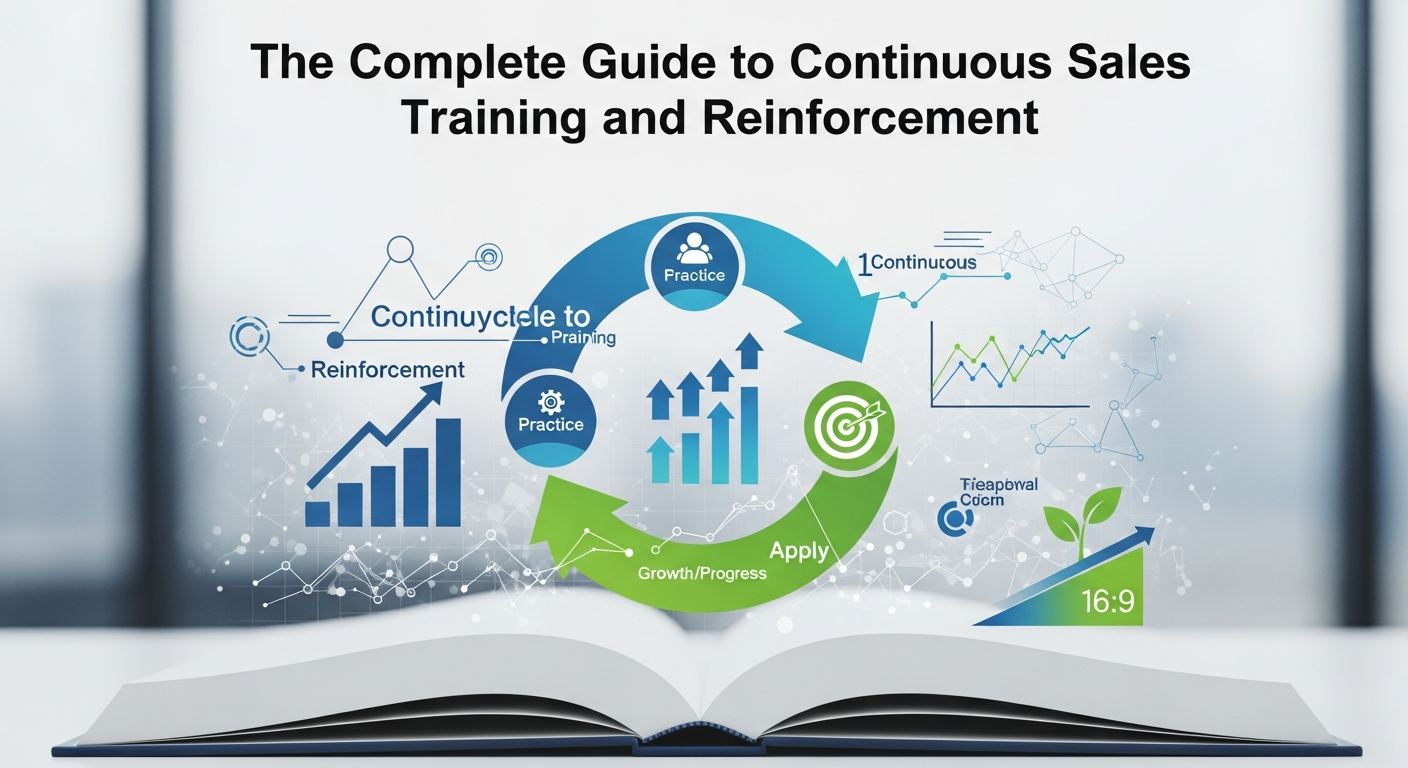
The Complete Guide to Continuous Sales Training and Reinforcement
In today's hyper-competitive and rapidly evolving marketplace, static, one-off sales training programs are relics of the past. For Vice Presidents, Directors, and Senior Managers of Learning & Development, the mandate is clear: empower sales teams not just to sell, but to adapt, excel, and consistently exceed targets. The answer lies in continuous sales training and reinforcement – a dynamic, ongoing process that ensures your sales force remains at the peak of its performance, regardless of market shifts or product evolutions.
This comprehensive guide delves into why continuous sales training is non-negotiable, outlines its essential components, and demonstrates how strategic implementation can drive unparalleled growth across diverse sectors like Banking, Finance, Insurance, Retail, Pharma, Health care, Hospitality, Oil and Gas, and Mining, addressing critical compliance and performance needs.
The Imperative of Continuous Sales Training
Why Traditional Training Falls Short
Traditional sales training often resembles a "sheep dip" approach: an intensive, one-time event followed by minimal follow-up. While it might provide an initial knowledge boost, the reality is that much of that information fades over time. Studies consistently show a significant decay in learning within weeks if not reinforced. This approach is inefficient, costly, and ultimately, ineffective in preparing sales professionals for long-term success.
The Modern Sales Landscape Demands Agility
The world of sales is no longer static. New products launch, competitors emerge, regulations change (especially in compliance-heavy industries), customer expectations evolve, and technology transforms how we interact. Sales professionals need to be lifelong learners, constantly updating their product knowledge, sales techniques, negotiation skills, and understanding of market dynamics. A robust Microlearning LMS is crucial for delivering timely, digestible content that keeps pace with these changes.
Pillars of Effective Continuous Sales Training
Microlearning for Knowledge Retention
Break down complex topics into bite-sized, easily consumable modules. This approach, facilitated by a powerful Microlearning LMS, combats information overload and aligns with the busy schedules of sales professionals. Whether it's a 5-minute product update, a quick review of compliance regulations, or a refresher on a specific sales technique, microlearning ensures knowledge is acquired efficiently and can be immediately applied. This method significantly boosts retention and engagement.
Gamification for Engagement
Transform training into an engaging, competitive, and rewarding experience. Integrating game-like elements such as points, badges, leaderboards, and challenges within a Gamified LMS motivates sales teams, fostering healthy competition and driving higher completion rates. It makes learning enjoyable, encouraging active participation and application of new skills in real-world scenarios. This is particularly effective for reinforcing behaviors and knowledge that are crucial for compliance or product launches.
Adaptive Learning Paths
Not all learners are the same, nor do they all start from the same knowledge base. Adaptive Learning tailors the training content and pace to individual needs, identifying knowledge gaps and strengths. By providing personalized learning journeys, an adaptive learning system ensures that each sales professional focuses on areas where they need the most improvement, making training more relevant, efficient, and impactful. This personalized approach maximizes ROI on training investments.
Leveraging AI for Personalized Development
Artificial Intelligence revolutionizes content creation and delivery. An AI Powered Authoring Tool can analyze performance data, identify skill gaps, and even recommend specific microlearning modules or coaching interventions. AI can personalize learning paths, suggest relevant content based on a sales rep’s pipeline, industry, or performance metrics, making training highly targeted and effective. This level of personalization ensures that every sales professional receives the exact support they need, precisely when they need it.
Reinforcement Strategies: Making Learning Stick
Regular Refreshers and Spaced Repetition
Combat the "forgetting curve" with strategically timed refreshers. Spaced repetition, where key information is revisited at increasing intervals, significantly improves long-term memory retention. Short quizzes, flashcards, or interactive scenarios delivered through an enterprise learning management system can serve as effective reinforcement tools, keeping critical knowledge front of mind.
Peer-to-Peer Learning and Coaching
Foster a culture of continuous learning by encouraging peer collaboration. Sales teams can learn immensely from each other's experiences, best practices, and innovative approaches. Implement mentorship programs, virtual discussion forums, or structured coaching sessions where experienced reps can guide newer team members. This collaborative environment strengthens the entire sales force and builds a knowledge-sharing ecosystem within your organization.
Performance-Based Feedback and Analytics
Integrate training with real-world sales performance data. A sophisticated learning management software can track how training completion correlates with sales metrics, product adoption, or compliance adherence. Regular, constructive feedback based on these analytics, combined with targeted reinforcement, helps sales professionals understand their impact and identify areas for further development. This data-driven approach ensures that training initiatives are directly linked to business outcomes.
Choosing the Right Technology Partner
The Power of a Robust LMS
At the heart of any successful continuous sales training program is a powerful LMS. This critical technology serves as your central hub for content delivery, learner tracking, and performance analytics. When selecting a learning content management system, consider features like mobile accessibility, robust reporting, SCORM and xAPI compatibility, and ease of integration with existing HR or CRM systems. A modern learning management system, such as a cloud based learning management system, provides the scalability and flexibility needed for global sales teams. Solutions like MaxLearn LMS offer comprehensive functionalities, including an LCMS, that support dynamic content creation and delivery, crucial for industries requiring constant updates, like finance or healthcare compliance.
Risk-focused Training for Compliance and Growth
In industries such as Banking, Finance, Pharma, and Health care, compliance training is paramount. Continuous sales training must incorporate Risk-focused Training to ensure sales teams are always up-to-date with the latest regulations, ethical guidelines, and company policies. This not only mitigates legal and financial risks but also builds customer trust. An effective lms learning management system can track compliance module completion, ensuring every sales professional meets mandatory requirements and understands the implications of non-compliance.
Addressing Key Questions in Modern Sales Training
How can intelligent automation enhance sales training effectiveness?
Intelligent automation, powered by machine learning, can personalize training at an unprecedented level. It can analyze a sales professional's past performance, product knowledge gaps, and even communication styles to recommend specific microlearning modules, practice scenarios, or coaching interventions. For global teams, it can translate and localize content automatically, ensuring cultural relevance and accessibility. This predictive capability means training is always proactive, addressing potential weaknesses before they impact sales, and continuously optimizing content delivery for maximum impact, regardless of geographic location or individual learning pace.
What are the benefits of a modern learning management system for global sales teams?
A cutting-edge learning management solutions platform offers unparalleled benefits for geographically dispersed sales forces. Firstly, it provides centralized access to all training materials, ensuring consistency in messaging and product knowledge across continents. Secondly, it enables flexible, on-demand learning, allowing sales professionals in different time zones to access content whenever it suits them. Thirdly, advanced analytics provide L&D leaders with a holistic view of learning progress and performance across regions, identifying global trends and localized training needs. Finally, features like multi-language support and culturally relevant content delivery capabilities ensure that training resonates with diverse international teams, fostering a unified and highly skilled global sales organization.
What is the best way to measure ROI for continuous sales training initiatives?
Measuring the return on investment (ROI) for continuous sales training involves a multi-faceted approach. Beyond tracking course completion rates and assessment scores, it's crucial to link training data directly to key sales metrics. This includes analyzing changes in sales revenue, average deal size, sales cycle length, customer satisfaction scores, product adoption rates, and reduction in compliance breaches. A robust learning management system, integrated with CRM and ERP systems, can provide the analytics needed to correlate specific training interventions with improvements in these business outcomes. Regularly comparing performance of trained versus untrained groups, or tracking individual progress pre- and post-training, provides quantifiable evidence of training effectiveness, demonstrating tangible value to the organization.
Conclusion
The journey to sales excellence is continuous, not a destination. By embracing continuous sales training and reinforcement, powered by innovative technologies like an LMS, organizations can cultivate a high-performing, adaptable, and compliant sales force ready to meet any challenge. For L&D leaders, investing in such a system isn't just about training; it's about strategically empowering your sales teams to drive sustainable growth, foster innovation, and maintain a competitive edge in an ever-changing global market.


Comments
Post a Comment