The Blueprint for Designing Bite-Sized Microlearning Content That Sticks
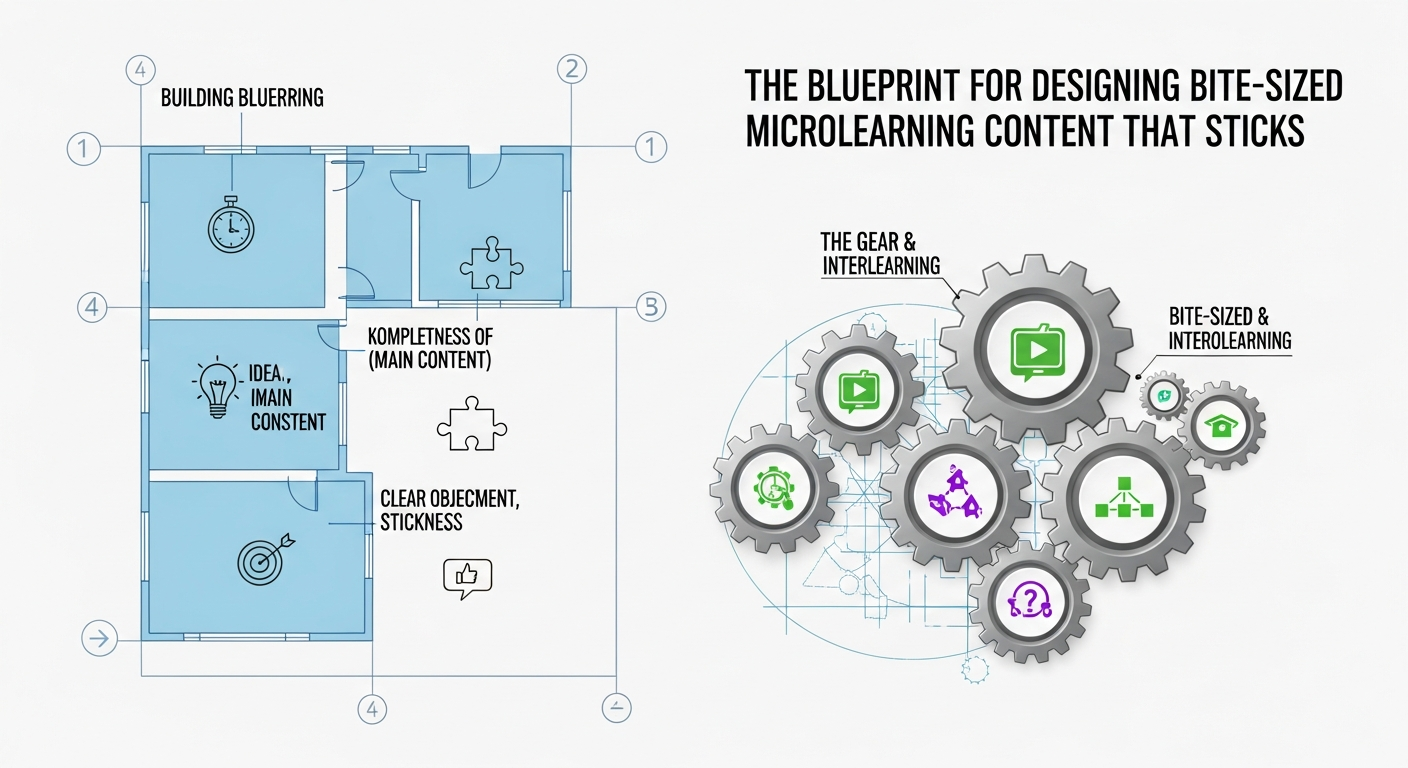
The Blueprint for Designing Bite-Sized Microlearning Content That Sticks
In today’s fast-paced corporate environment, the attention spans of your workforce are more fragmented than ever. As L&D leaders – Vice Presidents, Directors, and Senior Managers – you face the constant challenge of delivering impactful training that resonates, is retained, and truly drives performance. Traditional long-form courses often struggle to cut through the noise, leading to disengagement and forgotten knowledge. This is where microlearning emerges as a powerful antidote, but merely breaking content into smaller chunks isn't enough. The real challenge lies in designing microlearning content that doesn't just inform, but actively sticks.
This article unveils a comprehensive blueprint for crafting engaging, effective, and memorable bite-sized learning experiences. We'll explore the core principles, strategic steps, and the transformative role of technology, including advanced learning management systems, to ensure your training initiatives yield tangible results across diverse industries from compliance to healthcare, and sales to oil and gas.
Why Microlearning is Non-Negotiable for Modern L&D
The demand for on-demand, just-in-time learning is no longer a trend; it's an expectation. Microlearning, characterized by short, focused bursts of content (typically 3-10 minutes), aligns perfectly with how modern professionals consume information. It reduces cognitive load, allows for immediate application of knowledge, and fits seamlessly into busy schedules. For organizations leveraging a robust Microlearning LMS, the benefits extend to improved completion rates, enhanced skill development, and a more agile workforce. An effective LMS is the backbone for delivering these experiences.
The Core Principles of Sticky Microlearning
Before diving into the design steps, understanding the foundational principles is crucial for any learning content management system. These are the pillars upon which truly effective bite-sized content is built.
Focus on Single Learning Objectives
Each microlearning module must address one specific, measurable learning objective. Avoid the temptation to cram multiple concepts into a single unit. This singular focus ensures clarity, prevents overwhelm, and makes the content immediately actionable. Think of it as answering one critical question or solving one specific problem.
Contextual Relevance
Learning sticks when it's directly applicable to the learner's immediate work or challenges. Microlearning should provide just-in-time knowledge, accessible at the moment of need. Whether it's a sales rep needing product specs on the fly or a compliance officer verifying a new regulation, the content must be relevant to their current context. A sophisticated learning management system facilitates this on-demand access.
Engagement and Interactivity
Passive consumption leads to poor retention. Sticky microlearning incorporates interactive elements that prompt learners to apply, reflect, or make decisions. Quizzes, simulations, drag-and-drop activities, and scenarios transform learning into an active process. A Gamified LMS can significantly boost this engagement, turning learning into a more enjoyable and competitive experience.
Accessibility and Mobility
Microlearning content must be easily accessible on any device, anytime, anywhere. Mobile-first design is paramount. Learners should be able to pull up a quick training module on their smartphone during a commute, in between meetings, or on the factory floor. This flexibility is a hallmark of a modern cloud based learning management system.
Measurability and Feedback
For L&D leaders, demonstrating ROI is vital. Effective microlearning design includes mechanisms for tracking completion, comprehension, and application. Short assessments, feedback loops, and performance metrics within a robust enterprise learning management solution allow you to continuously refine and improve your content.
The Blueprint: Steps to Design Effective Microlearning
Translating these principles into actionable design requires a systematic approach. This blueprint guides you through the process, from inception to implementation, ensuring your learning management solutions truly deliver.
Step 1: Define Your "Why" and Pinpoint Needs
Start with a thorough training needs analysis. What specific knowledge or skill gaps are you trying to close? What business objectives will this training support? For instance, in Compliance, it might be reducing regulatory violations; in Sales, improving conversion rates. A clear "why" will guide every subsequent design decision, ensuring the content is targeted and impactful.
Step 2: Chunk It Down to the Essential Core
Once the objective is clear, break down existing content or develop new content into the absolute essentials. Ruthlessly eliminate jargon, redundancies, and extraneous information. Each micro-module should deliver one core message or skill. For example, instead of a 30-minute module on "Company Policy," create 5-minute modules on "Expense Reporting Guidelines," "Social Media Policy," etc.
Step 3: Choose Your Format Wisely
The format should suit the content and the learning objective.
- Videos: Excellent for demonstrations, process explanations, or scenario-based learning (e.g., how to handle a customer complaint).
- Infographics: Ideal for summarizing complex data, steps, or regulations (e.g., a quick guide to a new banking product).
- Quizzes/Assessments: Perfect for knowledge checks and reinforcing learning.
- Interactive Simulations: Best for practicing skills in a safe environment (e.g., a simulated sales call).
- Podcasts/Audio Clips: Great for conceptual explanations or inspirational messages for on-the-go learning.
Step 4: Inject Interactivity and Engagement
This is where content comes alive. Don't just present information; create experiences. Incorporate questions, drag-and-drop activities, branching scenarios, and reflection prompts. Utilize a Gamified LMS to introduce points, badges, and leaderboards, fostering healthy competition and increasing motivation, especially beneficial in industries like Retail or Hospitality.
Step 5: Leverage Technology for Delivery and Analytics
A sophisticated learning management software is indispensable. Implement a robust MaxLearn LMS that supports diverse content formats, offers intuitive mobile access, and provides comprehensive analytics. This system should track learner progress, engagement levels, and performance outcomes, allowing you to continually refine your strategy and demonstrate the value of your training initiatives to stakeholders. A modern lms learning management system provides the framework for scalable and effective microlearning delivery.
Advanced Insights: Intelligent Systems Supercharge Microlearning
The integration of intelligent technologies is revolutionizing how L&D professionals design and deliver microlearning, making it even more dynamic and effective.
How can intelligent systems personalize microlearning paths for individual employees?
Intelligent algorithms can analyze a learner's performance data, job role, past training, and even learning style to recommend highly personalized microlearning modules. This ensures that each employee receives content most relevant to their unique needs and progress, optimizing learning efficiency. This capability is at the heart of Adaptive Learning, which tailors the learning journey in real-time, delivering the right content at the right moment for maximum impact and retention.
What tools empower L&D teams to create engaging microlearning content rapidly and at scale?
Specialized authoring tools, often enhanced with intelligent capabilities, allow instructional designers to quickly convert complex information into compelling microlearning formats. These tools can automate aspects of content creation, suggest design improvements, and ensure responsiveness across devices. An AI Powered Authoring Tool dramatically reduces development time, enabling L&D teams to respond swiftly to evolving training needs, such as new product launches in Sales or updated protocols in Healthcare.
How can advanced analytics pinpoint crucial training needs and measure the impact of microlearning interventions?
Sophisticated analytics platforms can sift through vast amounts of data – from assessment results to operational performance metrics – to identify critical skill gaps and areas of high risk within an organization. By correlating microlearning engagement with business outcomes, these systems provide clear insights into which training modules are most effective. This data-driven approach supports Risk-focused Training, helping L&D leaders prioritize interventions that mitigate potential business risks and drive growth, particularly vital in sectors like Banking, Pharma, or Oil and Gas where compliance and safety are paramount.
Implementing in Your Industry
The beauty of microlearning lies in its versatility. For **Compliance**, it’s perfect for delivering concise updates on regulations. In **Sales**, it can provide just-in-time product knowledge or objection handling tips. **Banking, Finance, and Insurance** can leverage it for complex product explanations or fraud prevention. **Retail and Hospitality** benefit from quick refreshers on customer service standards or new promotions. **Pharma and Healthcare** use it for protocol updates or drug information. Even in **Oil and Gas** and **Mining**, microlearning delivers critical safety procedures and equipment operation instructions in a digestible format.
Conclusion
Designing microlearning content that truly sticks is about more than just brevity; it's about strategic intent, learner-centric design, and leveraging the right technological infrastructure. By adhering to a blueprint that prioritizes clear objectives, engaging formats, and robust delivery via a comprehensive learning management system, L&D leaders can transform their training programs. Embrace this blueprint, harness the power of intelligent systems, and empower your workforce with knowledge that not only informs but is retained and applied, driving measurable business success in every industry.


Comments
Post a Comment