Streamlining Product Knowledge Training with Bite-Sized Learning Systems
Streamlining Product Knowledge Training with Bite-Sized Learning Systems
In today's fast-paced corporate environment, product knowledge isn't just an asset; it's the bedrock of success across virtually every industry, from Compliance to Sales, Banking to Healthcare. For Vice Presidents, Directors, and Senior Managers in Learning & Development, the challenge of equipping teams with up-to-date, comprehensive product understanding is constant. Traditional, lengthy training modules often fall short, leading to information overload, disengagement, and ultimately, a knowledge gap that impacts performance and customer satisfaction. The solution? Embracing bite-sized learning systems, powered by advanced Microlearning LMS platforms.
The Evolving Landscape of Product Knowledge
The sheer volume and complexity of product information are escalating. Whether it's a new financial instrument in banking, an updated pharmaceutical drug, a complex software feature, or a compliance regulation in oil and gas, employees need to grasp intricate details quickly and retain them effectively. The rapid innovation cycles in industries like Pharma and Retail mean that product specifications can change quarterly, if not more frequently. This dynamic environment demands an agile and efficient approach to training.
Without robust product knowledge, organizations face:
- Reduced Sales Effectiveness: Sales teams struggle to articulate value propositions or answer nuanced customer questions.
- Compliance Risks: Employees in Banking, Finance, and Healthcare may inadvertently violate regulations due to outdated information.
- Poor Customer Experience: Support staff cannot provide accurate, timely solutions, leading to frustration and churn.
- Operational Inefficiency: Teams waste time searching for information or making avoidable errors.
This is where a modern LMS becomes indispensable, moving beyond a mere repository to an active learning facilitator.
Why Traditional Training Falls Short
Conventional training methods, often characterized by multi-hour e-learning courses or day-long classroom sessions, struggle to keep pace. The human attention span is shrinking, and adult learners thrive on relevance, immediacy, and convenience. Long-form content frequently leads to:
- Cognitive Overload: Too much information at once hinders retention.
- Irrelevance: Learners are forced through modules that don't directly apply to their role or immediate needs.
- Low Engagement: Monotonous presentations and lack of interactivity lead to disinterest.
- Slow Deployment: Creating and updating lengthy courses is time-consuming, meaning content can be outdated before it's even launched.
For L&D professionals, finding a robust learning content management system that can deliver agile content is crucial.
Embracing Bite-Sized Learning Systems
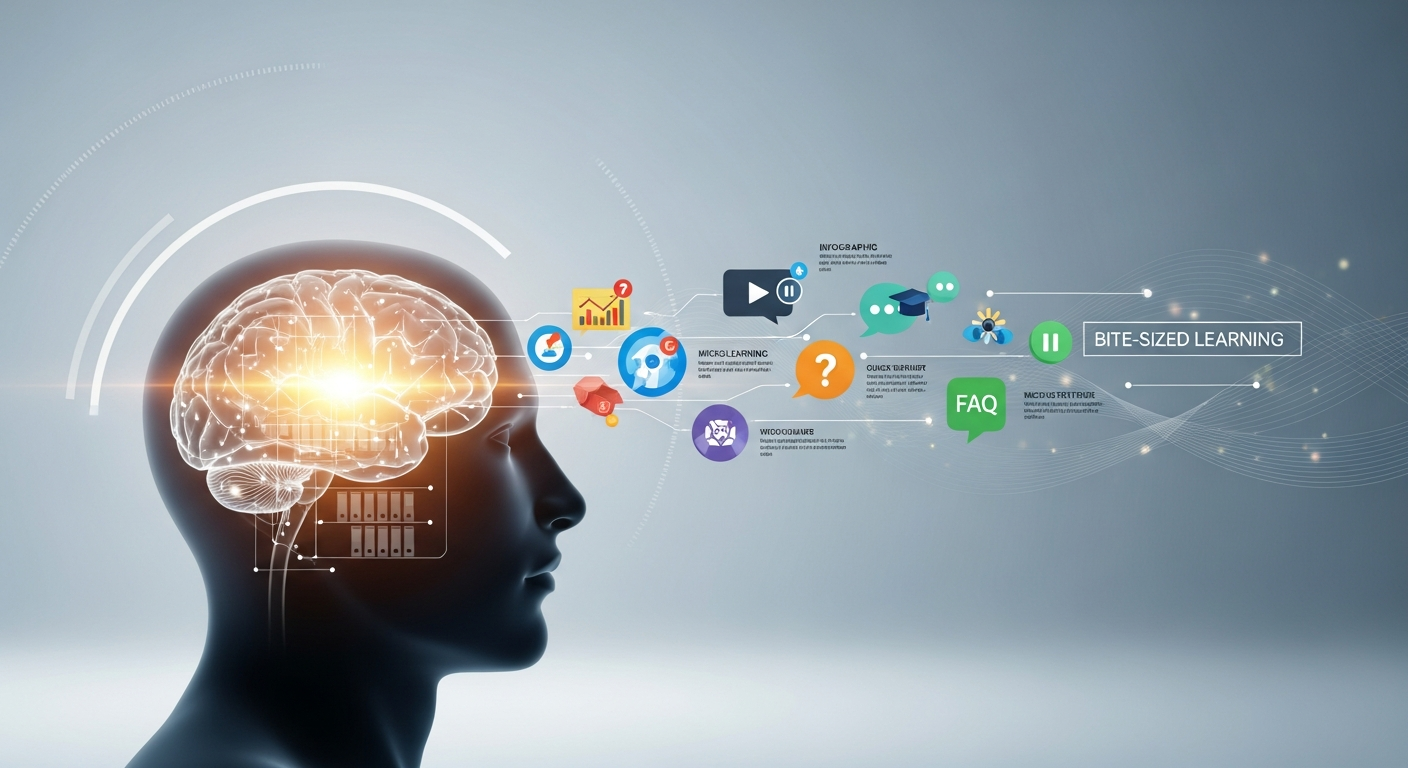
Bite-sized learning, or microlearning, breaks down complex product knowledge into short, digestible modules, typically 3-5 minutes in length. These can be videos, infographics, interactive quizzes, or short text summaries, focusing on a single learning objective. This approach aligns perfectly with how modern professionals consume information – on demand, on their preferred device, and in moments of need.
The benefits are transformative:
- Increased Engagement & Retention: Short, focused content is less daunting and more likely to be completed and remembered.
- Flexibility & Accessibility: Learners can access modules on their mobile devices whenever and wherever it's convenient, perfect for frontline staff in Retail or field reps in Sales.
- Faster Time-to-Competency: Employees can quickly acquire specific skills or knowledge relevant to their immediate tasks.
- Agile Content Updates: It's easier and faster to update a 3-minute video than an hour-long course, ensuring content remains current.
Key Components of an Effective Bite-Sized System
Implementing a successful bite-sized strategy requires more than just breaking down content. It demands a sophisticated learning management software:
- Intelligent Content Design: Modules must be highly focused, visually engaging, and incorporate diverse multimedia formats.
- Robust Delivery Platform: A lms learning management system designed for microlearning ensures seamless mobile delivery, tracking, and reporting.
- Integrated Analytics: To understand what's working and where knowledge gaps persist.
The Role of Advanced Technology in Streamlining Training
Modern learning management solutions are no longer just repositories; they are dynamic ecosystems. A dedicated Microlearning LMS elevates product knowledge training to new heights. For example, a Gamified LMS can turn learning into an engaging experience, using points, badges, and leaderboards to motivate completion and reinforce knowledge. This is particularly effective for large, diverse workforces in Retail or Hospitality.
Furthermore, the power of Adaptive Learning tailors the training path to each individual. Instead of a one-size-fits-all approach, an intelligent learning management system can assess a learner's existing knowledge and progress, serving up precisely the modules they need, when they need them. This personalized approach accelerates mastery and prevents wasted time on already-known topics.
Content creation itself is being revolutionized. An AI Powered Authoring Tool can dramatically speed up the development of bite-sized content, transforming raw product information into engaging learning modules with unprecedented efficiency. This is a game-changer for industries with constantly evolving product lines, reducing the burden on L&D teams.
For organizations dealing with vast amounts of product documentation, an integrated LCMS (Learning Content Management System) ensures all learning assets are organized, searchable, and reusable. A cloud based learning management system like MaxLearn LMS provides the scalability and accessibility required for global teams, making it an ideal enterprise learning management solution.
Addressing Specific Industry Needs
The modular nature of bite-sized learning is particularly effective for high-stakes industries:
- Compliance: Risk-focused Training can be delivered in precise, mandatory modules covering specific regulations in Banking, Finance, or Pharma.
- Sales: Quick updates on new product features, competitive advantages, or objection handling can be pushed directly to sales teams before client meetings.
- Healthcare: Medical professionals can access concise modules on new procedures, drug interactions, or equipment operation on demand.
- Retail & Hospitality: Frontline staff can quickly learn about daily specials, new policies, or customer service best practices in minutes.
AI-Powered Insights for Optimized Learning
The integration of artificial intelligence is further refining how L&D departments manage product knowledge training. AI-driven analytics provide a depth of insight previously unavailable.
Question: How can artificial intelligence help us understand what product knowledge gaps our teams truly have?
Answer: AI can analyze performance data from various sources, including sales metrics, customer support interactions, and assessment results within the learning system itself. By identifying common errors, frequently asked customer questions, or areas where employees consistently underperform, AI can pinpoint precise knowledge deficiencies. This data-driven approach allows L&D to proactively create or recommend targeted bite-sized modules, ensuring training resources are focused on the most impactful areas, rather than relying on generalized assumptions.
Question: In what ways can AI personalize the learning experience for product knowledge, leading to better employee performance?
Answer: AI-driven platforms can tailor the entire learning journey. Based on an individual's role, their previous learning history, current performance data, and even their preferred learning styles, AI can dynamically curate a personalized path. This means delivering specific bite-sized modules, recommending supplementary resources, or adjusting the difficulty of quizzes. By ensuring each employee receives the most relevant and engaging content, AI accelerates their product mastery and directly enhances their job efficacy, whether it's closing a sale or resolving a complex customer issue.
Question: Can AI adapt product knowledge training for different regional markets or diverse job functions within our organization?
Answer: Absolutely. AI excels at contextual adaptation. It can process and segment vast amounts of product information, localizing content for specific geographic regions, translating it for diverse language requirements, or adjusting it to comply with local regulations. Furthermore, AI can dynamically reconfigure training pathways to suit distinct job functions – for instance, providing a sales team with market-oriented product benefits while offering an engineering team a deeper dive into technical specifications for the same product. This ensures universal relevance and compliance across a global or functionally diverse workforce.
Implementing a Successful Bite-Sized Strategy
For L&D leaders, the transition to bite-sized learning is a strategic imperative. Start by identifying critical product knowledge areas that are frequently updated or have a significant impact on performance. Partner with subject matter experts to break down complex topics into discrete learning objectives. Choose an enterprise learning management system that supports microlearning principles, offers robust analytics, and is scalable for your organization's needs.
Measure the impact: track completion rates, knowledge retention through quick quizzes, and ultimately, improvements in business metrics like sales conversions, compliance adherence, or customer satisfaction scores. Iterate and refine your content based on these insights. A modern LMS is not just a tool; it's a strategic partner in this journey.
Conclusion
The future of product knowledge training is bite-sized, agile, and technology-driven. By leveraging advanced learning management system platforms, L&D professionals can move beyond outdated methods to provide engaging, effective, and continuously updated product knowledge to their teams. This approach not only streamlines training processes but also empowers employees to perform at their peak, driving business growth and maintaining a competitive edge in any industry. Explore how an advanced MaxLearn LMS can revolutionize your product knowledge training strategy today.


Comments
Post a Comment