Step-by-Step: How to Move Corporate Compliance Training to Mobile Apps
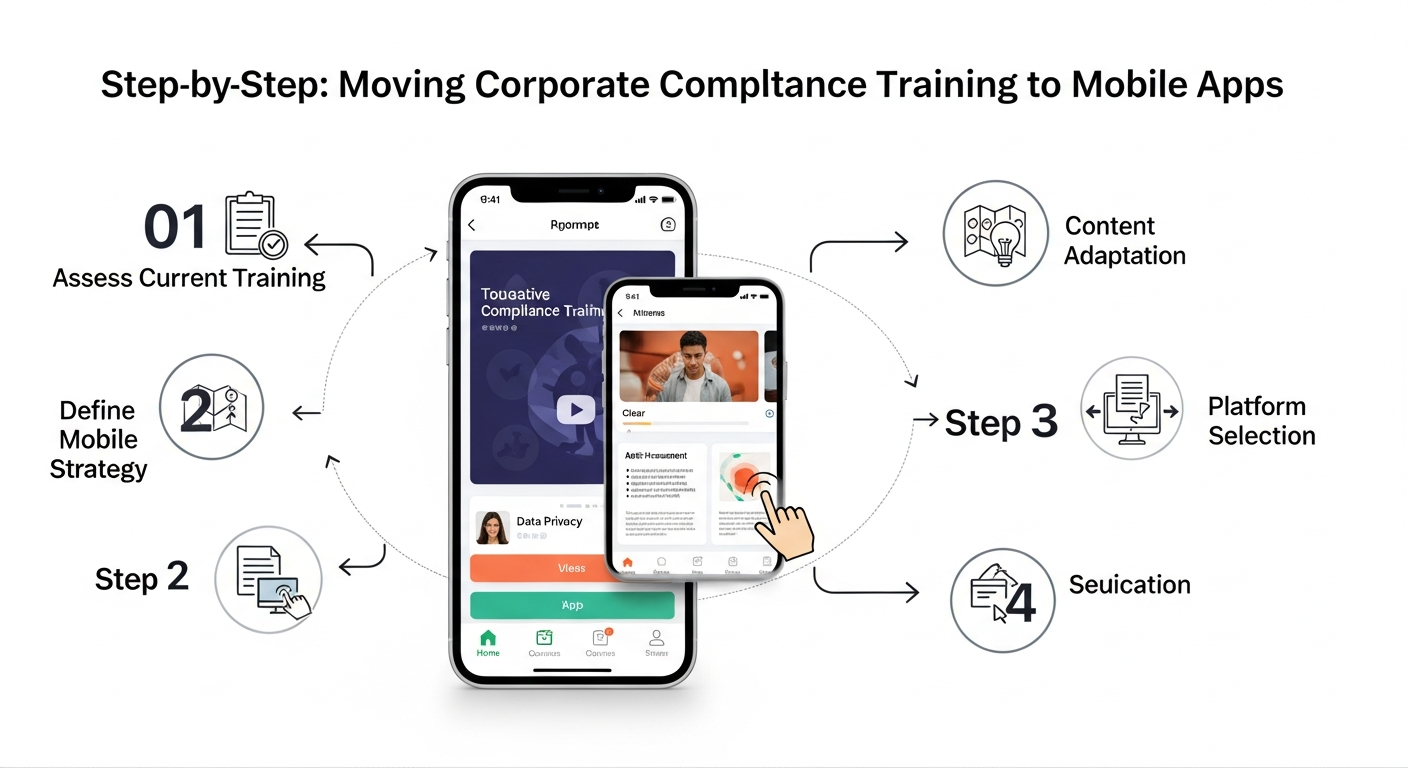
Elevate Compliance: A Step-by-Step Guide to Moving Corporate Training to Mobile Apps
In today’s fast-paced corporate environment, the demand for accessible, engaging, and effective compliance training has never been higher. Traditional classroom sessions and lengthy e-learning modules often struggle to keep pace, leading to disengaged employees and increased risk. For Vice Presidents, Directors, and Senior Managers in Learning & Development, the challenge is clear: how to deliver critical compliance information in a way that truly sticks and impacts behavior. The answer, increasingly, lies in leveraging the power of mobile applications.
Moving corporate compliance training to mobile apps isn't just about technological adoption; it's a strategic shift towards fostering a culture of continuous learning and compliance readiness. Mobile solutions offer unparalleled flexibility, engagement, and the ability to integrate learning seamlessly into the daily workflow. This article will guide you through the essential steps to make this transition a success, transforming your compliance program into a dynamic, future-proof asset.
Why Mobile for Corporate Compliance?
The benefits of adopting a mobile-first approach for compliance training extend far beyond mere convenience. They address core challenges faced by L&D professionals across industries like banking, finance, insurance, retail, pharma, health care, hospitality, oil and gas, and mining.
- Unmatched Accessibility & Convenience: Employees can access training anytime, anywhere, directly from their smartphones or tablets. This flexibility significantly boosts completion rates, especially for remote or field-based teams.
- Enhanced Engagement & Retention: Mobile apps facilitate interactive and Gamified LMS content, turning potentially dry compliance topics into engaging experiences. Short, focused modules, often delivered through a Microlearning LMS approach, improve retention.
- Meeting Modern Workforce Expectations: Today’s workforce expects digital, on-demand resources. Providing mobile compliance training aligns with these expectations, demonstrating a commitment to modern learning methodologies.
- Robust Data & Analytics: A sophisticated LMS integrated with a mobile app provides granular data on learner progress, engagement, and areas of difficulty, enabling targeted interventions and continuous improvement. This learning management system provides valuable insights for enterprise learning management.
- Cost-Effectiveness: Reducing reliance on physical classrooms, travel, and extensive instructor time can lead to significant cost savings in the long run. A cloud based learning management system further enhances this efficiency.
The Strategic Imperative: Planning Your Mobile Transition
A successful migration to mobile compliance training begins with meticulous planning and strategic foresight.
Needs Assessment & Goal Setting
Before diving into technology, it’s crucial to understand your organization's unique compliance training landscape. Identify current pain points – are completion rates low? Is comprehension poor? Are certain regulatory areas consistently problematic? Define clear, measurable goals for your mobile initiative. These might include increasing completion rates by X%, reducing compliance violations by Y%, or improving employee confidence in handling specific ethical dilemmas. Consider which regulations are most critical for your industry and segments like sales, banking, or healthcare, and what key learning outcomes are non-negotiable.
Content Audit & Optimization
Review your existing compliance training materials. Not all content is created equal, nor is it all suitable for direct migration to mobile. Identify what can be repurposed, what needs to be entirely redesigned, and what new content might be necessary. This is where the principles of microlearning become invaluable. Break down complex topics into bite-sized, digestible modules perfect for mobile consumption. A powerful Microlearning LMS can be instrumental in managing and delivering this optimized content effectively.
Step-by-Step Implementation Guide
Once your strategy is in place, it’s time to execute the transition.
Step 1: Choose the Right Platform
Selecting the appropriate LMS is perhaps the most critical decision. Look for a robust learning management software that offers native mobile app support, not just a responsive website. Key features to prioritize include:
- Offline access capabilities.
- Push notifications for reminders and updates.
- Intuitive user interface (UI) and user experience (UX).
- Robust security features to protect sensitive compliance data.
- Comprehensive reporting and analytics.
- Integration capabilities with other HR or business systems.
- Support for various content formats (video, interactive quizzes, simulations).
An advanced Microlearning LMS or a Gamified LMS will offer these features and more, providing a solid foundation for your mobile compliance journey. Consider a comprehensive learning management system that acts as a true learning content management system (LCMS).
Step 2: Redesigning Content for Mobile
This isn't about shrinking desktop content; it's about reimagining it. Focus on:
- Microlearning Principles: Deliver information in short bursts (2-5 minutes) that address specific learning objectives.
- Interactivity: Incorporate quizzes, polls, drag-and-drop exercises, and simulations to keep learners engaged. A Gamified LMS can provide a rich toolkit for this.
- Visuals First: Use high-quality graphics, videos, and infographics to convey complex information, minimizing text where possible.
- Adaptive Learning Paths: Tailor the learning experience based on a learner's role, previous knowledge, or performance.
- Authoring Tools: Leverage an AI Powered Authoring Tool to streamline content creation and ensure mobile compatibility from the outset.
Step 3: Pilot Program & Feedback
Before a full rollout, launch a pilot program with a small, diverse group of employees. Gather their feedback meticulously. What works well? What are the pain points? Is the app intuitive? Does the content resonate? Use this feedback to iterate and refine your mobile compliance solution, making necessary adjustments to content, UI/UX, and delivery mechanisms. This iterative approach is key to success.
Step 4: Rollout & Promotion
Once refined, plan a comprehensive rollout. Communicate the benefits of the new mobile compliance training clearly to all employees. Highlight how it makes compliance easier, more engaging, and more relevant to their daily work. Provide clear instructions for downloading and using the app. Offer technical support and resources to ensure a smooth adoption process. Leadership buy-in and active promotion are vital for encouraging widespread use of your new learning management solutions.
Step 5: Monitor, Analyze, and Iterate
The launch is not the end; it's the beginning of continuous improvement. Utilize the powerful analytics within your LMS. Track key metrics such as:
- Completion rates and time to completion.
- Engagement levels (e.g., time spent in the app, frequency of access).
- Quiz scores and knowledge retention.
- Feedback survey results.
These insights will help you identify areas for improvement, update content to reflect new regulations or company policies, and ensure your program remains effective. Use these insights to drive Risk-focused Training, ensuring your efforts are always aligned with critical business needs and compliance landscapes. MaxLearn LMS provides robust reporting for this continuous optimization.
Addressing Key AI-Related Considerations for Enhanced Compliance
As L&D leaders, you're looking for solutions that not only deliver training but also anticipate needs and optimize outcomes. Modern LMS platforms are leveraging intelligent features to push the boundaries of compliance training effectiveness.
Optimizing for Impact: Smart Content Delivery
How can we proactively deliver compliance training before specific risks materialize or before an employee even realizes they have a knowledge gap? An advanced learning management system leverages data on an employee's role, past performance, recent compliance incidents, and even company-wide updates to predict which content is most relevant to them at any given time. This anticipatory approach ensures that training is delivered when it's most impactful, preventing potential issues before they arise. It moves beyond reactive training to a predictive compliance posture, a hallmark of effective enterprise learning management.
Tailoring Training: Relevance Across Locations
What if compliance needs vary significantly across different regions, countries, or even specific business units within your global organization? A flexible learning content management system allows for the dynamic delivery of region-specific modules, localizing regulatory information and cultural nuances. This ensures that employees receive training that is precisely relevant to their geographic and operational context, avoiding generic content that might lead to confusion or non-compliance. It's about ensuring every employee, regardless of their location, receives the most pertinent and actionable compliance guidance from their cloud based learning management system.
Personalizing the Learning Journey: Individual Growth
How can we ensure that compliance training truly resonates with each employee's unique learning needs, preferences, and existing knowledge base? The answer lies in personalized pathways enabled by intelligent algorithms. This means the system can adapt the sequence, depth, and even the format of content based on a learner's progress, role, prior assessment results, and interaction patterns. Through Adaptive Learning, an employee might bypass known material or be directed to additional resources on challenging topics, ensuring an efficient and highly effective learning experience tailored just for them. A Gamified LMS, for example, can also provide individualized challenges and feedback loops that cater to different learning styles.
Conclusion
The journey to mobile corporate compliance training is a strategic investment that pays dividends in employee engagement, risk reduction, and overall organizational performance. By embracing a mobile-first approach, L&D leaders can transform compliance from a perceived chore into a valuable, continuous learning opportunity. Following these steps will not only modernize your training delivery but also empower your workforce to navigate the complex regulatory landscape with confidence and competence. It's time to unlock the full potential of your compliance program with an intelligent, accessible, and engaging mobile solution. Partner with innovative learning management solutions like MaxLearn LMS to lead this crucial transformation.


Comments
Post a Comment