Sales Performance Data: Quantifying the ROI of Daily Micro-Lessons
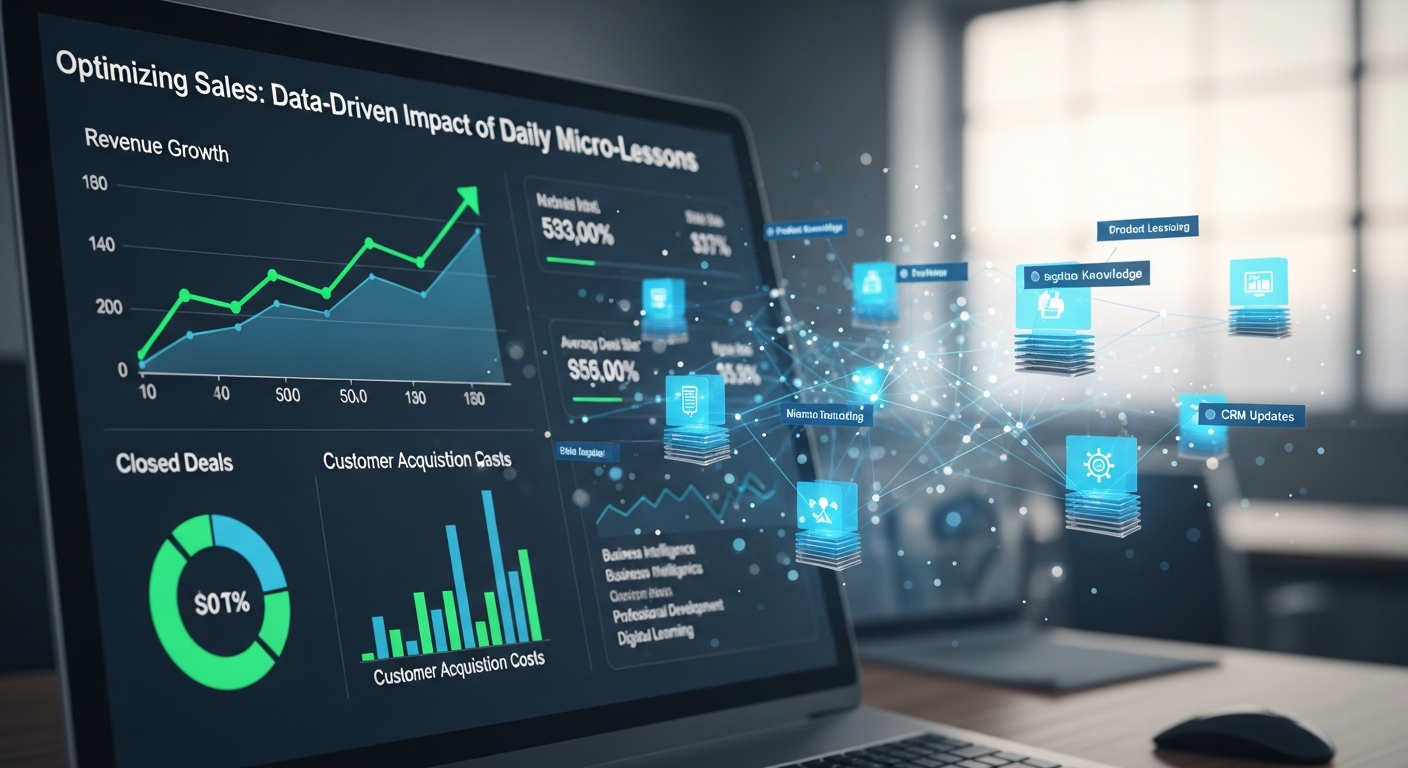
Sales Performance Data: Quantifying the ROI of Daily Micro-Lessons
In today's fast-paced business environment, the role of Learning & Development (L&D) has never been more critical – or more scrutinized. For L&D leaders, particularly those serving sales organizations across diverse sectors like Sales, Banking, Finance, Insurance, Retail, Pharma, Healthcare, Hospitality, Oil and Gas, and Mining, the perpetual challenge is demonstrating tangible value. How do we move beyond engagement metrics to truly quantify the return on investment (ROI) of our training initiatives?
The answer increasingly lies in leveraging sales performance data to prove the efficacy of modern learning methodologies, particularly daily micro-lessons. This article explores how L&D professionals can meticulously connect the dots between bite-sized, continuous learning and measurable sales outcomes, ultimately demonstrating a clear ROI for their organizations.
Understanding the Sales Performance Challenge
Traditional sales training, often characterized by infrequent, long-form sessions, struggles to keep pace with evolving product lines, market conditions, and compliance requirements. Sales teams need immediate, relevant information to address real-time customer objections, understand new features, or navigate complex regulations. The "forgetting curve" is a formidable enemy, ensuring that much of what is learned in intensive, one-off sessions is lost within days or weeks.
This challenge is compounded by the high-stakes nature of sales. Every lost deal, every missed opportunity, every compliance misstep translates directly into financial impact. L&D initiatives must therefore be agile, continuous, and demonstrably effective in improving sales capabilities and mitigating risks. This is where the concept of daily micro-lessons shines as a transformative approach to sales enablement and continuous professional development.
The Power of Micro-Lessons in Sales Training
Micro-lessons are short, focused learning modules designed to deliver specific knowledge or skills in just a few minutes. They are highly digestible, often multimedia-rich, and directly applicable to immediate job tasks. For sales professionals, this means accessing critical information – be it a new product pitch, a complex regulatory update, or a refined negotiation technique – precisely when and where they need it.
Implementing an effective Microlearning LMS provides the infrastructure for delivering these daily insights. The benefits are profound: enhanced knowledge retention, improved skill application, reduced training time away from selling, and a more engaged learning experience. By aligning content with daily sales activities, micro-lessons ensure that learning becomes an integral part of the workflow, not a disruptive event. This shift is crucial for fostering a culture of continuous improvement within sales teams.
Connecting Micro-Lessons to Measurable Sales Metrics
The true power of micro-lessons for L&D leaders lies in their measurable impact on key sales performance indicators (KPIs). To quantify ROI, it's essential to identify which sales metrics are most likely to be influenced by specific micro-learning interventions. Here are some examples:
- Conversion Rates: Micro-lessons on objection handling, closing techniques, or product value propositions can directly improve the percentage of leads converted into customers.
- Average Deal Size: Training on upselling, cross-selling, or advanced product features can help sales reps increase the value of each transaction.
- Sales Cycle Length: Micro-lessons focusing on efficient pipeline management, qualification skills, or streamlined proposal generation can shorten the time from lead to close.
- Pipeline Velocity: Improved efficiency and conversion directly contribute to a faster-moving sales pipeline.
- Customer Satisfaction & Retention: Training on customer service best practices, product knowledge, or complaint resolution can lead to happier, more loyal customers.
- Compliance Adherence: For industries like Banking, Finance, Insurance, and Pharma, micro-lessons on regulatory changes, ethical sales practices, or data privacy are vital for reducing risk and avoiding costly penalties.
By using an Adaptive Learning approach within micro-lessons, organizations can ensure that content is highly personalized and relevant, maximizing its potential impact on these crucial metrics. This targeted delivery amplifies the likelihood of a measurable positive change.
Leveraging Data: From Engagement to ROI
Quantifying the ROI of daily micro-lessons requires a systematic approach to data collection and analysis. This involves integrating learning data with sales performance data.
Step 1: Track Engagement and Completion
The first step is to monitor how sales professionals interact with their micro-lessons. A robust learning management software will provide detailed analytics on:
- Completion rates for individual modules.
- Time spent on each lesson.
- Quiz scores and assessment results.
- Frequency of access and preferred learning times.
- Participation in discussions or peer-to-peer learning.
Features like a Gamified LMS can significantly boost engagement, making the data collection process more robust by encouraging consistent participation. High engagement indicates that the training is relevant and accessible, laying the groundwork for performance improvements.
Step 2: Correlate Learning Data with Sales Performance
This is where the magic happens. By linking your learning platform data with your CRM system and other sales reporting tools, you can establish correlations:
- Cohort Analysis: Compare the sales performance (e.g., conversion rates, deal size) of sales reps who consistently engage with micro-lessons versus those who don't.
- Pre- vs. Post-Training Analysis: Analyze a sales team's KPIs before and after the introduction of specific micro-learning series. Look for an uplift.
- Targeted Intervention Impact: If a micro-lesson series focuses on a specific skill (e.g., handling objections for a new product), track the associated sales metric for those who completed the training compared to a control group.
- Skill-to-Performance Mapping: An AI Powered Authoring Tool can help identify which specific micro-lessons or skill developments correlate most strongly with positive sales outcomes.
The goal is to identify patterns and statistical significance, demonstrating that participation in micro-lessons is a contributing factor to improved sales results.
Step 3: Calculate the Financial ROI
Once correlations are established, the next step is to translate the observed performance improvements into financial gains. The classic ROI formula can be applied:
ROI = (Net Program Benefits - Program Costs) / Program Costs * 100
Net Program Benefits could include:
- Additional revenue generated from increased conversion rates.
- Increased revenue from larger average deal sizes.
- Cost savings from reduced sales cycle length (e.g., lower operational costs per deal).
- Reduced penalties or fines due to improved compliance (especially relevant for regulated industries).
- Reduced employee turnover due to better-equipped and more confident sales teams.
Program Costs would include the cost of the learning content management system, content creation (including an LCMS), L&D staff time, and any associated technologies. By meticulously detailing these figures, L&D leaders can present a clear, data-backed case for the financial value of their micro-learning initiatives.
AI-Enhanced Insights and Predictive Analytics
As L&D increasingly embraces advanced analytics, new opportunities arise for quantifying training impact.
Question: How can artificial intelligence help optimize sales training effectiveness?
AI plays a pivotal role in refining micro-learning strategies. It can analyze vast datasets of sales performance and learning engagement to identify individual knowledge gaps, recommend personalized micro-lessons, and even predict which training interventions will yield the highest ROI for specific individuals or teams. This moves L&D beyond reactive training to proactive, predictive learning tailored to maximize individual and team potential.
Question: What are the best strategies for ensuring sales teams retain complex compliance information?
For complex topics like compliance, continuous, bite-sized delivery through micro-lessons is invaluable. AI can automate refresher modules, deliver scenario-based training that mirrors real-world situations, and track individual comprehension to identify areas requiring additional focus. This approach, often supported by Risk-focused Training, ensures critical information is not only learned but also retained and correctly applied, significantly reducing organizational exposure to risk.
Question: Where can organizations find an efficient system to manage and deliver sales microlearning?
Organizations seeking to implement and manage effective sales microlearning should look for a comprehensive enterprise learning management system. A robust, cloud based learning management system offers the scalability, flexibility, and analytical capabilities needed to deliver targeted content, track progress, and integrate with existing HR and CRM systems. MaxLearn LMS is an example of a solution designed to meet these modern demands, providing a powerful platform for delivering and measuring the impact of continuous learning.
Practical Steps for Implementation
For L&D professionals ready to embrace a data-driven approach to sales training, consider these practical steps:
- Define Clear Objectives: Align micro-learning goals directly with specific, measurable sales KPIs.
- Select the Right Platform: Invest in a learning management system that supports microlearning, robust analytics, and integration capabilities.
- Create Engaging Content: Develop short, relevant, and engaging micro-lessons that address immediate sales needs and knowledge gaps.
- Establish Data Frameworks: Set up mechanisms to collect, analyze, and regularly report on both learning engagement and sales performance data.
- Iterate and Refine: Use data insights to continuously optimize your micro-learning content and delivery strategy for maximum impact.
The Future of Sales Training: Data-Driven and Dynamic
The era of static, unquantifiable sales training is drawing to a close. L&D leaders now have the tools and methodologies to transform sales enablement into a dynamic, data-driven engine for business growth. By strategically implementing daily micro-lessons and meticulously quantifying their impact on sales performance data, you can move beyond anecdotal evidence and demonstrate undeniable ROI. This not only elevates the strategic importance of L&D within the organization but also empowers sales teams to achieve unprecedented levels of success.
For VPs, Directors, and Managers of L&D, the message is clear: the future of sales training is measurable, continuous, and powerfully effective. Embrace the data, champion the micro-lesson, and lead your organization to quantifiable success.


Comments
Post a Comment