Psychology Behind Gamification: Why Employees Love Bite-Sized Learning Contests
Psychology Behind Gamification: Why Employees Love Bite-Sized Learning Contests
In the dynamic landscape of corporate learning, L&D professionals are constantly seeking innovative strategies to boost employee engagement and knowledge retention. Traditional training methods often fall short, leading to disinterest and forgotten information. Enter gamification, especially when paired with bite-sized learning contests. Far from being a mere trend, the success of this approach is deeply rooted in human psychology, transforming mundane tasks into captivating challenges that employees genuinely love. This article delves into the psychological underpinnings of why Microlearning LMS solutions, leveraging gamification, are revolutionizing how organizations approach training across diverse sectors like Compliance, Sales, Banking, Finance, Insurance, Retail, Pharma, Health care, Hospitality, Oil and Gas, and Mining.
The Dopamine Drive: The Allure of Immediate Gratification
At the core of why employees are drawn to gamified learning is the human brain's reward system. When we achieve a goal, earn a point, or see our name rise on a leaderboard, our brain releases dopamine, a neurotransmitter associated with pleasure and motivation. Bite-sized learning contests capitalize on this by providing frequent, small wins and immediate feedback.
- Instant Rewards: Unlike lengthy courses with delayed gratification, a quick quiz or challenge offers instant points, badges, or virtual currency. This constant stream of positive reinforcement keeps learners motivated and eager for the next interaction.
- Sense of Accomplishment: Each completed module, correct answer, or level-up provides a tangible sense of achievement, no matter how small. This continuous cycle of challenge and reward makes learning feel productive and satisfying, fostering a positive association with training.
- Recognition: Public recognition, whether through leaderboards or virtual accolades, taps into our innate desire for social validation, further fueling the dopamine feedback loop.
Fostering Intrinsic Motivation: Autonomy, Mastery, and Purpose
While external rewards are powerful, gamification also excels at nurturing intrinsic motivation – the desire to engage in an activity for its inherent satisfaction. Psychologist Edward Deci and Richard Ryan's Self-Determination Theory highlights three core psychological needs: autonomy, competence, and relatedness. Effective gamified learning addresses all three.
- Autonomy (Choice): Bite-sized modules often allow employees to choose what to learn next, when to learn, and at what pace. This sense of control over their learning journey significantly increases engagement.
- Mastery (Competence): Gamified contests are designed with escalating difficulty, allowing learners to progressively master skills. Achieving "expert" status or unlocking advanced levels provides a deep sense of competence and growth. A well-designed Gamified LMS provides pathways to achieve this mastery.
- Purpose (Relatedness): When learning is framed within a larger context – such as improving team performance, understanding critical compliance regulations, or enhancing customer service – it imbues the learning with purpose, making it more meaningful.
The Social Dimension: Connection, Competition, and Collaboration
Humans are inherently social beings, and gamification harnesses this fundamental aspect of our psychology. Learning becomes less of an isolated task and more of a shared experience.
- Healthy Competition: Leaderboards, peer rankings, and team challenges tap into our competitive spirit in a constructive way. The desire to outperform peers or contribute to a team's success acts as a powerful motivator.
- Collaboration and Team Building: Many gamified learning platforms incorporate team-based challenges, encouraging employees to collaborate, share knowledge, and support each other. This not only reinforces learning but also strengthens team cohesion.
- Social Learning: The ability to comment, share insights, and discuss challenges within the learning platform fosters a vibrant community of learners, enhancing knowledge sharing and retention across the enterprise learning management system.
Progress and Achievement: Keeping Learners on Track
The human brain thrives on seeing progress. Gamification makes the learning journey transparent and rewarding, combating the feeling of being stuck or overwhelmed that can accompany longer training programs.
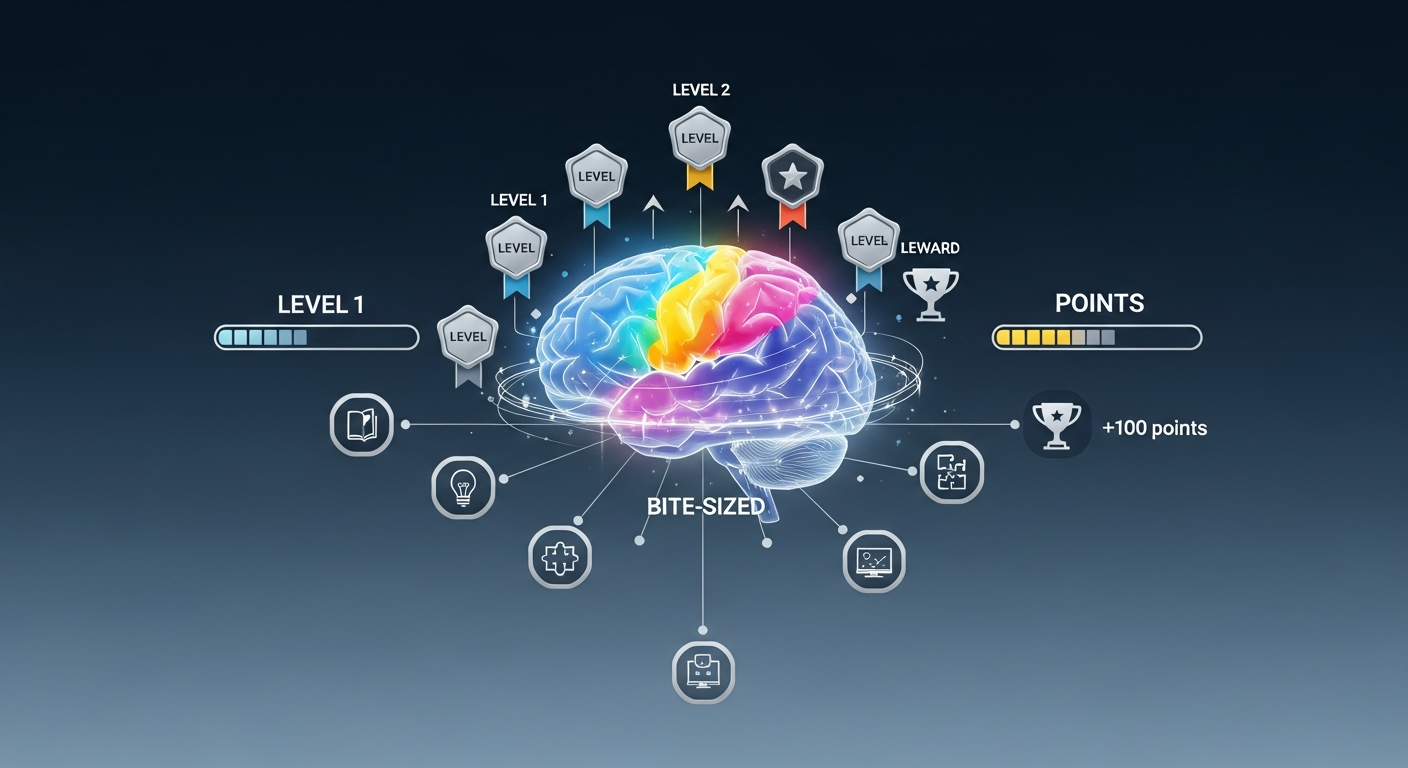
- Visible Progress Bars: Simple visual indicators, like progress bars or level meters, provide a clear sense of how far a learner has come and how much further they need to go. This visual feedback is highly motivating.
- Milestones and Levels: Breaking down a large learning objective into smaller, achievable milestones (levels) makes the overall goal seem less daunting and more attainable. Each level unlocked is a miniature celebration of progress.
- Collecting Badges and Trophies: Digital badges serve as virtual trophies, commemorating achievements and skills acquired. They provide a lasting record of success and can be shared, further boosting a sense of pride and accomplishment within the learning management software.
Cognitive Efficiency: Why Bite-Sized Works Best
Beyond motivational aspects, bite-sized learning contests align perfectly with how our brains process and retain information. This approach directly addresses issues of cognitive load and attention span.
- Reduced Cognitive Load: Microlearning modules focus on one or two key concepts at a time, preventing learners from feeling overwhelmed by too much information. This reduces cognitive load, making it easier for the brain to process and encode new knowledge.
- Improved Retention (Spaced Repetition): Bite-sized content facilitates spaced repetition, where concepts are revisited at increasing intervals. This method, backed by cognitive science, significantly enhances long-term memory retention compared to traditional bulk learning.
- Flexibility and Convenience: Employees can engage with learning during short breaks, commutes, or in between tasks. This flexibility makes learning less of a chore and more seamlessly integrated into the workday, enhancing the utility of any cloud based learning management system.
AI's Role in Supercharging Gamified Learning
The integration of artificial intelligence is elevating gamified learning to new heights, offering unprecedented personalization and efficiency for any LMS.
How can intelligent systems personalize the gamified learning experience to cater to individual employee needs and learning styles?
AI algorithms analyze performance data, identify knowledge gaps, and recommend personalized learning paths and challenges. This ensures that each employee receives content and challenges perfectly suited to their pace and preferences, maximizing engagement and effectiveness. Such personalized journeys are hallmarks of modern Adaptive Learning environments. A sophisticated learning content management system like MaxLearn LMS can dynamically adjust the difficulty of contests or suggest relevant micro-modules based on individual progress.
What valuable insights can advanced analytics provide about learner engagement and the effectiveness of gamified contests?
Sophisticated analytical tools process vast amounts of data from employee interactions within the learning platform. They can pinpoint popular content, identify common sticking points, measure time spent on tasks, and correlate engagement with performance outcomes. This data empowers L&D leaders to refine their strategies, optimize content, and prove ROI. Understanding these metrics is crucial for maximizing the impact of any learning management solutions.
Is it possible for technology to assist in rapidly creating engaging, gamified learning content tailored for various departments or global teams?
Absolutely. Modern platforms now incorporate generative capabilities that significantly accelerate content creation. An AI Powered Authoring Tool can help L&D teams quickly design interactive quizzes, simulations, and scenarios, ensuring relevance for specific audiences, whether it's for compliance training in finance or sales techniques in retail, drastically reducing development time and effort. This makes content development for an LCMS both faster and more targeted.
Strategic Advantages for L&D Leaders
For Vice Presidents, Directors, and Senior Managers of L&D, understanding the psychology behind gamified, bite-sized learning translates into tangible business advantages:
- Increased Engagement & Completion: Employees are more likely to start, participate in, and complete training when it's engaging and rewarding.
- Enhanced Knowledge Retention: The combination of microlearning and gamification significantly improves the long-term recall and application of knowledge.
- Improved Performance: Better-trained employees lead to better business outcomes, whether it's improved sales figures, higher compliance rates, or enhanced customer satisfaction. This is particularly crucial for industries demanding Risk-focused Training, such as Banking, Finance, Insurance, and Healthcare.
- Measurable ROI: Advanced analytics from a comprehensive learning management system (like a MaxLearn LMS) provide clear data on engagement, performance, and impact, allowing L&D to demonstrate value.
- Future-Proofing Training: Embracing a modern lms learning management system with gamification and AI capabilities prepares organizations for the evolving demands of workforce development.
Conclusion
The appeal of bite-sized learning contests isn't just a fleeting fad; it's a strategically sound approach rooted in fundamental human psychology. By tapping into our innate desires for reward, mastery, social connection, and progress, gamified microlearning transforms corporate training from a chore into a highly anticipated and effective development journey. For L&D leaders across industries, from Pharma to Oil and Gas, investing in a robust Microlearning LMS that incorporates these psychological principles, often enhanced by AI, is not just about staying current—it's about creating a workforce that is continually motivated, knowledgeable, and equipped for success.


Comments
Post a Comment