How to Use Leaderboards to Drive Healthy Competition in Corporate Sales Teams
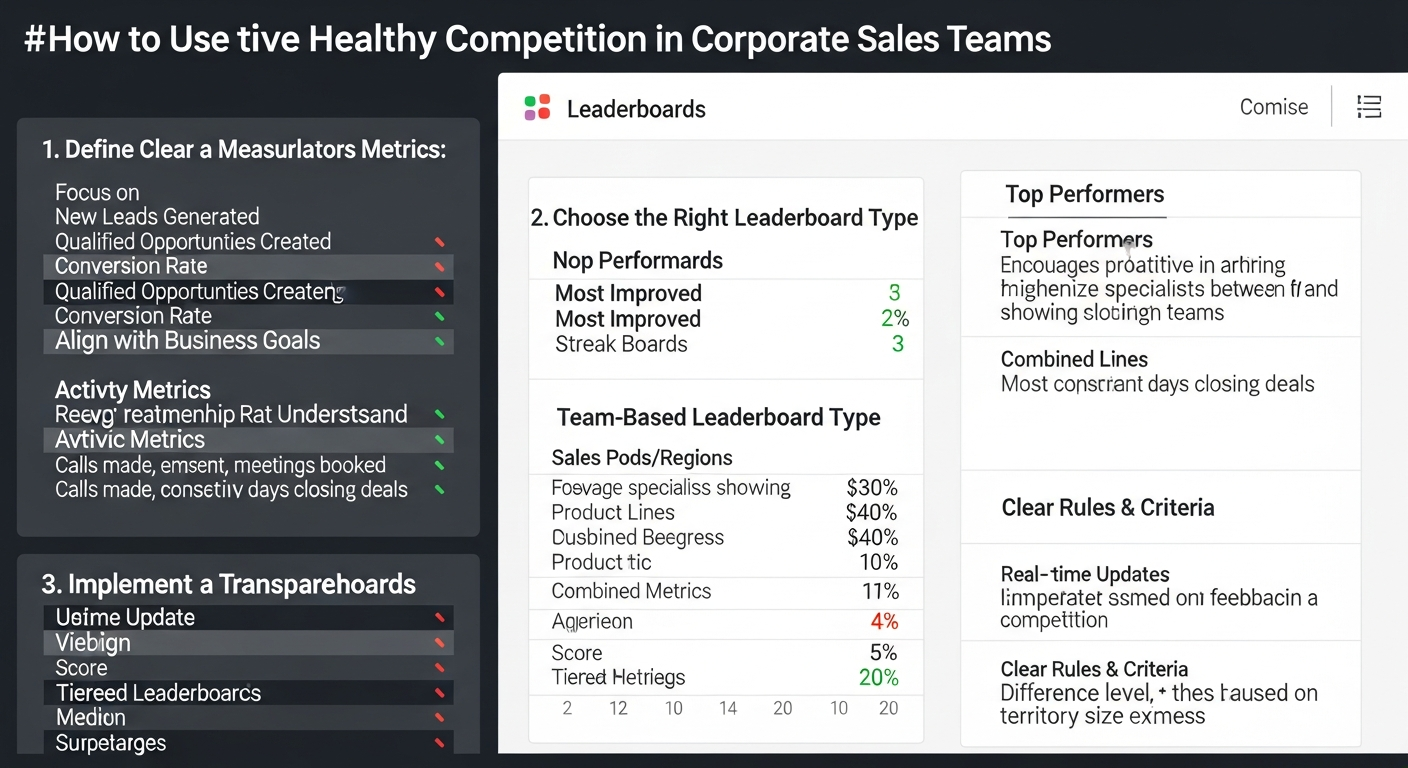
Unlocking Sales Potential: How Leaderboards Drive Healthy Competition in Corporate Teams
In the high-stakes world of corporate sales, motivation is currency, and performance is paramount. Learning and Development (L&D) leaders, including VPs, Directors, and Managers across diverse sectors like Banking, Pharma, Retail, and Oil & Gas, constantly seek innovative strategies to ignite their sales force. One powerful, yet often underutilized, tool is the leaderboard. Far from being a mere scoreboard, strategically designed leaderboards can foster healthy competition, boost engagement, and significantly elevate team performance, transforming sales cultures into dynamic, achievement-driven environments.
The challenge for L&D professionals lies in crafting leaderboards that inspire rather than intimidate, creating an ecosystem where every team member feels empowered to excel. This article will delve into how to harness the potential of leaderboards to drive positive outcomes, supported by modern Microlearning LMS and intelligent technologies.
The Power of Healthy Competition
Competition, when channeled correctly, is a potent catalyst for growth. In sales, it can translate into increased activity, improved skill application, and a collective drive towards achieving ambitious targets. A well-implemented leaderboard system encourages individuals to push their boundaries while reinforcing team cohesion.
Boosting Engagement & Morale
- Visibility & Recognition: Leaderboards provide clear visibility of top performers, offering well-deserved recognition that fuels morale. Public acknowledgement can be a stronger motivator than monetary incentives alone.
- Goal Orientation: They make individual and team goals tangible and trackable, giving salespeople a clear benchmark to strive for. This clarity reduces ambiguity and focuses efforts.
- Peer Inspiration: Seeing peers succeed inspires others to emulate best practices and work harder, creating a virtuous cycle of improvement.
Driving Performance Improvement
- Data-Driven Insights: Leaderboards are fundamentally data visualization tools. They highlight areas of strength and areas needing improvement, enabling managers to provide targeted coaching.
- Accelerated Skill Application: When tied to specific sales behaviors (e.g., number of qualified leads, successful product pitches, closing rates), leaderboards encourage the immediate application of skills learned through learning content management system modules.
- Increased Accountability: With performance metrics transparently displayed, individuals become more accountable for their results. This fosters a sense of ownership over their sales pipeline.
Fostering Learning & Skill Development
Beyond just tracking sales figures, leaderboards can be designed to reward participation in training, mastery of new product knowledge, or successful completion of compliance modules. Integrating these learning objectives directly into the leaderboard scoring mechanism incentivizes continuous professional development, critical for industries like Finance, Healthcare, and Compliance.
Designing Effective Leaderboards
The success of a leaderboard hinges on its design and the metrics it tracks. It must be perceived as fair, relevant, and motivating to all participants, not just the top few.
Key Considerations for Implementation
- Clear Metrics & Goals: Define what success looks like. Is it sales volume, profit margin, customer acquisition, or pipeline growth? Ensure metrics are measurable, attainable, and directly aligned with business objectives.
- Fairness & Transparency: Everyone must understand how scores are calculated. Ensure rules are consistent and data is accurate. Consider segmenting leaderboards by territory, experience level, or product line to create more equitable competition.
- Frequent Updates & Recognition: Leaderboards should be dynamic. Real-time or daily updates keep the competition fresh and engaging. Celebrate milestones and achievements frequently, not just at the end of a long period.
- Team-Based Challenges: To prevent isolation and foster collaboration, incorporate team-based challenges alongside individual ones. This reinforces collective success and peer support.
- Integrate with Learning: Link leaderboard performance to learning modules. For instance, high scores in a product knowledge quiz on your lms learning management system could earn bonus points on the sales leaderboard.
Leveraging Technology: The Role of an LMS
Implementing dynamic, effective leaderboards at scale across an organization requires robust technological infrastructure. A modern learning management system (LMS) is the ideal platform to integrate sales training with performance tracking.
An advanced LMS provides the backbone for seamless integration of sales content, performance data, and motivational tools. Features like those found in a Gamified LMS directly support leaderboard functionality, offering points, badges, and levels that resonate with competitive sales professionals. Such a system can track progress through training modules, measure engagement with sales enablement content, and even correlate learning activities with actual sales performance.
The best learning management software offers not just content delivery but also powerful analytics. A cloud based learning management system ensures accessibility for global sales teams, while an enterprise learning management solution can handle the complexity and scale required for large organizations in industries like Mining or Hospitality. An integrated LCMS (Learning Content Management System) allows for rapid creation and deployment of relevant training, directly impacting skills that drive leaderboard performance.
AI-Enhanced Leaderboards: The Future of Sales Motivation
The next frontier in sales motivation lies in intelligent systems that personalize and optimize the competitive experience. Imagine leaderboards that aren't just static displays but dynamic, responsive tools that adapt to individual needs and team dynamics.
What can advanced algorithms achieve in terms of optimizing sales performance tracking and reporting? Intelligent analytics can process vast amounts of sales data, identifying subtle patterns and predictive indicators that human managers might miss. This allows for more precise and fair leaderboard metrics, moving beyond simple raw numbers to factor in market conditions, territory potential, or product complexity.
Where are the most strategic points within the sales cycle or team structure to deploy intelligent systems for real-time leaderboard adjustments and motivational nudges? Intelligent systems can pinpoint exactly when a salesperson might be disengaging or struggling, offering a timely, personalized challenge or recommending specific Adaptive Learning modules. They can suggest optimal peer-to-peer coaching opportunities or even dynamically adjust competition parameters to keep the playing field engaging for everyone, from rookies to seasoned veterans. Using an AI Powered Authoring Tool, L&D teams can quickly create highly relevant and engaging content that directly supports these personalized interventions.
How do these intelligent insights translate into actionable improvements for individual sales representatives and overall team strategic planning? By analyzing performance gaps identified through leaderboards, intelligent systems can recommend specific Risk-focused Training to address weaknesses in areas like compliance or product-specific knowledge, which are critical in regulated industries. These systems can also forecast future performance based on current trends, enabling proactive adjustments to sales strategies and resource allocation. This level of insight transforms a leaderboard from a mere score display into a powerful, data-driven coaching and development instrument.
Best Practices for Sustainable Engagement
Even with advanced technology, the human element remains crucial for sustained engagement with leaderboards.
- Regular Reviews & Feedback: Use leaderboard data as a starting point for one-on-one coaching. Discuss performance, celebrate successes, and collaboratively identify areas for improvement.
- Celebrating Success: Go beyond just listing names. Share success stories, highlight the strategies used by top performers, and create a culture where achievement is genuinely celebrated.
- Balancing Individual & Team Recognition: While individual competition is powerful, ensure team successes are also prominently recognized. This builds camaraderie and a shared sense of purpose.
- Continuous Improvement: Gather feedback from the sales team on the leaderboard design and metrics. Be willing to adapt and evolve the system to keep it fresh and relevant.
Conclusion
Leaderboards, when strategically implemented and supported by robust technology, are invaluable tools for L&D leaders aiming to cultivate a high-performing sales culture. They not only drive healthy competition and boost individual performance but also foster continuous learning and provide critical insights for strategic development. By leveraging a comprehensive learning management solutions like MaxLearn LMS, companies across all industries can transform their sales training and motivation strategies, leading to sustained growth and a highly engaged sales force ready to tackle any challenge.


Comments
Post a Comment