How to Structure a 5-Minute Microlearning Module for Daily Sales Training
How to Structure a 5-Minute Microlearning Module for Daily Sales Training
In today's fast-paced business environment, equipping sales teams with up-to-date product knowledge, refined selling techniques, and crucial compliance information is paramount. Traditional long-form training often struggles to keep pace with market shifts and maintain learner engagement. This is where the power of microlearning shines, especially when designed for daily consumption. For L&D leaders, Vice Presidents, Directors, and Managers across industries like Sales, Banking, Finance, Insurance, Retail, Pharma, Healthcare, Hospitality, Oil and Gas, and Mining, mastering the art of the 5-minute microlearning module can be a game-changer for enhancing performance and ensuring compliance.
Microlearning isn't just about making content shorter; it's about making it smarter, more focused, and highly digestible. A well-structured 5-minute module can deliver maximum impact in minimal time, perfectly fitting into a busy sales professional's day. But how do you pack so much value into such a short burst? It requires a strategic approach.
The Imperative of Microlearning for Sales Teams
Sales professionals are often on the go, facing tight schedules and immediate client needs. They don't have hours to dedicate to classroom sessions or lengthy online courses. This reality underscores the need for a nimble, efficient training approach. A dedicated Microlearning LMS becomes an indispensable tool, offering a platform where sales teams can access relevant, bite-sized content exactly when and where they need it.
Consider the common challenges: product updates that require immediate dissemination, new compliance regulations that demand swift understanding, or skill gaps identified through performance reviews. Long training cycles can leave sales reps behind, impacting revenue and increasing risk. Daily 5-minute modules address these challenges head-on by providing continuous, relevant learning opportunities. An effective Gamified LMS can further boost engagement, making daily training a habit rather than a chore.
What are the critical components for an effective 5-minute microlearning module in a multi-region sales organization?
When our sales team operates across diverse markets, understanding local nuances and regulatory frameworks is crucial. The core components must include universal best practices alongside customizable segments for regional adaptation. Leveraging an enterprise learning management solution that supports global content distribution and localization is key.
Deconstructing the 5-Minute Microlearning Module: A Step-by-Step Structure
Every second counts in a 5-minute module. Here’s a tried-and-true structure to maximize impact:
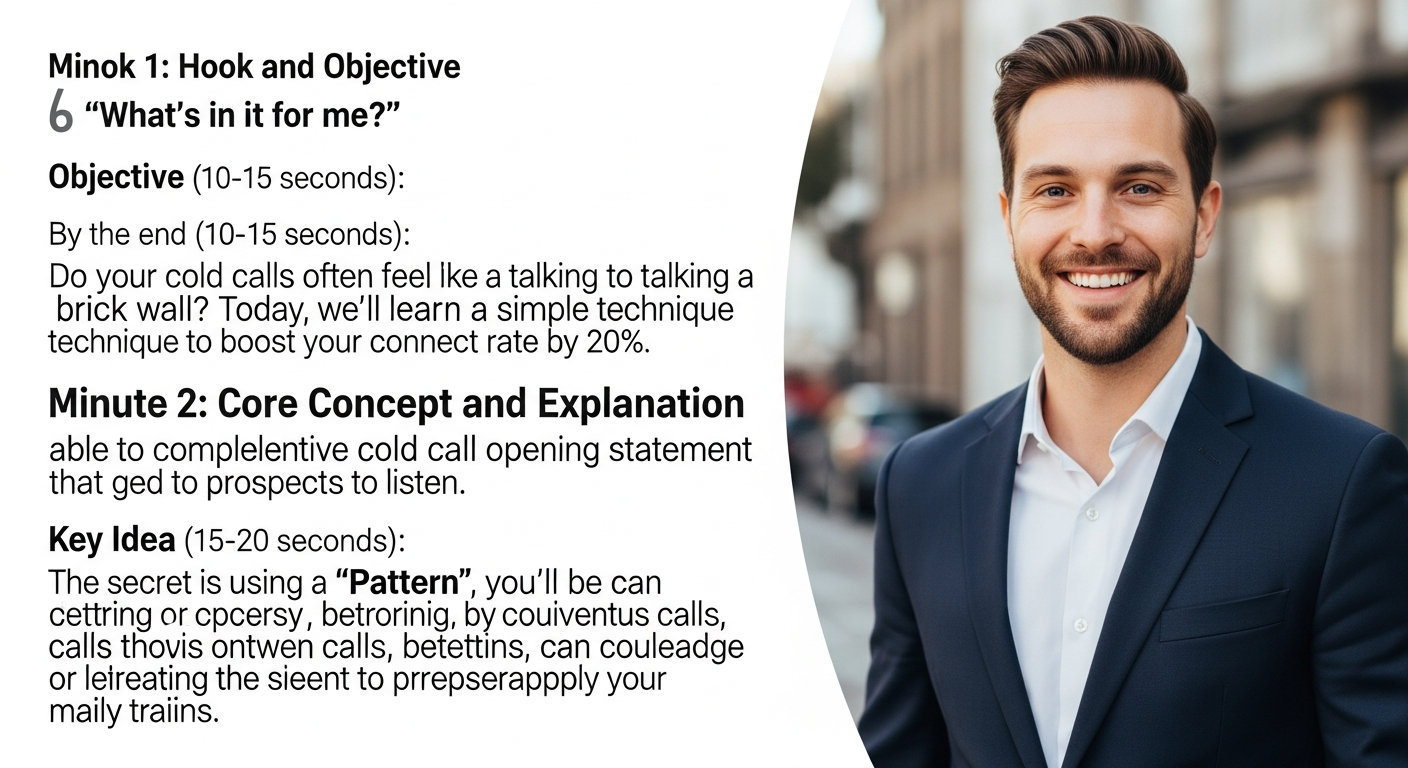
1. The Hook (0-30 seconds)
- Objective: Grab attention immediately and state the module's relevance.
- Content Idea:
- A compelling question directly related to a sales challenge.
- A surprising statistic or industry insight.
- A quick scenario or anecdote that resonates with their daily experience.
- A short, impactful video clip or animation.
- Why it works: Salespeople are driven by results. Show them quickly how this module will help them close more deals, avoid pitfalls, or enhance client relationships.
2. The Core Concept (1-2 minutes)
- Objective: Deliver one single, focused learning objective. Avoid information overload.
- Content Idea:
- A brief explanation of a new product feature.
- A demonstration of a specific sales technique (e.g., handling an objection).
- An overview of a key compliance rule or policy.
- A walkthrough of a critical step in a sales process.
- Visual aids like infographics, short animations, or bullet points are highly effective.
- Why it works: By focusing on just one concept, learners can easily grasp and retain the information without feeling overwhelmed. Think of it as answering a single, specific question.
3. Application/Context (1 minute)
- Objective: Show learners how to apply the concept in a real-world sales scenario.
- Content Idea:
- A short case study or role-play example.
- A "what would you do?" scenario.
- Specific tips for integrating the new skill or knowledge.
- Examples of successful application by peers.
- Why it works: Bridging the gap between theory and practice is crucial for sales training. This segment helps them visualize success and understand immediate utility.
4. Quick Check/Assessment (1 minute)
- Objective: Reinforce learning and check for understanding.
- Content Idea:
- A single multiple-choice question.
- A true/false statement.
- A drag-and-drop exercise.
- A quick "fill in the blank" related to a key takeaway.
- Immediate feedback, whether correct or incorrect, is essential.
- Why it works: This low-stakes assessment helps consolidate knowledge and provides instant feedback, encouraging active recall. For sensitive areas like compliance, this is vital.
5. Call to Action/Next Steps (0-30 seconds)
- Objective: Encourage further action or provide resources for deeper learning.
- Content Idea:
- A link to a more detailed resource (e.g., product spec sheet, compliance handbook).
- A reminder to practice the new skill in their next sales call.
- A prompt to discuss the topic with a manager or mentor.
- A preview of the next module.
- Why it works: It ensures the learning isn't isolated and connects it to ongoing development and practical application.
Leveraging Technology for Optimal Delivery
Delivering daily microlearning at scale across various industries, from Pharma to Oil and Gas, requires robust technological support. A comprehensive learning management system is not just a repository; it's an ecosystem for learning. For L&D professionals seeking to implement a powerful daily training regimen, an Adaptive Learning platform can personalize content delivery based on individual performance and knowledge gaps, ensuring relevance for every sales rep.
How can modern learning platforms ensure compliance and reduce organizational risk effectively across a large enterprise?
Leveraging cutting-edge technology, particularly those with sophisticated data analytics, allows us to pinpoint areas of non-compliance, understand common mistakes, and automatically assign targeted remediation. This proactive, data-driven approach dramatically strengthens our Risk-focused Training strategies across all segments, including Banking, Finance, and Healthcare, safeguarding the organization from potential liabilities.
Furthermore, an AI Powered Authoring Tool can dramatically speed up content creation, allowing L&D teams to generate relevant, high-quality modules quickly. Imagine rapidly converting lengthy compliance documents or new product specifications into engaging, 5-minute microlearning modules without extensive manual effort. This accelerates time-to-market for training content, ensuring sales teams are always up-to-date.
Best Practices for Implementing Daily Sales Microlearning
- Keep it focused: One objective per module. Period.
- Make it mobile-first: Sales reps are often using tablets or smartphones. Optimize for small screens.
- Vary content formats: Mix videos, quizzes, infographics, short articles, and interactive simulations to maintain engagement.
- Integrate with workflow: Ideally, modules should be accessible directly within CRM tools or sales enablement platforms.
- Provide feedback and tracking: An LMS with robust analytics is crucial to track completion rates, comprehension, and impact on performance.
- Reinforce regularly: Spaced repetition is key for retention. Revisit core concepts periodically with fresh modules.
- Solicit feedback: Regularly ask sales teams what kind of training they need and how existing modules can be improved. This ensures relevance and buy-in.
What considerations are vital when developing content for a diverse global sales force, spanning industries from Retail to Hospitality, to ensure cultural relevance and maximum impact?
Cultural sensitivity and local market context are paramount. Content development should involve local subject matter experts and consider translation, imagery, and examples that resonate with regional audiences. A robust learning content management system (LCMS) that facilitates easy content adaptation and distribution is indispensable for managing such a complex training landscape.
Conclusion
Structuring a 5-minute microlearning module for daily sales training is an art and a science. It's about respecting the salesperson's time while delivering maximum value. By adhering to a clear structure – Hook, Core Concept, Application, Quick Check, and Call to Action – L&D leaders can transform their sales enablement strategy. Leveraging a modern learning management system that offers microlearning capabilities, adaptive pathways, gamification, and AI-powered authoring tools provides the technological backbone for this transformation. This commitment to continuous, bite-sized learning will not only enhance sales performance and boost revenue but also ensure robust compliance and significantly reduce organizational risk across all industries.


Comments
Post a Comment