How to Apply the Design Dynamics Experience (DDE) Model to Gamification
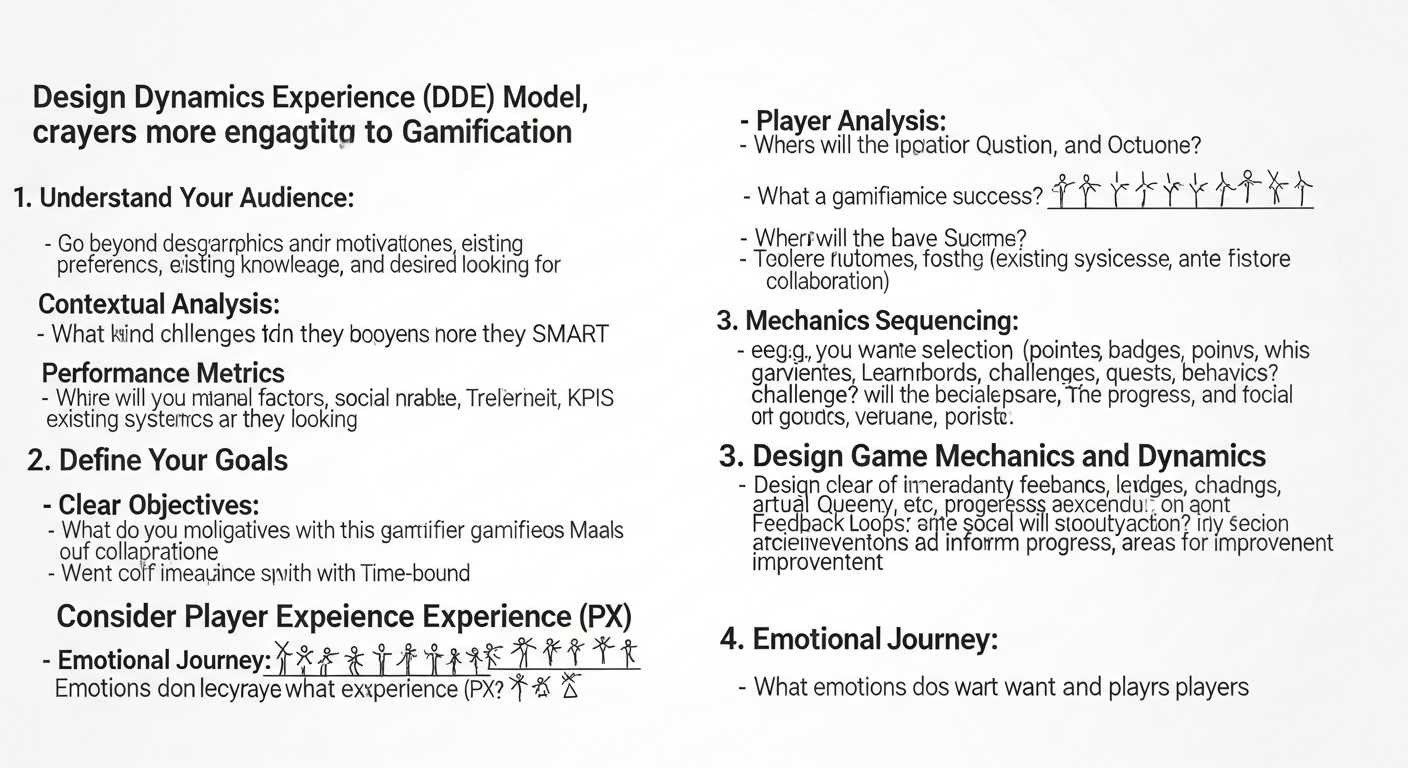
How to Apply the Design Dynamics Experience (DDE) Model to Gamification
In today's fast-paced corporate environment, engaging employees in learning is more critical – and challenging – than ever. For Vice Presidents, Directors, and Senior Managers in Learning & Development, the quest for truly effective training solutions often leads to innovative approaches. Gamification, when implemented strategically, stands out as a powerful tool to captivate learners, drive performance, and achieve tangible business outcomes across industries like Compliance, Sales, Banking, Finance, Insurance, Retail, Pharma, Health care, Hospitality, Oil and Gas, and Mining.
However, successful gamification is far more than just adding points and badges. It demands a deep understanding of human motivation and behavior. This is where the Design Dynamics Experience (DDE) Model proves invaluable. By focusing on the interplay of Dynamics, Mechanics, and Aesthetics, DDE offers a robust framework for crafting gamified learning experiences that resonate deeply, foster genuine engagement, and deliver lasting impact.
Understanding the Design Dynamics Experience (DDE) Model
The DDE Model, adapted from game design principles, provides a holistic lens through which to view the creation of interactive experiences. It helps designers move beyond superficial elements to build systems that truly motivate and engage learners.
What is DDE?
- Dynamics: These are the emergent behaviors, emotions, and overarching themes that arise from the interaction between players and the game system. Dynamics represent the "feel" of the experience – the challenge, the mastery, the narrative, the social interaction, or the sense of accomplishment. They are the high-level conceptual elements that drive engagement.
- Mechanics: These are the specific rules, components, and actions within the gamified system. Mechanics are the "how" – points, badges, leaderboards, levels, quests, avatars, rewards, feedback loops, progression systems, and the underlying algorithms that govern interaction. They are the tangible building blocks users interact with.
- Aesthetics: These refer to the sensory experience of the gamified system – the visual design, user interface, sounds, haptics, and overall "look and feel." Aesthetics are crucial for creating an immersive and enjoyable experience, making the mechanics intuitive and the dynamics palpable. They make the system appealing and easy to navigate.
The brilliance of DDE lies in its iterative nature and the understanding that these three components are deeply interconnected. Changes in one area inevitably affect the others, making a holistic design approach essential for creating truly engaging and effective gamified learning experiences.
Why DDE for Gamification?
For L&D professionals, applying the DDE Model to gamification means moving beyond basic "pointification" to create rich, meaningful learning journeys. It ensures that your gamified initiatives are:
- Purpose-Driven: Aligned with specific learning objectives and business goals.
- Engaging: Tapping into intrinsic motivations for sustained participation.
- Effective: Leading to measurable knowledge acquisition and behavioral change.
- Sustainable: Designed for long-term learner retention and repeated engagement.
Applying DDE to Gamified Learning
Let's explore how L&D leaders can systematically apply the DDE Model to design and implement powerful gamified learning solutions.
Step 1: Define Your Dynamics – The "Why" and "Feel"
Before designing any game elements, begin by understanding the desired emotional and behavioral outcomes. What do you want learners to feel? What overarching goals should they strive for?
- Identify Learning Objectives and Business Impact: Is it to reduce compliance violations, improve sales conversion rates, enhance product knowledge, or foster leadership skills? For example, for Risk-focused Training, the dynamic might be vigilance, responsibility, and strategic decision-making under pressure.
- Understand Learner Motivations: Are your learners driven by competition, mastery, social connection, altruism, or personal achievement? Craft narratives that resonate with these intrinsic drivers.
- Craft a Compelling Narrative: A strong story or scenario provides context and purpose. For instance, in banking, a gamified module might simulate managing a client portfolio to achieve financial goals, creating a dynamic of strategic growth and client trust.
A crucial question arises here: How can advanced digital platforms personalize the learning journey for individual employees to align with their unique motivations? Intelligent learning systems leverage data analytics and machine learning to understand individual learning styles, progress, and preferences. They can dynamically adapt content and challenges, ensuring the "dynamics" of the gamified experience resonate uniquely with each learner, offering personalized feedback and pathways that keep them intrinsically motivated.
Step 2: Design Your Mechanics – The "How"
Once the desired dynamics are clear, translate them into concrete, actionable game elements. This is where the structure of your gamified experience takes shape.
- Select Appropriate Game Elements: Points, badges, leaderboards, levels, quests, virtual currency, unlockable content, progress bars, and avatars are common examples. Choose those that best support your dynamics. For instance, a Gamified LMS offers a rich toolkit of mechanics to implement these concepts.
- Establish Clear Rules and Feedback Loops: How do learners earn points? What unlocks the next level? Provide immediate and constructive feedback to reinforce learning and guide behavior.
- Incorporate Progression and Rewards: Design a clear path for learners to advance, offering meaningful rewards that align with the established dynamics (e.g., skill unlocks, recognition, access to advanced content).
Another common inquiry is: What geographical considerations should L&D leaders make when deploying global gamified initiatives? When designing mechanics for a global audience, cultural nuances are paramount. An effective learning management system can support localization of content, culturally relevant examples, and different reward structures. For instance, competitive leaderboards might be highly motivating in some regions, while collaborative quests might be preferred in others. Advanced platforms enable administrators to tailor mechanics to specific regional preferences, ensuring broad appeal and effectiveness.
Step 3: Refine Your Aesthetics – The "Look and Feel"
Aesthetics are not mere window dressing; they are integral to creating an immersive and intuitive experience. They reinforce the dynamics and make the mechanics enjoyable to interact with.
- Visual Design: Ensure the graphics, user interface (UI), and user experience (UX) are professional, engaging, and consistent with the learning content and overall brand. An intuitive interface can significantly boost engagement and reduce cognitive load. A powerful Microlearning LMS often features clean, modern aesthetics that make learning appealing.
- Audio Elements: Thoughtful use of sound effects and background music can enhance immersion and provide subtle cues, creating a more dynamic and enjoyable learning environment.
- Narrative and Thematic Consistency: Ensure the aesthetics visually represent the narrative and themes established in the dynamics. For example, a gamified compliance course might use a detective-themed aesthetic to reinforce the dynamic of uncovering and solving issues.
L&D leaders often wonder: How can intelligent systems assist in optimizing engagement and instructional design for diverse learning styles through aesthetics? By analyzing user interaction data, sophisticated learning management software can identify what visual and auditory aesthetics resonate most with different learner segments. An Adaptive Learning system might dynamically adjust interface themes, color palettes, or even the presentation of information (e.g., more visual for visual learners, more text for textual learners) to optimize individual engagement and comprehension, ensuring that the "look and feel" is always engaging and effective.
Strategic Implementation and Best Practices
Iterative Design and Testing
The DDE Model emphasizes that design is not a linear process. Pilot your gamified solutions with a small group, gather feedback on how learners perceive the dynamics, interact with the mechanics, and react to the aesthetics. Use this data for continuous improvement. This iterative approach ensures your gamified learning evolves into a highly effective tool.
Integration with Learning Technologies
The success of gamified learning often hinges on the robust capabilities of your learning technology stack. A comprehensive LMS is fundamental. A modern lms learning management system, particularly a cloud based learning management system, offers the scalability and flexibility required for enterprise-wide deployment. Utilizing an AI Powered Authoring Tool within your LCMS can significantly streamline the creation of engaging, gamified content, making it easier to build interactive scenarios and challenges at scale. For organizations managing extensive training programs, an enterprise learning management solution like MaxLearn LMS, which acts as a powerful Learning content management system and provides advanced learning management solutions, offers the infrastructure for delivering sophisticated gamified experiences effectively.
Measuring Impact
Define clear Key Performance Indicators (KPIs) from the outset. Track engagement rates, completion rates, knowledge retention scores, and ultimately, the impact on business metrics such as compliance adherence, sales figures, customer satisfaction, or operational efficiency. Data from your learning management solutions will be vital in demonstrating ROI and justifying further investment in gamification initiatives.
Conclusion
For L&D Vice Presidents, Directors, and Managers, mastering gamification is a strategic imperative in the modern learning landscape. By thoughtfully applying the Design Dynamics Experience (DDE) Model – moving beyond superficial game elements to focus on the underlying dynamics, meticulously designed mechanics, and captivating aesthetics – you can transform your training programs into truly engaging and impactful experiences. This strategic approach ensures that your gamified initiatives not only entertain but also deeply embed learning, drive desired behaviors, and contribute directly to your organization's success.
Embrace DDE to unlock the full potential of gamification, creating learning journeys that are not just effective, but truly unforgettable for your workforce.


Comments
Post a Comment