How Often Should Employees Complete Training for Maximum Knowledge Retention?
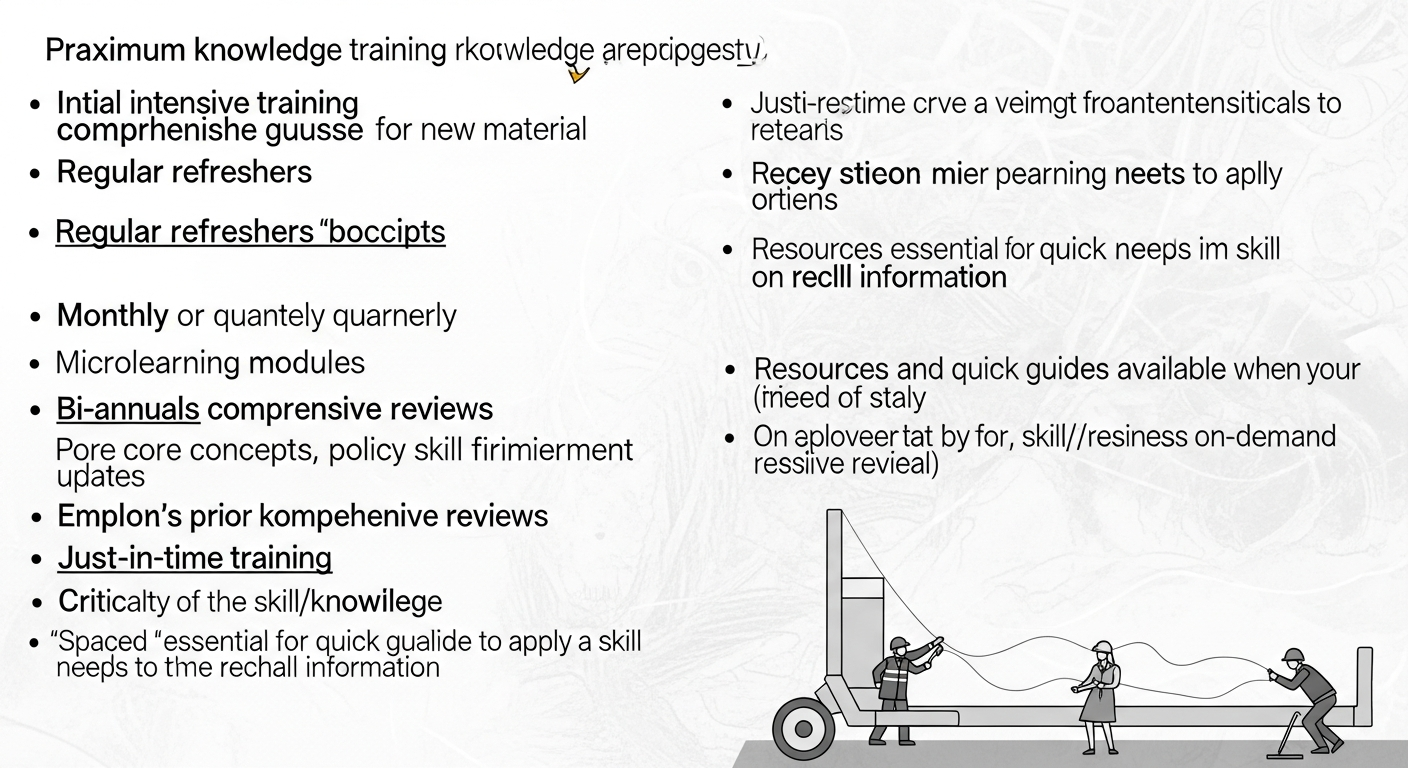
Optimizing Employee Training Frequency for Peak Knowledge Retention
In today's fast-paced corporate environment, the efficacy of employee training programs is paramount. For Vice Presidents, Directors, and Managers of Learning & Development across industries like Compliance, Sales, Banking, Finance, Insurance, Retail, Pharma, Healthcare, Hospitality, Oil and Gas, and Mining, ensuring that training translates into lasting knowledge and improved performance is a constant challenge. The question isn't just whether employees are trained, but critically, "How often should employees complete training for maximum knowledge retention?" This article delves into the science and strategy behind optimal training cadences, offering actionable insights for L&D leaders.
The Pervasive Challenge of Knowledge Decay
The human brain is an incredible learning machine, but it's also susceptible to the "Forgetting Curve," a concept popularized by Hermann Ebbinghaus. Without reinforcement, newly acquired information can rapidly fade from memory. This natural process of knowledge decay poses a significant threat to organizational effectiveness:
- Reduced ROI on Training: If learned skills are quickly forgotten, the investment in training yields diminishing returns.
- Performance Gaps: Employees may struggle to apply critical knowledge, leading to errors, inefficiencies, and compliance risks.
- Stagnated Growth: An inability to retain new information hinders adaptation to new technologies, regulations, and market demands.
Understanding this challenge is the first step toward building a resilient and effective training strategy centered around knowledge retention.
Key Factors Influencing Training Frequency
There's no one-size-fits-all answer to how often employees should train. The ideal frequency is a dynamic variable influenced by several critical factors:
Complexity of Content
Highly complex or technical information, especially in fields like finance, healthcare, or engineering, requires more frequent reinforcement than simpler concepts. When the subject matter is intricate, initial training must be followed by regular refreshers and opportunities for application to solidify understanding.
Job Role and Responsibilities
Employees in critical roles, such as those involved in safety protocols in oil and gas, or customer-facing roles in banking and retail that require up-to-date product knowledge, will necessitate more frequent training. Their daily tasks directly impact the business, making robust knowledge retention crucial.
Industry Regulations and Compliance
For industries heavily regulated like pharma, finance, and healthcare, compliance training is not just a best practice—it's often a legal mandate. Regulations can change, requiring updates and refreshers on an annual, bi-annual, or even quarterly basis to ensure adherence and mitigate Risk-focused Training.
Pace of Change
In rapidly evolving sectors, such as technology or certain aspects of sales and marketing, product features, software updates, or market strategies can change frequently. Employees need continuous learning opportunities to stay current and competitive. An agile LMS can facilitate rapid content deployment in such scenarios.
Employee Experience Level
New hires often require more intensive and frequent training during onboarding to build foundational knowledge. Experienced employees, while needing refreshers, might benefit more from advanced, specialized, or Adaptive Learning modules to deepen their expertise.
Strategic Approaches for Optimal Knowledge Retention
To combat the forgetting curve and maximize the impact of training, L&D professionals are increasingly turning to data-driven strategies and innovative technologies.
Spaced Repetition
This scientifically backed technique involves reviewing information at increasing intervals over time. Instead of a single, intensive training session, learning is broken into smaller chunks and revisited periodically. This method dramatically improves long-term memory retention.
Microlearning
Delivering content in short, digestible bursts (2-7 minutes) makes learning less intimidating and easier to integrate into busy work schedules. A Microlearning LMS is ideal for deploying these bite-sized modules, allowing employees to access relevant information precisely when they need it, reinforcing key concepts without overwhelming them.
Personalized Learning Paths
Not all employees learn at the same pace or have the same knowledge gaps. Utilizing Adaptive Learning platforms allows for customized learning journeys based on an individual's existing knowledge, role, and performance data. This ensures training is relevant and efficient.
Interactive and Engaging Formats
Passive learning yields poor retention. Integrating interactive elements like simulations, scenarios, quizzes, and gamification significantly boosts engagement and memory. A Gamified LMS transforms routine training into an enjoyable and effective experience.
Continuous Reinforcement
Beyond initial training, regular reinforcement is key. This can include short quizzes, quick reference guides, practical application exercises, peer discussions, and access to a comprehensive LMS or Learning content management system (LCMS) where resources are readily available.
Leveraging Technology for Effective Training
Modern learning management system (LMS) solutions are indispensable tools for implementing and managing strategic training programs. A robust learning management software platform, especially a cloud based learning management system, provides the infrastructure for delivering diverse content, tracking progress, and analyzing effectiveness.
- An advanced LMS can automate the scheduling of refreshers, administer microlearning modules, and track completion rates, making the management of ongoing training seamless.
- Platforms featuring an AI Powered Authoring Tool enable L&D teams to quickly create and update dynamic, personalized content, crucial for industries with rapidly changing information.
- For large enterprises, an enterprise learning management system provides scalability and consistent delivery across global operations. The right learning management solutions can transform your training approach. Many organizations find success with platforms like MaxLearn LMS, which offers comprehensive features for modern learning.
Determining Your Organization's Ideal Training Cadence
Finding the sweet spot for training frequency requires a systematic approach:
Assessment and Feedback
Regularly assess employee knowledge and skill levels post-training. Utilize pre- and post-tests, performance reviews, and direct feedback to identify knowledge gaps and areas requiring more frequent reinforcement. This data should inform your training schedule.
Pilot Programs
Before rolling out a new training frequency across the entire organization, test it with a smaller group. Analyze the results, gather feedback, and iterate. This allows for fine-tuning the approach before a wider implementation.
Flexibility and Iteration
The ideal training frequency isn't static. It will evolve with your organization's needs, industry changes, and employee feedback. Be prepared to adjust your strategy based on ongoing analysis and data from your learning management system.
Addressing Key Inquiries in L&D
L&D leaders often grapple with complex questions regarding training optimization. Here's a look at common inquiries and effective solutions:
Question: What methods prove most effective in cementing crucial information for employees over the long term?
Answer: The most effective methods integrate spaced repetition with Microlearning LMS modules, breaking down complex topics into digestible content. Interactive simulations and scenario-based training also significantly enhance recall and application, especially when delivered through a Gamified LMS.
Question: How can an organization customize educational journeys for diverse personnel across varied operational locations?
Answer: Leveraging a robust, cloud based learning management system with Adaptive Learning capabilities is key. This allows for the creation of personalized learning paths tailored to specific roles, regions, and proficiency levels, ensuring relevance and engagement for every individual.
Question: What technological solutions can help predict and enhance the success of employee development programs?
Answer: Advanced analytics within an lms learning management system can identify trends, predict potential knowledge gaps, and measure the impact of training on performance. Furthermore, an AI Powered Authoring Tool can dynamically generate and update content, ensuring training remains current and impactful, thereby improving overall program success.
Question: How can businesses effectively prioritize and deliver training on areas with significant operational or compliance risks?
Answer: Implementing Risk-focused Training strategies, often delivered via microlearning, allows organizations to target critical compliance and operational safety areas with high-frequency, mandatory modules. Data from an LMS can pinpoint employees or departments with identified knowledge deficiencies in these high-stakes topics, enabling targeted intervention.
Conclusion
Determining the optimal training frequency for maximum knowledge retention is a strategic imperative for L&D leaders. It moves beyond a one-off event to a continuous, adaptive process. By understanding the factors that influence learning, embracing scientifically-backed strategies like spaced repetition and microlearning, and leveraging cutting-edge technology such as a modern LMS with Adaptive Learning and Gamified LMS features, organizations can build a training ecosystem that not only delivers information but ensures it sticks. This strategic approach to training frequency will ultimately lead to a more skilled, compliant, and productive workforce, driving sustainable business growth.


Comments
Post a Comment