Compliance and Product Training for Retail Banking: A Microlearning Approach
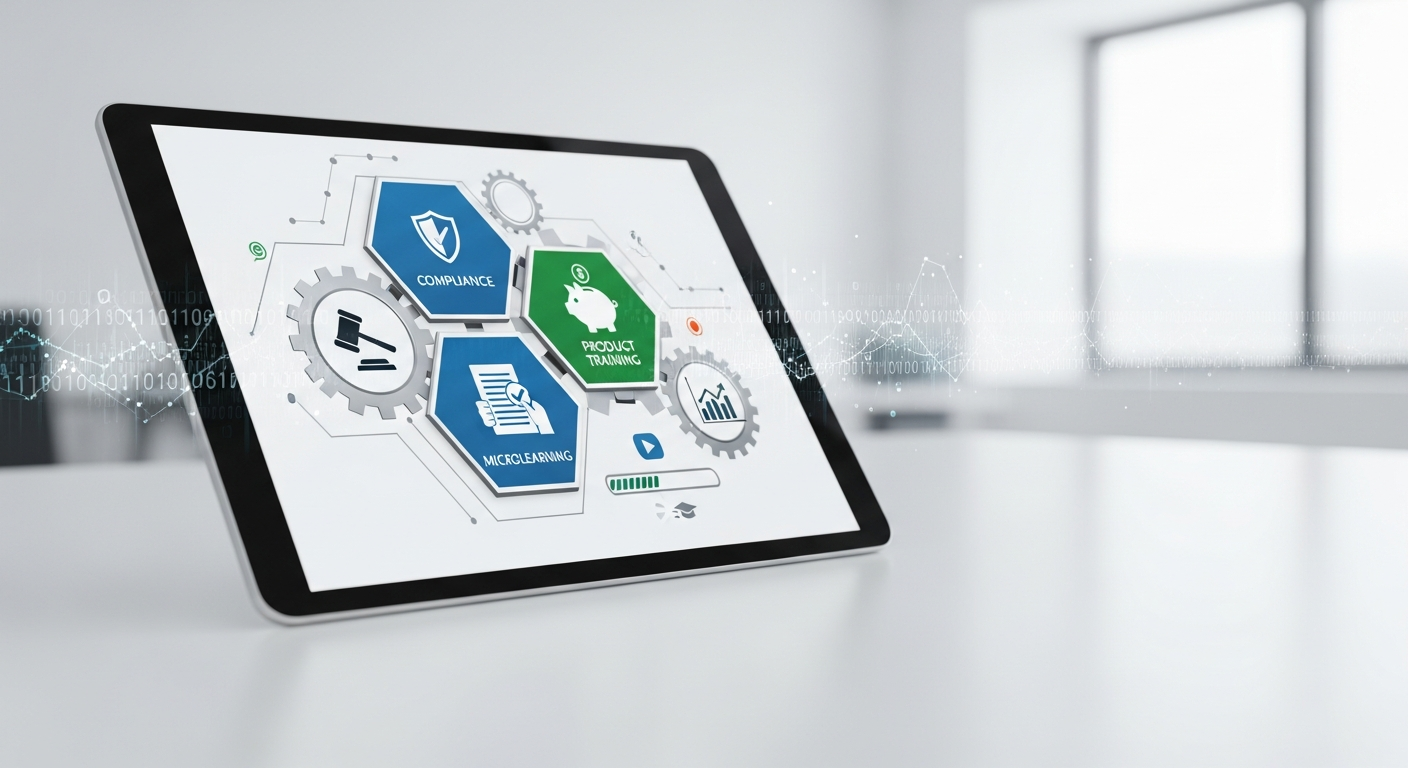
Compliance and Product Training for Retail Banking: A Microlearning Approach
In the dynamic world of retail banking, staying ahead means more than just offering competitive products; it demands an agile, informed, and compliant workforce. For Vice Presidents, Directors, and Senior Managers in Learning & Development, the challenge is perpetual: how to deliver effective, engaging, and compliant training at scale, without disrupting day-to-day operations or overwhelming employees. The traditional lengthy training sessions are often inefficient, quickly forgotten, and fail to keep pace with the rapid evolution of financial regulations and product portfolios.
This is where a microlearning approach emerges as a powerful paradigm shift. Microlearning, characterized by short, focused bursts of information, delivers precise content exactly when and where it's needed. It's an ideal strategy for managing the complexities of compliance training and the nuances of product knowledge in retail banking, ensuring that your teams are always up-to-date and ready to serve customers with confidence and adherence to the highest standards.
The Imperative for Modern Retail Banking Training
Retail banking operates under a microscope of regulations, from anti-money laundering (AML) and know-your-customer (KYC) protocols to data privacy and ethical selling practices. Non-compliance isn't just a regulatory headache; it carries significant financial penalties, reputational damage, and a loss of customer trust. Simultaneously, a constantly evolving suite of financial products and digital services requires front-line staff to be experts, capable of explaining intricate details clearly and empathetically to customers.
The traditional training model often falls short:
- Information Overload: Long courses lead to decreased retention and engagement.
- Time Constraints: Pulling employees off the floor for extended periods impacts productivity and customer service.
- Lack of Relevance: Generic training may not address specific roles or regional requirements.
- Outdated Content: Regulatory changes and new products often outpace content updates.
A robust Microlearning LMS offers a compelling solution to these challenges, transforming how banking institutions approach learning and development.
Microlearning for Compliance Training: Mitigating Risk, Ensuring Adherence
For compliance, microlearning transforms what can often be perceived as tedious, mandatory training into digestible, impactful learning moments. Instead of a day-long seminar on a new regulation, employees receive short modules addressing specific aspects, followed by quick assessments to confirm understanding.
Key Benefits for Compliance:
- Enhanced Retention: Breaking down complex regulations into bite-sized modules improves comprehension and recall.
- Timely Updates: New compliance requirements can be rolled out instantly via targeted microlearning modules, ensuring that all staff are informed without delay.
- Role-Specific Training: Deliver only the compliance information relevant to a specific role, reducing cognitive load and increasing direct applicability.
- Audit Readiness: A modern LMS provides comprehensive tracking and reporting, demonstrating compliance adherence to regulators. This is critical for Risk-focused Training, ensuring that all employees are aware of potential pitfalls and how to navigate them.
Microlearning for Product Training: Empowering Sales and Service Teams
Product training in retail banking benefits immensely from a microlearning approach. When a new credit card feature is introduced, or a mortgage product is updated, staff can quickly access short, interactive modules. This instant access to up-to-date information empowers them to confidently explain offerings, answer customer questions, and drive sales.
Key Benefits for Product Knowledge:
- Just-in-Time Learning: Employees can pull up a quick module on a specific product feature right before a customer interaction, ensuring accuracy and confidence.
- Improved Sales Performance: Confident, knowledgeable staff are better equipped to cross-sell and up-sell, enhancing revenue generation.
- Consistency Across Branches: Ensures all employees, regardless of location, have access to the same accurate and updated product information.
- Faster Time-to-Market for New Products: Rapidly train staff on new offerings, accelerating their market introduction and adoption.
The Role of AI and Advanced Learning Management Systems
To truly unlock the potential of microlearning for compliance and product training, an advanced learning management system is indispensable. Today's cutting-edge platforms, like a MaxLearn LMS, leverage artificial intelligence to personalize and optimize the learning experience.
Driving Engagement and Personalization with AI
Consider these questions that an AI-powered system can answer:
Question: How can we ensure our training content directly addresses the daily tasks and regional market nuances for each employee, making it highly relevant and impactful?
Answer: An intelligent learning platform analyzes an employee's role, location, and past performance data to deliver hyper-targeted microlearning modules. For example, a branch manager in a specific region might receive training on local compliance variations, while a customer service representative focuses on new digital banking features relevant to their daily interactions.
Question: How can we personalize learning paths for individual employees, ensuring they receive the most relevant training at the optimal pace, rather than a one-size-fits-all approach?
Answer: Through sophisticated algorithms, an Adaptive Learning system identifies knowledge gaps and recommends specific microlearning modules. If an employee struggles with a particular compliance topic, the system automatically provides additional resources or targeted quizzes until mastery is achieved. This ensures efficient learning and avoids redundant training.
Question: What strategies can we employ to significantly boost overall employee participation and enthusiasm for mandatory and product-related training?
Answer: An advanced learning content management system integrates elements like leaderboards, badges, and points, creating a Gamified LMS experience. Employees are motivated by progress tracking and friendly competition, turning compliance and product training into an engaging activity rather than a chore. Furthermore, an AI Powered Authoring Tool can help L&D teams rapidly create interactive and engaging content that resonates with learners.
The Power of a Modern LMS
Investing in a modern lms learning management system provides a centralized hub for all your training needs. Features like a comprehensive learning management software facilitate everything from content creation to delivery and robust reporting. A cloud based learning management system ensures accessibility anytime, anywhere, a crucial factor for a distributed retail banking workforce.
- Scalability: Easily deploy training to thousands of employees across multiple branches.
- Analytics: Gain insights into completion rates, knowledge retention, and areas needing improvement.
- Content Management: A powerful LCMS (Learning Content Management System) ensures your training materials are always current and easily updated.
- Integration: Seamlessly integrate with existing HR systems and other enterprise platforms, forming a truly robust enterprise learning management solution.
Implementing a Microlearning Strategy for Retail Banking
For L&D leaders looking to transform their training programs, here’s how to get started:
- Content Audit: Identify existing lengthy courses that can be broken down into microlearning modules. Pinpoint critical compliance areas and frequently updated product information.
- Technology Investment: Select a powerful learning management system that supports microlearning, adaptive paths, and gamification. Look for a solution that acts as a comprehensive learning management solutions provider.
- Pilot Program: Start with a specific department or a new product launch to test the microlearning approach and gather feedback.
- Iterate and Optimize: Continuously analyze data from your LMS to refine content, delivery methods, and engagement strategies.
Conclusion
The future of compliance and product training in retail banking is microlearning-driven, intelligent, and employee-centric. By adopting this approach and leveraging advanced learning management software, L&D departments can move beyond reactive, compliance-driven training to a proactive, continuous learning culture. This not only mitigates risk and ensures regulatory adherence but also cultivates a highly skilled, confident, and engaged workforce ready to excel in the competitive financial landscape. Embrace the power of microlearning to empower your retail banking teams, drive performance, and build a resilient learning ecosystem.


Comments
Post a Comment