Comparing the Cost of Employee Turnover vs. Investing in Adaptive Upskilling
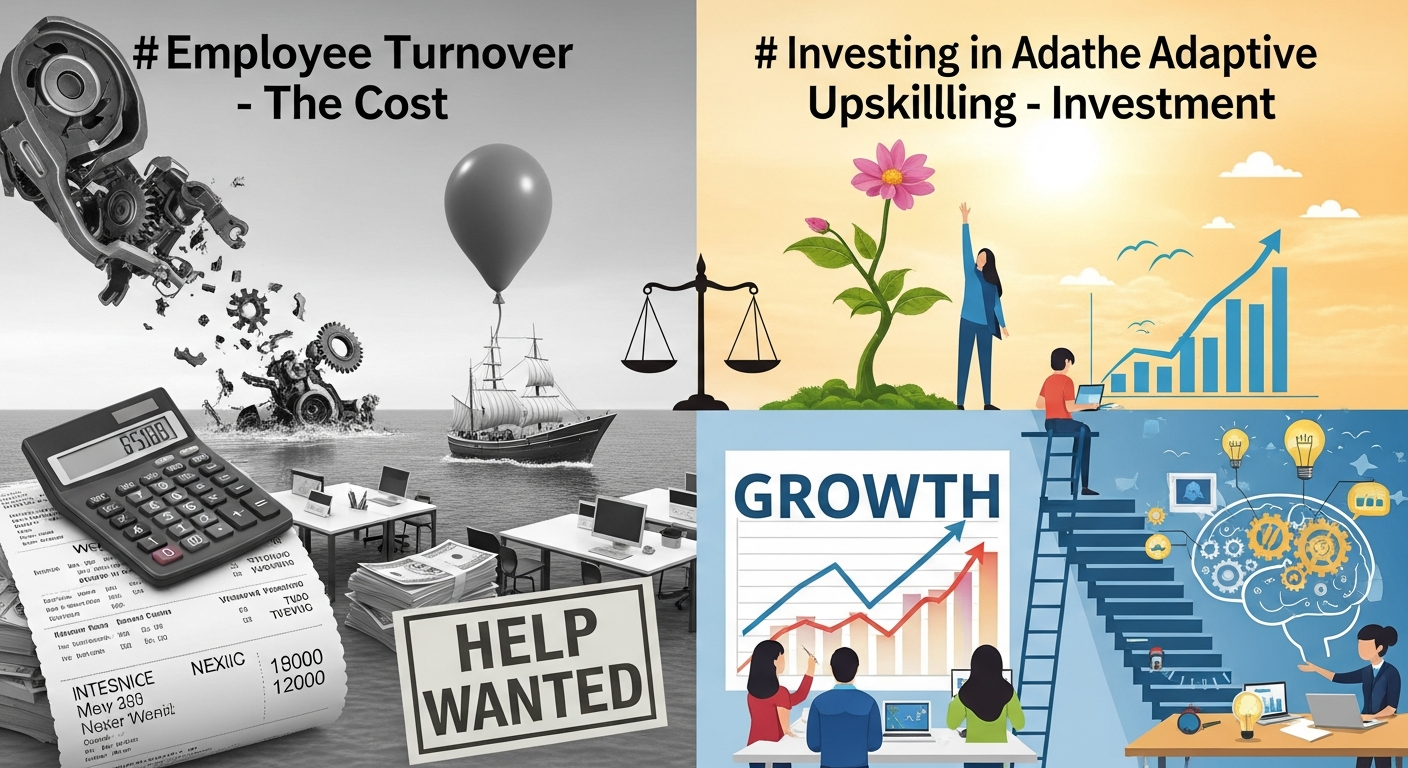
The Unseen Drain: Comparing the Cost of Employee Turnover vs. Investing in Adaptive Upskilling
In today's rapidly evolving business landscape, organizations across every sector—from Compliance to Sales, Banking to Healthcare, and even Oil and Gas to Mining—are grappling with two critical workforce challenges: the persistent drain of employee turnover and the urgent need to keep skills relevant. For Vice Presidents, Directors, and Senior Managers in L&D, the choice often seems like a complex one: continue to absorb the significant, often hidden, costs associated with employees leaving, or proactively invest in robust, future-proof learning strategies? This article will dissect the true financial and operational impact of turnover versus the strategic advantages and compelling ROI of investing in Adaptive Learning and upskilling.
The Hidden Costs of Employee Turnover: A Business Drain
Employee turnover isn't just a HR issue; it's a profound business challenge that impacts profitability, productivity, and organizational morale. While the direct costs are often recognized, the indirect and intangible expenses frequently go uncalculated, leaving a significant, unaddressed drain on resources, particularly in industries requiring specialized knowledge like Finance, Pharma, and Insurance.
Direct Costs: The Obvious Outlays
- Recruitment and Hiring: Advertising job openings, interviewing, background checks, drug screenings, and the administrative burden of onboarding. For specialized roles in sectors like Banking or high-stakes environments like Healthcare, these costs escalate rapidly.
- Onboarding and Training: The expense of bringing a new hire up to speed, including new employee orientation, training materials, and the time spent by managers and colleagues in coaching. This is particularly costly in roles requiring extensive compliance training, common in industries like Pharma and Compliance itself.
- Severance Pay and Benefits: Depending on the circumstances, organizations may incur costs related to severance packages, unused vacation payouts, and continuation of benefits.
Indirect Costs: The Unseen Erosion
The indirect costs of turnover are often far more substantial and insidious, quietly eroding productivity, morale, and institutional knowledge across all segments, from Retail to Hospitality.
- Lost Productivity: Before an employee leaves, their productivity may decline. After they're gone, there's a significant gap until a new hire is fully productive. This downtime can directly impact sales targets, project deadlines, and customer service quality.
- Decreased Morale and Engagement: High turnover can create a ripple effect, leading to increased stress for remaining employees who must cover extra work, potentially impacting their job satisfaction and increasing the risk of further departures.
- Loss of Institutional Knowledge: When experienced employees depart, they take with them invaluable knowledge, client relationships, and best practices. This "brain drain" can lead to reduced efficiency, increased errors, and a loss of competitive advantage, especially critical in expert-driven fields like Oil and Gas, or complex regulatory environments.
- Impact on Customer Service and Client Relationships: In customer-facing roles, particularly in Retail, Sales, and Hospitality, a revolving door of staff can disrupt client relationships and damage brand reputation.
- Increased Error Rates: New employees, regardless of their prior experience, are more prone to making errors as they learn the ropes of a new organization and its specific processes. This can have severe implications in fields like Finance and Healthcare.
The Strategic Investment in Adaptive Upskilling: Building a Resilient Workforce
In stark contrast to the reactive nature of addressing turnover, investing in Adaptive Learning and upskilling is a proactive, strategic move that fortifies an organization from within. It’s about not just filling skill gaps, but building a culture of continuous growth.
What is Adaptive Upskilling?
Adaptive upskilling is a personalized approach to employee development that leverages data and intelligent algorithms to deliver tailored learning experiences. Instead of a one-size-fits-all model, it identifies individual skill gaps and learning styles, providing relevant content and pathways to mastery. This can be effectively delivered through a modern Microlearning LMS, ensuring learning is bite-sized, engaging, and directly applicable. It’s about leveraging advanced learning content management system capabilities to deliver personalized, on-demand education.
Benefits of Adaptive Upskilling: Driving Growth and Retention
- Enhanced Employee Retention and Engagement: Employees who feel invested in and see opportunities for growth are more likely to stay. Adaptive upskilling demonstrates an organization's commitment to their career development, fostering loyalty and reducing the likelihood of voluntary turnover.
- Improved Performance and Productivity: By continuously refining skills, employees become more proficient in their roles, leading to higher quality work, fewer errors, and increased efficiency. This directly translates to better outcomes in areas like Sales targets, accurate financial reporting, and superior patient care in Healthcare.
- Future-Proofing the Workforce: Adaptive upskilling prepares employees for future roles and emerging industry trends, making the workforce resilient against technological shifts and market demands. For example, in the rapidly changing world of banking and finance, upskilling in FinTech is crucial.
- Cultivating Innovation: A workforce that is constantly learning and developing new skills is more agile, creative, and capable of innovating. This is vital for maintaining a competitive edge in any industry.
- Stronger Compliance and Reduced Risk: For highly regulated industries, Risk-focused Training delivered adaptively ensures employees meet all regulatory requirements, significantly reducing the risk of penalties and legal issues.
Quantifying the ROI: Turnover vs. Upskilling
The decision to invest in upskilling becomes clear when you compare the quantifiable returns against the costs of inaction. While calculating turnover costs requires diligent tracking, the ROI of upskilling is increasingly measurable.
Calculating Turnover Costs
To truly understand the cost of turnover, organizations can sum up the direct and indirect expenses for each departure. For a mid-level employee, this often ranges from 0.5 to 2 times their annual salary, varying by role and industry. For highly specialized roles, particularly in sectors like Mining or Pharma, this can be even higher.
Measuring Upskilling ROI
The return on investment for adaptive upskilling can be measured through various metrics:
- Reduced Turnover Rates: A direct correlation often exists between investment in learning and decreased attrition.
- Increased Productivity and Efficiency: Track key performance indicators (KPIs) like sales conversion rates, project completion times, and error rates before and after upskilling initiatives.
- Improved Employee Engagement Scores: Surveys and feedback mechanisms can gauge the impact of learning opportunities on morale.
- Innovation and Market Agility: Measure the introduction of new ideas, processes, or technologies within the organization.
- Compliance Adherence: Reduced incidence of non-compliance, fines, or regulatory breaches for industries like Finance, Insurance, and Healthcare.
By using a robust learning management system that incorporates Gamified LMS features, organizations can not only track these metrics but also boost engagement, making the learning process more effective and enjoyable for employees.
Leveraging Technology for Adaptive Upskilling
The success of an adaptive upskilling strategy hinges on the right technology infrastructure. A modern LMS (learning management system) serves as the backbone, enabling personalized learning paths, content delivery, and performance tracking. An enterprise learning management solution like MaxLearn LMS provides the capabilities needed to scale these initiatives across large organizations and diverse segments.
Key features to look for in a lms learning management system include:
- AI-Powered Recommendations: Delivering personalized course suggestions based on an employee's role, performance, and career aspirations. An AI Powered Authoring Tool can also significantly streamline the creation of relevant, dynamic learning content.
- Flexible Content Delivery: Support for various formats including video, interactive modules, and simulations, accessible via a cloud based learning management system from any device.
- Analytics and Reporting: Deep insights into learner progress, skill acquisition, and the overall impact of training programs. This is where a comprehensive learning content management system truly shines.
Implementing effective learning management software and learning management solutions is no longer a luxury but a necessity for organizations committed to talent development. With the right MaxLearn LMS, businesses can transform their approach to continuous learning.
AI-Powered Insights: Questions for L&D Leaders
How can data intelligence guide our upskilling strategy?
By analyzing performance data, skill assessments, and industry trends, intelligence systems can pinpoint exact skill gaps within your workforce. They can predict future skill requirements, enabling your organization to proactively develop training programs that align with business goals, rather than reactively addressing deficiencies. This data-driven approach ensures every learning investment is targeted and impactful, optimizing resource allocation.
What is the impact of tailored learning on employee retention?
Tailored learning significantly boosts employee retention by fostering a sense of value and career progression. When employees receive training directly relevant to their roles and aspirations, they feel more engaged, capable, and committed to their organization. This personalized approach not only enhances job satisfaction but also prepares them for internal advancement, reducing the incentive to seek opportunities elsewhere and creating a loyal, skilled workforce.
How can automation enhance our learning delivery and impact?
Automation within learning platforms can revolutionize delivery by streamlining course assignments, progress tracking, and feedback mechanisms. Intelligent systems can automatically recommend next steps for learners, provide instant feedback on assessments, and even trigger personalized interventions based on performance. This not only makes learning more efficient and scalable but also ensures that each employee receives timely, relevant support, maximizing the impact of every training module.
Conclusion
The comparison is stark: the escalating, often invisible, costs of employee turnover represent a continuous drain on an organization's resources, whereas investing in adaptive upskilling is a strategic outlay with clear, measurable returns. For L&D leaders in industries ranging from Compliance to Oil and Gas, the mandate is clear: move beyond reactive recruitment to proactive talent development. By embracing modern learning management software and adaptive methodologies, organizations can build a resilient, engaged, and highly skilled workforce ready to navigate the challenges and seize the opportunities of tomorrow. The real question is not whether you can afford to invest in adaptive upskilling, but whether you can afford not to.


Comments
Post a Comment