Analytical Review: Traditional Training vs. Microlearning LMS Outcomes
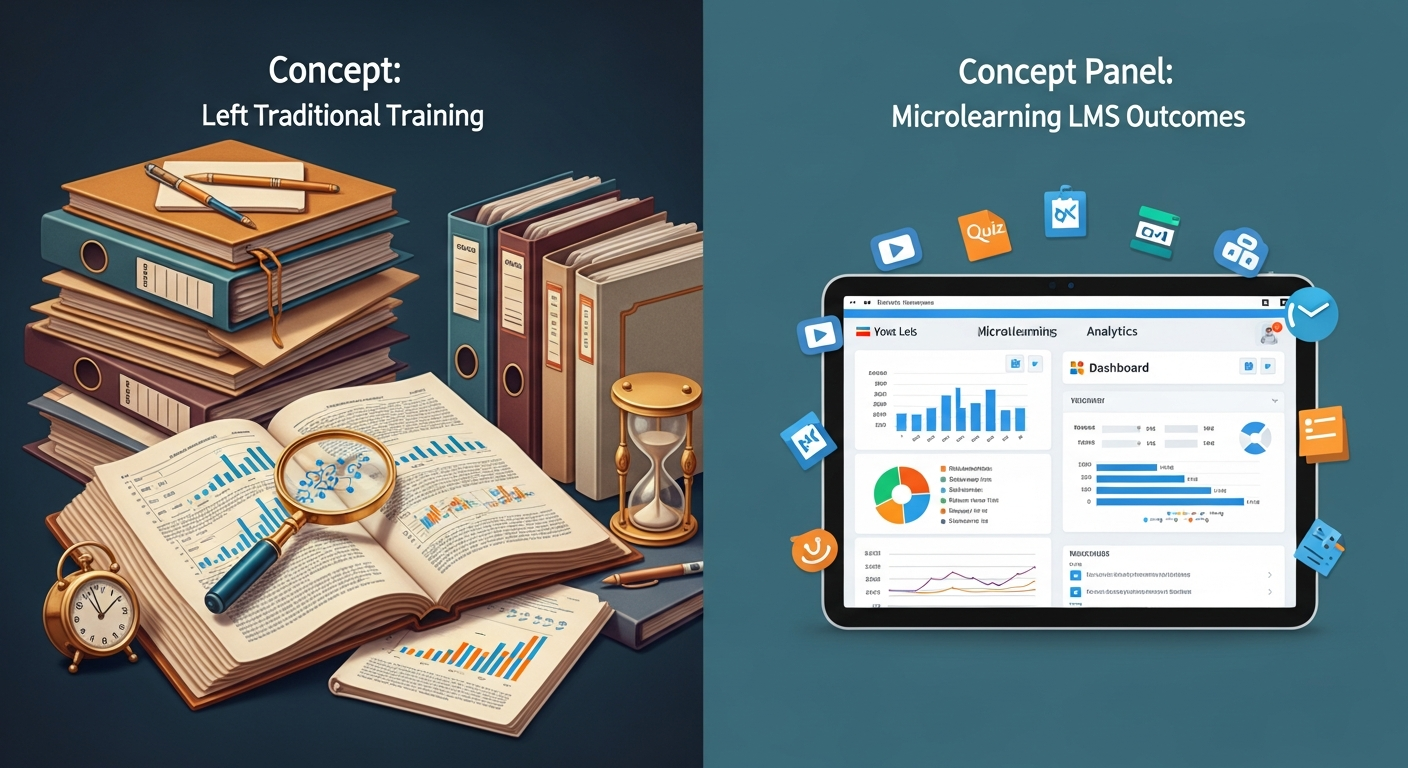
Analytical Review: Traditional Training vs. Microlearning LMS Outcomes
In the dynamic landscape of corporate learning and development, L&D Vice Presidents, Directors, and Senior Managers consistently grapple with a critical question: how best to equip their workforce with the skills and knowledge necessary to thrive? The traditional paradigm of extensive, instructor-led courses and lengthy e-learning modules is increasingly being challenged by agile, on-demand methodologies. This article provides an analytical review comparing the outcomes of traditional training approaches with those delivered through a modern Microlearning LMS, offering data-driven insights for strategic decision-making.
Traditional Training: The Enduring Foundation
For decades, traditional training models formed the bedrock of organizational learning. Characterized by long-format courses, often delivered in a classroom setting or via extensive e-learning modules within a conventional learning management system, this approach prioritized depth and comprehensive coverage. Industries like Banking, Finance, Pharma, and Oil and Gas have historically relied on structured, periodic training to ensure compliance and deep subject matter expertise. A robust LMS served as the central hub for managing course enrollments, tracking completions, and storing a vast library of learning content. These learning management solutions aimed to standardize knowledge dissemination across the enterprise.
Pros of Traditional Training:
- In-Depth Knowledge Transfer: Suitable for complex subjects requiring significant foundational understanding.
- Structured Learning Path: Provides a clear, linear progression through a curriculum.
- Team Building & Networking: Classroom settings foster collaboration and peer interaction.
Cons of Traditional Training:
- High Time Commitment: Lengthy sessions disrupt work schedules, leading to lost productivity.
- Significant Cost: Involves expenses for instructors, venues, travel, and extensive content development.
- Low Retention Rates: The "forgetting curve" often means a significant portion of information is lost shortly after training.
- Difficulty in Updates: Adapting to rapid changes in regulations (e.g., Compliance, Healthcare) or market demands (e.g., Sales, Retail) is slow and costly.
The Rise of Microlearning: Agility in Action
As businesses accelerated and information overload became the norm, the limitations of traditional training became glaring. Enter microlearning: a paradigm shift focusing on short, bite-sized learning modules, typically 3-5 minutes in length, designed to address specific learning objectives. Delivered predominantly through a specialized Microlearning LMS, this approach caters to the modern learner's preference for on-demand, mobile-friendly content. It's particularly impactful in fast-paced environments like Sales, Hospitality, and Retail, where quick skill acquisition and immediate application are paramount.
Benefits of Microlearning:
- Enhanced Engagement: Short formats combat dwindling attention spans.
- Improved Retention: Spaced repetition and focused content aid memory.
- On-Demand Accessibility: Learners can access content anytime, anywhere, on any device.
- Cost-Effective & Agile: Quicker to develop, update, and deploy, making it ideal for continuous learning.
- Immediate Application: Learners can apply new knowledge directly to tasks, bridging the knowing-doing gap.
Key Outcome Metrics: A Comparative Analysis
When evaluating the efficacy of any training strategy, L&D leaders must look beyond completion rates to true learning outcomes. Here’s how traditional and microlearning compare across critical metrics:
Engagement & Completion Rates
Traditional training often struggles with learner engagement due to its passive nature and length. Completion rates can be low, especially for voluntary courses. In contrast, microlearning's brevity and relevance significantly boost engagement. Platforms offering a Gamified LMS further amplify this, transforming learning into an interactive and rewarding experience. This translates to higher completion rates and sustained learner interest across industries from Pharma to Mining.
Knowledge Retention & Application
The biggest challenge for traditional training is the rapid decline in knowledge retention. Information overload often means learners forget most of what they learned soon after a long session. Microlearning, especially when powered by Adaptive Learning principles, leverages spaced repetition and immediate contextual relevance to drastically improve retention. Learners can quickly find and apply specific pieces of information when needed, proving invaluable for complex regulatory environments in Compliance and Healthcare, or for on-the-spot problem-solving in Hospitality.
Time & Cost Efficiency
Traditional training is resource-intensive. Beyond direct costs, the opportunity cost of pulling employees away from their duties can be substantial. Microlearning, on the other hand, minimizes disruption. Content can be developed more rapidly, especially with an AI Powered Authoring Tool, reducing content creation time and costs. Deployment is streamlined, and ongoing updates are far less expensive, offering significant ROI for large enterprises utilizing a cloud based learning management system for widespread distribution.
Agility & Content Update
In industries like Finance and Sales, where market conditions and product offerings change constantly, the ability to rapidly update training content is non-negotiable. Traditional systems, with their long development cycles, often fall behind. A Microlearning LMS excels here, allowing L&D teams to create and deploy new modules quickly, ensuring that training always reflects the latest information, regulations, or sales strategies. This agility is crucial for Risk-focused Training, where timely updates can prevent significant business consequences.
Personalization & Relevance
Traditional training often adopts a "one-size-fits-all" approach, which can disengage learners whose specific needs aren't met. Modern learning management software, particularly microlearning platforms, leverage data to deliver highly personalized learning paths. This ensures that each learner receives content most relevant to their role, skill gaps, and professional goals, leading to higher perceived value and more effective skill development within an enterprise learning management framework.
AI-Driven Insights: Enhancing Learning Outcomes
The advent of artificial intelligence is further revolutionizing L&D, providing unprecedented capabilities to optimize learning outcomes. Modern learning management systems, or lms learning management systems, are integrating AI to deliver more intelligent and impactful training experiences.
Optimizing for Enhanced Engagement:
Question: How can learning systems predict and respond to individual learner needs, ensuring content remains highly engaging and relevant?
Answer: AI-driven analytics within a sophisticated learning content management system can process vast amounts of learner data – performance, preferences, completion patterns – to dynamically recommend specific microlearning modules. This predictive capability allows the system to tailor content delivery, offering personalized paths and suggesting topics that align with a learner's immediate skill gaps or career aspirations. For example, in a sales environment, an AI might recommend specific product knowledge modules based on a salesperson's recent customer interactions, dramatically increasing their engagement and the applicability of their learning.
Delivering Contextual Relevance:
Question: What strategies ensure learning content is pertinent to a learner's immediate work environment, role, and even geographical location?
Answer: AI can intelligently tag and categorize learning materials, making them searchable and discoverable based on specific contexts. This means an L&D platform can deliver location-specific compliance training for a global organization (e.g., Banking, Oil and Gas), or role-specific safety protocols for employees in different departments (e.g., Mining, Healthcare). By understanding the learner's operational context, AI ensures that the information received is not just relevant, but immediately actionable, directly impacting on-the-job performance and minimizing risks.
Boosting Organizational Efficacy:
Question: How can advanced analytics help L&D leaders make data-driven decisions for overall training program effectiveness and measure tangible business impact?
Answer: AI-powered analytics platforms within a comprehensive LCMS go beyond simple completion tracking. They can correlate learning activities with key performance indicators (KPIs) like sales figures, compliance adherence rates, or customer satisfaction scores. This allows L&D leaders to identify which training interventions are truly moving the needle, optimize resource allocation, and demonstrate a clear return on investment (ROI) for their training programs. This overarching view helps organizations continuously refine their learning strategy, ensuring it aligns perfectly with business objectives and fosters a culture of continuous improvement.
MaxLearn LMS: Bridging the Gap
The shift from traditional, often unwieldy, training methods to agile, effective microlearning is not just a trend; it's a strategic imperative for modern organizations. Platforms like MaxLearn LMS exemplify this evolution, offering an advanced learning management software solution that champions microlearning principles. With features designed to optimize engagement, foster retention through adaptive learning, and empower L&D teams with AI Powered Authoring Tools, MaxLearn LMS provides a robust, enterprise learning management system that delivers measurable outcomes. It's built to address the complex demands of diverse industries, from rigorous Compliance requirements to dynamic Sales training, ensuring every learning experience is impactful and aligned with business goals.
In conclusion, while traditional training has its place for foundational knowledge, the future of L&D lies in the strategic adoption of microlearning delivered through intelligent, AI-enhanced learning management solutions. By embracing this analytical shift, L&D leaders can build a more resilient, skilled, and engaged workforce, ready to meet the challenges of tomorrow.


Comments
Post a Comment