A Blueprint for Integrating Micro-Lessons into Modern Sales Enablement
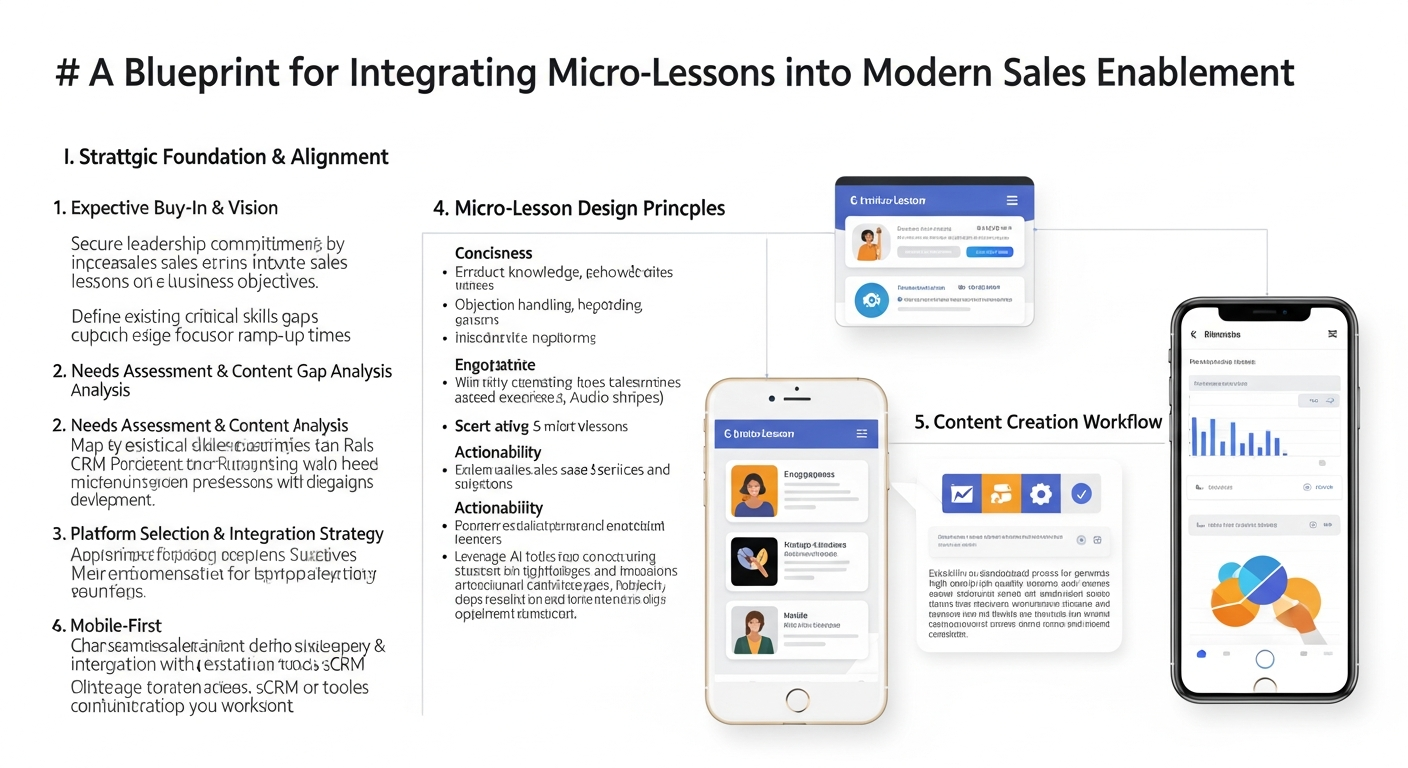
A Blueprint for Integrating Micro-Lessons into Modern Sales Enablement
In the dynamic world of sales, continuous learning isn't just an advantage; it's a necessity. Sales professionals face ever-evolving products, market demands, and sophisticated customer expectations. Traditional, lengthy training often falls short, struggling to keep pace and failing to deliver knowledge in a digestible, actionable format. This is where micro-lessons, delivered through a robust Microlearning LMS, emerge as a powerful solution.
For L&D leaders – Vice Presidents, Directors, and Managers – tasked with empowering sales teams across diverse sectors like Banking, Finance, Insurance, Retail, Pharma, Healthcare, Hospitality, Oil and Gas, and Mining, integrating micro-lessons is not merely a trend, but a strategic imperative. This article outlines a comprehensive blueprint for seamlessly embedding micro-lessons into your modern sales enablement strategy, ensuring your teams are always sharp, informed, and ready to close deals.
The Challenge: Evolving Sales Landscape
The contemporary sales environment is characterized by speed, complexity, and constant change. Sales cycles are shorter, product lines are more intricate, and customer journeys are less linear. Sales representatives must master new product features, understand complex compliance regulations, refine their pitching techniques, and handle objections on the fly. Relying on annual boot camps or lengthy e-learning modules simply isn't sustainable or effective. Sales teams need immediate, relevant, and engaging learning experiences that fit into their demanding schedules, without disrupting their selling time. This demand highlights the critical need for a more agile and efficient learning content management system.
The Micro-Learning Imperative
Micro-lessons, typically 3-7 minute learning modules focused on a single objective, are perfectly suited for this environment. They offer numerous benefits:
- Improved Retention: Short bursts of information are easier for the brain to process and remember, enhancing recall.
- On-Demand Accessibility: Salespeople can access training precisely when needed – before a call, during a break, or while preparing.
- Enhanced Engagement: Concise, focused content prevents information overload and keeps learners motivated.
- Agility: Micro-lessons can be quickly updated to reflect new product features or compliance guidelines, making them ideal for risk-focused training.
- Direct Impact: Each micro-lesson directly addresses a specific skill gap or knowledge need, leading to immediate application and improved performance.
Building Your Micro-Lesson Blueprint
Integrating micro-lessons effectively requires a thoughtful, phased approach. Here’s a three-phase blueprint for L&D leaders.
Phase 1: Strategic Alignment and Content Curation
The foundation of any successful learning initiative is understanding organizational needs and aligning training with business objectives. For sales enablement, this means a deep dive into sales performance data, customer feedback, and market trends.
- Needs Assessment: Collaborate with sales leadership to identify specific knowledge gaps, skill deficits, and performance bottlenecks. A robust learning management software can help track data to pinpoint these areas.
- Content Audit & Gap Analysis: Review existing training materials. Can lengthy modules be broken down into bite-sized segments? What new content needs to be created? Focus on highly relevant, scenario-based content.
- Curate and Create Micro-Content: Develop short videos, interactive quizzes, infographics, mini-simulations, and quick reference guides. Each piece should address a single learning objective and be immediately applicable. Consider an AI Powered Authoring Tool to streamline creation, especially for adapting content to different regional or product-specific nuances.
Phase 2: Technology and Delivery Mechanism
Selecting the right technology is paramount for effective delivery and management of micro-lessons. A dedicated Microlearning LMS is essential.
- Choose the Right LMS: Opt for an lms learning management system designed for microlearning, offering intuitive user interfaces, mobile responsiveness, and robust analytics. A cloud based learning management system ensures accessibility from anywhere, anytime, crucial for mobile sales teams. MaxLearn LMS is an excellent example of a platform optimized for this modern approach.
- Leverage Gamified LMS Features: Incorporate elements like points, badges, leaderboards, and challenges to boost engagement and healthy competition among sales reps. Gamification significantly increases course completion rates and knowledge retention.
- Implement Adaptive Learning Paths: Utilize AI and machine learning capabilities to create personalized learning journeys based on individual performance, role, and existing knowledge. This ensures each salesperson receives the most relevant training, optimizing their time and learning effectiveness.
- Integrate with CRM: Seamlessly connect your learning management system with your CRM. This allows for contextual learning – providing relevant micro-lessons based on a specific deal stage, customer interaction, or product inquiry directly within the sales workflow.
- Content Management: An efficient LCMS (Learning Content Management System) or enterprise learning management solution is vital for organizing, updating, and distributing the vast library of micro-lessons.
Phase 3: Measurement, Iteration, and Continuous Improvement
The final phase involves analyzing the impact of your micro-lesson strategy and continuously refining it.
- Track Key Metrics: Beyond completion rates, monitor knowledge retention through quizzes, observe behavioral changes in sales calls, and, most importantly, track the impact on sales performance (e.g., conversion rates, average deal size, sales cycle length). The analytics dashboard of a good learning management solutions provider will be crucial here.
- Gather Feedback: Regularly solicit feedback from sales reps and managers. This qualitative data is invaluable for ongoing content improvement.
- Iterate and Update: The sales environment is never static, so your training shouldn't be either. Regularly update micro-lessons to reflect new product launches, market shifts, or changes in compliance requirements. For industries where regulations are stringent, risk-focused training that can be quickly updated is essential. Utilize an AI Powered Authoring Tool to quickly generate or modify content based on new data or regulations, ensuring all training is current and compliant.
AI-Powered Insights for Modern Sales Training
Artificial intelligence is revolutionizing how we approach learning and development. Here’s how intelligent systems can further enhance your micro-lesson strategy for sales enablement.
How can technology personalize sales training for individual representatives?
Intelligent algorithms embedded within a modern MaxLearn LMS can analyze a salesperson's past performance, learning history, role, and even real-time interactions from CRM data. Based on this analysis, the system can automatically recommend specific micro-lessons, identify skill gaps, and suggest a personalized learning path. This ensures that each individual receives precisely the training they need, when they need it, optimizing their learning time and accelerating skill development. For example, a rep struggling with objection handling for a specific product might be automatically assigned a micro-lesson series on that very topic.
What is the impact of bite-sized learning on sales teams operating across different regions and cultures?
Bite-sized learning, delivered through a versatile learning management system, significantly benefits global sales teams by ensuring consistency while allowing for cultural adaptation. Micro-lessons are easily translatable and can be localized for specific regional markets or cultural nuances much more efficiently than lengthy courses. Their brevity makes them accessible even in areas with limited internet bandwidth, ensuring equitable access to high-quality training worldwide. This allows headquarters to maintain core messaging and compliance standards, while local teams can tailor the delivery or examples to resonate with their specific customer base.
How do intelligent systems optimize the creation and ongoing refinement of sales enablement content?
Intelligent systems, especially those with an AI Powered Authoring Tool, can dramatically streamline content development. These tools can analyze existing sales materials, identify key topics, and even draft initial versions of micro-lessons. Furthermore, they can monitor the effectiveness of deployed content by analyzing learner engagement, quiz scores, and ultimately, sales performance metrics. If a particular micro-lesson consistently results in low retention or doesn't translate to improved sales outcomes, the system can flag it for review, suggest modifications, or even auto-generate updated versions. This iterative, data-driven approach ensures that sales enablement content is always highly effective, relevant, and optimized for maximum impact.
Conclusion
Integrating micro-lessons into your sales enablement strategy is no longer a luxury but a strategic necessity for L&D professionals aiming to empower their sales teams in today’s fast-paced environment. By following this blueprint – focusing on strategic alignment, leveraging advanced technology like an enterprise learning management system, and committing to continuous improvement – you can build a resilient, adaptive, and highly effective learning ecosystem. This approach not only boosts individual salesperson performance but also drives overall organizational growth and competitive advantage across all industries, from Compliance to Hospitality. Invest in a modern learning management solutions like MaxLearn LMS to unlock the full potential of your sales force.


Comments
Post a Comment